
Employment or Entitlement: The real cost of jobless growth

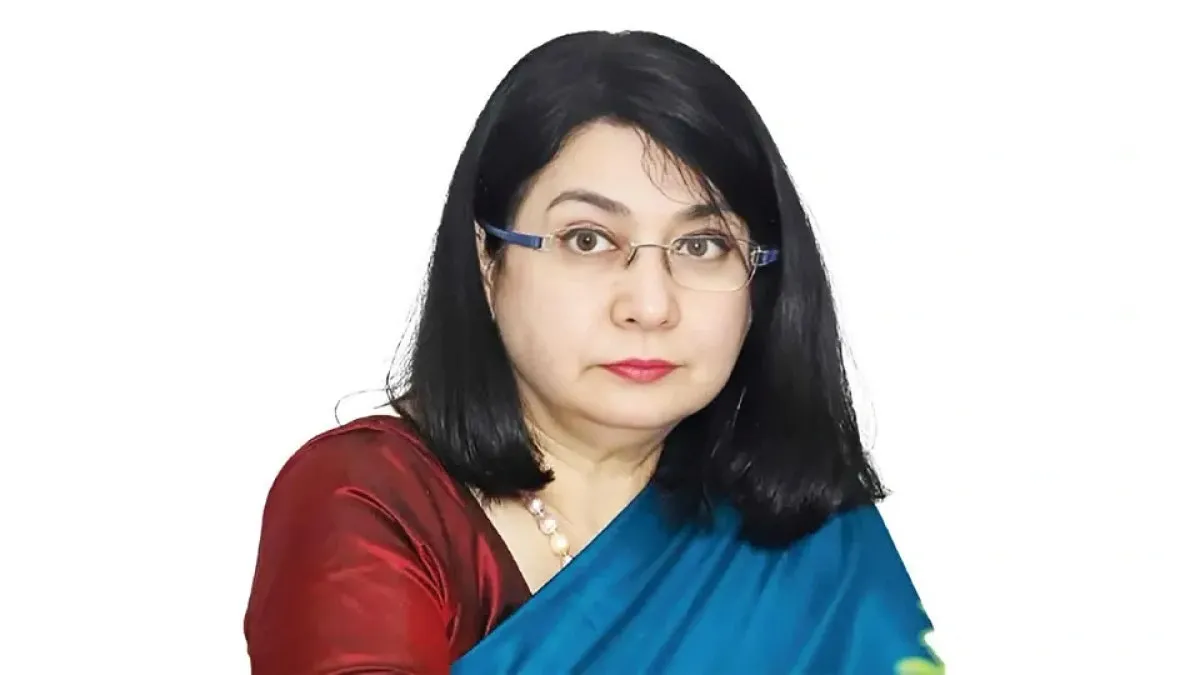
Honorary Fellow of the Centre for Policy Dialogue (CPD) Dr. Fahmida Khatun.
At one time, the country's vast working-age population was considered a major potential of the economy, or a "demographic dividend," but it has now become a worrying reality of unemployment and lack of skills. Due to the mismatch between the education system and the demands for labour in the industrial sector, slow investment, and structural weaknesses, this promising human resource is now becoming a burden for the country.
Distinguished economist and Honorary Fellow of the Centre for Policy Dialogue (CPD) Dr. Fahmida Khatun spoke with The Agamir Somoy about various aspects of the economy, including ways to overcome this deep crisis of the demographic dividend. The interview was conducted by Agamir Somoy Business Editor Mizan Chowdhury.
Agamir Somoy: Despite having a large working-age population in the country, it cannot be utilized. How do you see this issue?
Dr. Fahmida Khatun: Every year, 20 to 22 lakh people enter our labor market, but not all of them find work. Even though they are capable and qualified, they are deprived of income due to not finding work, which is creating great pressure on families as well as on the country. By 2045, our "demographic dividend" period will end, and the country's vast population will become elderly. If they cannot be utilized now, this dividend will become a demographic burden for us, and the impact will be reversed.
Agamir Somoy: What is the main reason for the rise in educated unemployment? Is the education system responsible here?
Dr. Fahmida Khatun: There is a big gap between the supply of educated young people and the demand of the industrial sector. Those who are coming out after finishing their studies from universities have no match between their skills and the demands for industrial establishments. On one hand, job seekers are not getting work; on the other hand, employers are not getting qualified people. Besides, the size of our economy is not yet large enough to give everyone in the country a desk job. Therefore, moving away from conventional thinking, young people must lean toward technical or vocational education. People abroad work in professions like plumbing or driving; we also need to bring about a change in our mindset.
Agamir Somoy: Why is women's employment not increasing at the desired rate? How much is social barriers responsible?
Dr. Fahmida Khatun: Although women's participation in the labor market is close to 40 percent, about 90 percent of these women work in the informal sector—where wages are low and there is no job security. Besides, with the increase in the use of technology, many women cannot adapt, and as a result, they are gradually falling behind even in the readymade garment sector. Alongside this, the lack of adequate day care centers in the country is also a major reason for working women falling behind. I believe it is very important to ensure these facilities to keep women in the workplace.
Agamir Somoy: Is only the shortage of investment responsible for the failure to create employment?
Dr. Fahmida Khatun: Of course. Because 80 percent of our economy is the private sector. Job opportunities in the public sector are only 5-6 percent. Unless investment in the private sector increases, employment will not increase in any way. Investors will come to the country only when there is political stability, the cost of doing business decreases, and energy facilities are ensured. There is no alternative to creating a suitable environment by reducing bureaucratic complications and corruption.
Agamir Somoy: How important do you think the government's role is in creating new entrepreneurs?
Dr. Fahmida Khatun: Those who want to become new entrepreneurs do not have capital, nor do they easily get bank loans. Because banks want to see transaction records before giving loans. Therefore, to create entrepreneurs as an alternative employment option, the government's policy support and easy-term loan availability must be ensured. Bangladesh Bank's new entrepreneur fund must be utilized. Alongside this, training in business and arrangements for capital for young people must be made.
Agamir Somoy: How can the three years' time received for LDC graduation be utilized?
Dr. Fahmida Khatun: These three years are not much time. Our duty-free trade facilities, easy-term loans, and intellectual property law benefits will go away. Therefore, changes in the tariff structure must be brought now. Domestic revenue collection must be increased, and the capacity to take loans on commercial terms from the international market must be achieved. We do not have a single day to waste now for overall preparation.
