
Bangladesh inflation could rise to 10.9%: IMF

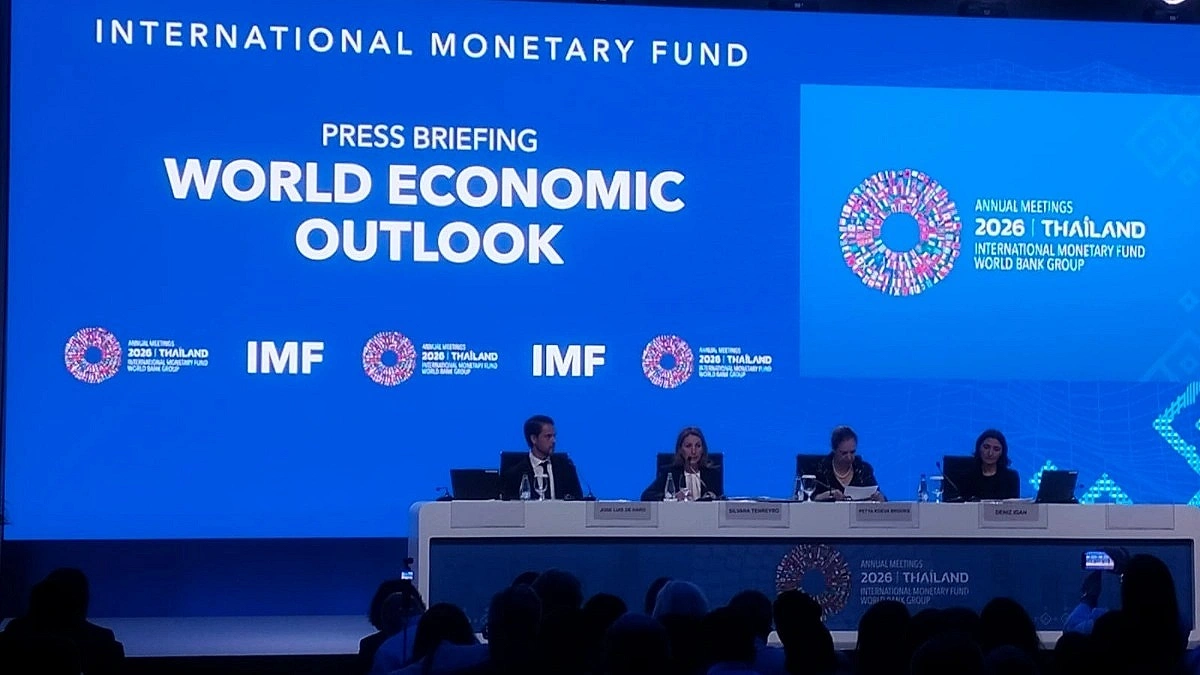
Photo: Agamir Somoy
International Monetary Fund (IMF) said Bangladesh’s economy may slow down further by high inflation and a slowdown in GDP growth in the 2026-27 fiscal year due to global economic instability and domestic policy limitations.
On Tuesday, during the second day of the annual meetings of the World Bank (WB) and the IMF held at the Queen Sirikit National Convention Center in Bangkok, the organization published the “World Economic Outlook 2026”.
Warning about Bangladesh, the report said due to upward inflation pressure and a growth slowdown, there is a risk of living costs and crisis deepening for people.
According to the IMF’s observation, the country’s economy will remain in the 3 percent range in the 2026-27 fiscal year. Although growth was 3.6 percent in the 2025-26 fiscal year, it will decline to 3.2 percent in the 2026-27 fiscal year. Alongside this growth slowdown, consumer inflation has also been estimated.
Although inflation came down to 8.7 percent last fiscal year, it could rise dangerously again in the current fiscal year to reach 10.9 percent. In its observation regarding the underlying challenges of the economy, the IMF noted that high inflation is directly hitting the purchasing power and standard of living of people.
Particularly due to rising prices of food and fuel, low- and fixed-income families are falling into extreme risk. On the other hand, exchange rate volatility in the domestic market, investment stagnation, and a lack of business confidence are preventing the economy from turning around.
At 9 am local time, the IMF held a press conference on the occasion of publishing the economic outlook at the WB and IMF conference center. The press conference was attended by IMF Research Department Director Silvana Tenreyro, Deputy Director Petya Koeva Brooks, and Division Chief Deniz Igan.
The press conference was moderated by Communications Officer Jose Luis de Haro. Regarding the global economy, it was said despite consecutive shocks such as the war in the Middle East and trade tensions, the global economy is showing more resilience than expected.
However, the agency warned that the protective shield working behind this resilience is gradually running out, and the global economy is now clearly splitting into two divisions.
According to the IMF forecast, global growth in the current fiscal year in 2027 may increase slightly to reach 3.4 percent. However, global inflation may drop to 4.1 percent.
The report highlighted that under the influence of two opposing forces - geopolitics and artificial intelligence (AI) technology - the global economy has split into two opposite spectrums.
Countries securing massive investments and export opportunities based on AI technology are in a quite advantageous position. Energy-exporting countries that remain outside the war zones are benefiting from a favorable trade environment.
On the other hand, countries that are not integrated into the global technology supply chain and rely on imports to meet their own energy needs are facing the hardest situation.
High import costs, currency depreciation, squeezed revenues, and income deficits have put them under extreme pressure. A major portion of low-income and developing countries across the globe belong to this second group.
