Apparel orders being diverted to several countries, mostly India

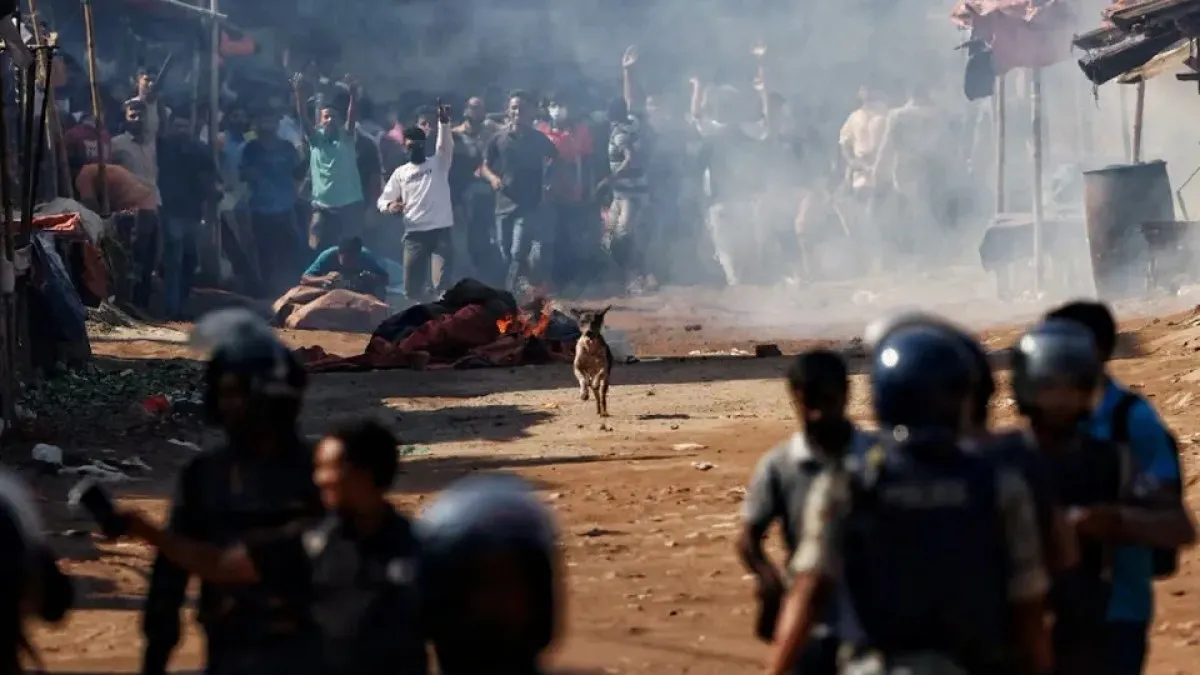
Reuters photo of workers' agitation at an industrial belt.
Clothing purchase orders from global fashion brands are being shifted away from Bangladesh to several Asian countries, with a large portion going to neighboring India. In the first half of November, brands such as Zara and H&M shifted purchase orders worth about Tk 3,184 crore away from Bangladesh. The brands made this decision due to production disruption caused by labor unrest and rising production costs.
Reuters reported in a report citing three garment factory owners.
According to the factory owners, between November 1 and 18, orders worth about $254 million (about Tk 3,184 crore) were shifted from Bangladesh to other countries. A large portion went to neighboring India. This is a major blow to the garment industry, one of the main foundations of Bangladesh's economy. Even if the ongoing labor unrest stops, the impact of this shift may be long-lasting.
Industry leaders say that due to wage increases, the energy crisis, and political uncertainty, Bangladesh's advantage in low-cost garment production has diminished. It was on the strength of this advantage that Bangladesh became the world's second-largest garment exporter after China. Due to the situation, global brands are now diversifying their sources of garment purchase.
According to the Bangladesh Garment Manufacturers and Exporters Association (BGMEA), the production loss due to worker protests amounts to more than $400 million. More than 80 percent of Bangladesh's total export earnings come from this industry. About 40 percent of employment in the country's manufacturing sector also depends on this industry.
Vietnam, Cambodia, and Indonesia Also Benefit
Industry leaders said India has benefited the most from the shifting of purchase orders. However, to reduce supply chain risks and ensure timely delivery of goods, buyers are also leaning toward Vietnam, Cambodia, and Indonesia.
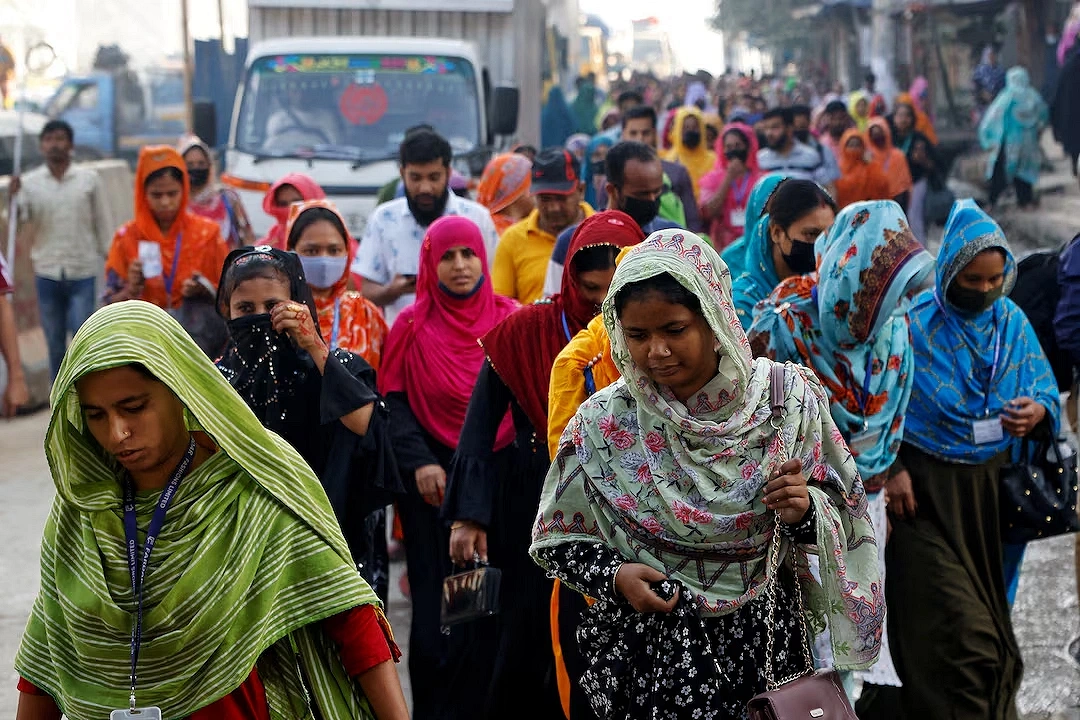
Photo: Reuters.
These pressures increased further after the decision on Wednesday to raise the minimum wage of Bangladeshi garment workers by 36 percent. This was the lowest wage increase in four decades.
Workers did demand that wages be more than doubled. But as that demand was not met, workers clashed with police again. Meanwhile, Abdur Rahman Tarafdar, secretary of the Ministry of Labor and Employment, commented that the wage increase decision was "satisfactory." He also expressed hope that all garment workers would return to work from Saturday.
Industry leaders say that due to the wage increase, Bangladesh's labor cost advantage compared to India will diminish further. However, workers' organizations claim that Bangladesh's wages are still low by global garment industry standards.
Considering relations with international buyers, factory owners, on condition of anonymity, said that due to the ongoing unrest, various global brands including Zara, H&M, Marks & Spencer, and C&A have shifted their purchase orders to other countries. India received a large portion of these orders.
Inditex, the parent company of Zara, did not agree to answer Reuters' questions. Marks & Spencer, H&M, and C&A also did not respond to requests for comment.
After Reuters' report was published, share prices of Indian textile sector companies rose. Gokaldas Exports' share price rose by up to 11 percent and Trident's by about 5 percent. Shares of potential other beneficiary companies—Welspun Living, KPR Mill, and Bardhaman Textiles—also rose by about 2 percent each.
M. Mohiuddin Chowdhury, a director of BGMEA, said pressure on garment manufacturers is increasing due to rising wages, services, and raw material costs.
He said, "When buyers are demanding lower prices and competition with rival countries is increasing, the wage increase has further increased production costs."
BGMEA President Mahmud Hasan Khan did not agree to name the brands. However, he said that by temporarily shifting some purchase orders to other countries, it is possible to retain global buyers and reduce financial losses.
Fear of Losing More Business
Factory owners say the biggest concern is that Bangladesh may lose future business as well after the purchase orders already shifted to other countries. Buyers are reconsidering which country to choose for garment sourcing.
The energy crisis has intensified due to the Middle East crisis. This is disrupting production, and some factories are having to rely on alternative fuels at higher costs.
Mohiuddin Chowdhury said that in selecting suppliers, buyers now prioritize delivery time over product price.
He said, "When brands are under pressure to deliver goods within a specified time, the price issue becomes relatively less important."
According to Mohiuddin Chowdhury, buyers can receive goods from India about a week earlier. On the other hand, Vietnam and Cambodia can reduce delivery times to a maximum of 15 days.
He further said that production centers in rival countries can generally produce and deliver goods within 60 to 90 days. In Bangladesh, this takes about 120 days.
Due to production disruption, work pressure has also accumulated in factories. Factories around Dhaka have lost an estimated 20 to 25 days of production. To deliver goods on time, some factories are considering running extra hours and sending goods by costly air freight.
Khan Monirul Alam, managing director of Alps Apparels Group, a supplier of clothing to various European brands, said the impact of the ongoing unrest has already begun to affect new purchase orders.
Alam said, "Since November 1, most of my buyers have stopped placing new orders due to the instability. They say our orders have been shifted elsewhere, suspended, or canceled. They have already found alternative arrangements."
Political tension over the possibility of former Prime Minister Sheikh Hasina's return to Dhaka from India has also raised fears of fresh instability.
Industry leaders say that to retain international buyers, it is essential to restore a stable environment and ensure uninterrupted production. Mohiuddin Chowdhury warned that purchase orders shifted to other countries during instability may not return to Bangladesh even after the situation improves.
He said, "The big challenge now is to restore buyers' confidence before the temporary decision to shift orders to other countries turns into a long-term sourcing choice. Brands have alternatives. If instability continues, they will not wait for us."