
'Plundering of banks were well planned by the directors', says BIBM chief

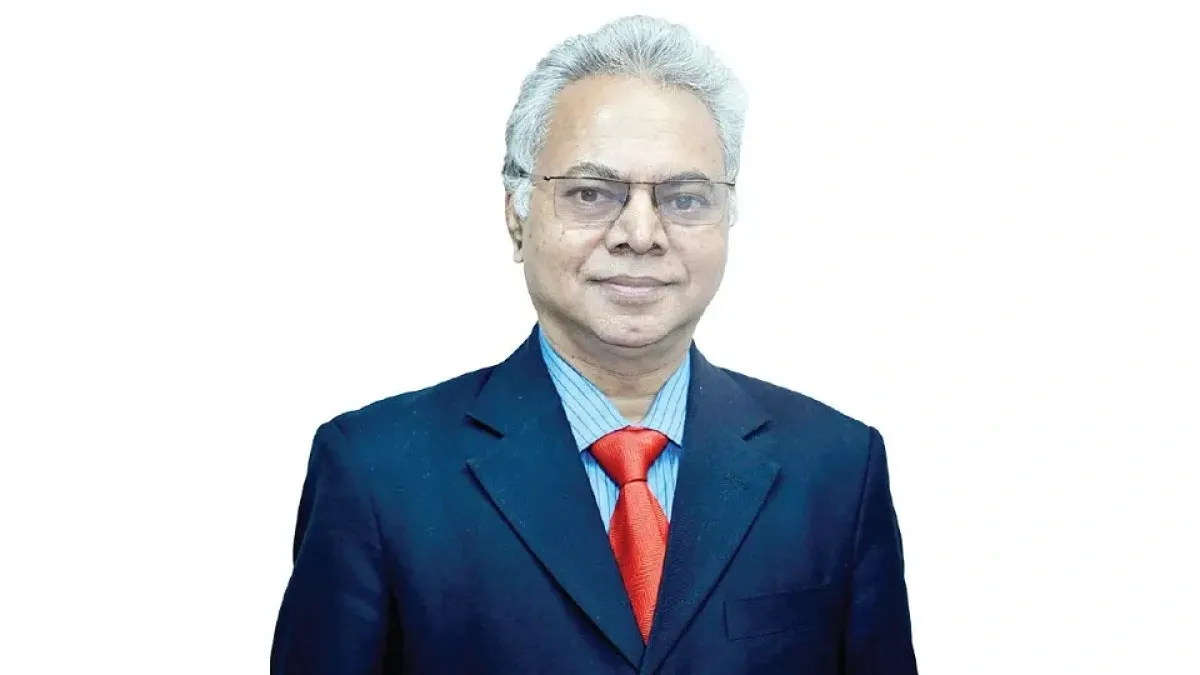
Dr. Md. Ejazul Islam, Director General of the Bangladesh Institute of Bank Management (BIBM). Collected photo.
At one time, the country's banking sector had only a culture of defaulted loans, but now it has turned into a dangerous form of looting and takeover. Due to long-standing political patronage, weak supervision, and irregularities by directors, the banking sector has reached the brink of collapse. Dr. Md. Ejazul Islam, Director General of the Bangladesh Institute of Bank Management (BIBM), spoke with Agamir Somoy about ways to overcome this deep crisis and various other aspects. The interview was conducted by Business Editor Mizan Chowdhury.
Question: From a culture of defaulted loans, now there is talk of looting and takeover. Who is responsible for this situation?
Md. Ejazul Islam: After independence in 1972, our banking sector was nationalized. Later, in the 1980s, private banks began to be approved. Although there were major reforms in the financial sector in the 1990s, after 2009, especially after 2015, extensive negative changes came to the banking sector. Dangerous events such as forced takeover of ownership, granting special privileges to loan defaulters, and concealment of actual information began to occur. Through collusion with political patronage, some individuals withdrew huge amounts of money from banks. Using legal loopholes, directors of one bank have illegally taken loans from another bank. As a result, defaulted loans have reached nearly Tk 6 lakh crore. Although laws exist, they could not be strictly enforced due to political interference.
Question: Is the banking sector's poor condition having a negative impact on the country's inflation and reserves?
Md. Ejazul Islam: Of course, it is having a massive impact. The actual inflation data was previously deliberately concealed. A large portion of the huge amounts of money withdrawn anonymously from banks was smuggled abroad. The rest of the money circulated within the country, which reached the hands of ordinary people and severely increased inflation in the market. The global crisis added to this. Due to the abnormal rise in prices of fuel oil, fertilizer, and food products in the world market, we had to spend a huge amount of dollars on imports. Again, the more than one lakh crore taka in incentives provided by Bangladesh Bank during the coronavirus period also contributed to rising inflation. As a result, foreign exchange reserves have come under severe strain.
Question: Could the internal audit departments not play an effective role in the withdrawal of huge loans in names and anonymously?
Md. Ejazul Islam: In the banks where massive looting occurred, the boards of directors controlled everything in a highly well-planned manner. They had internal audits conducted by people of their own choosing and managed the balance sheets as they wished. Everywhere, there was unethical compromise with the management. This is not a case of default for mere business reasons; this is literally bank looting. To prevent this, asset recovery has now begun. Legal measures and various important initiatives are being taken to seize assets smuggled abroad.Question: What was the role of the central bank in controlling the banking sector? Can the central bank avoid responsibility for this dire situation?Md. Ejazul Islam: The central bank cannot avoid this responsibility in any way. During the previous government, all regulatory agencies, including the central bank, were politically captured. In 2017, the ownership of Islami Bank was forcibly changed by political decision; at that time, the governor did not have much power to do anything. However, we have seen that after 2017, Bangladesh Bank's supervision was almost completely halted. Bangladesh Bank repeatedly issued notices to Basic Bank Chairman Abdul Hai Bachchu but could not remove him due to political reasons. The Anti-Corruption Commission also could not work independently at that time due to political pressure.Question: What should be done now to restore customer confidence in the banking sector, and how do you view the matter of forming a new bank commission?Md. Ejazul Islam: Currently, the amount of cash held by ordinary people has increased to nearly Tk 4 lakh crore, which is clear proof of an extreme crisis of confidence in the banking sector. To restore confidence, strict enforcement of the law must be ensured, supervision must be increased, and a guarantee must be created that deposited money will be returned whenever customers demand it. Regarding the bank reform commission, I think there is not much need for a new commission. We know the rules for how banks should be run properly. Ensuring good governance, permanently stopping political interference, and giving full autonomy to the central bank will turn the banking sector around.
