
Quilts and mattresses lose appeal as comforters gain popularity

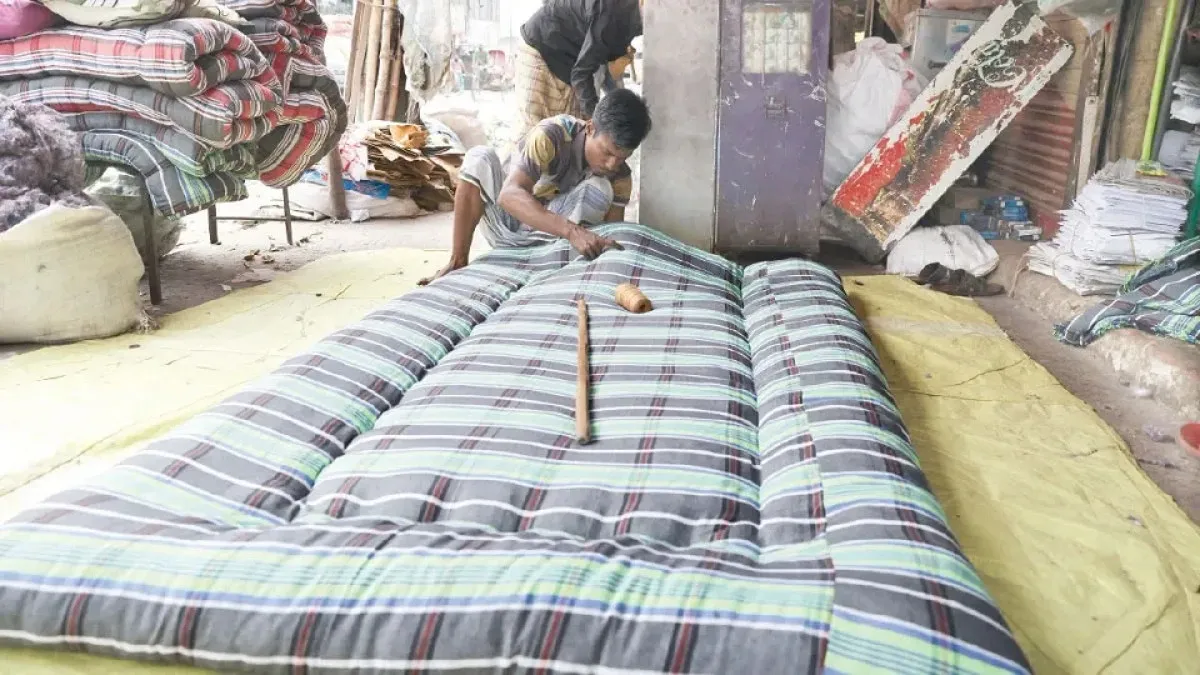
A man is sewing a mattress at a Karwan bazar shop in the city. Photo: Mahubar Rahman.
Amid a chilly breeze winter is setting in. With this arrival of winter, sales of winter clothing have also begun in the markets of the capital. However, a basic change in the economy is evident this winter. The demand for traditional quilts and mattresses, once the mainstay for warding off the cold, is gradually declining, and domestic and foreign comforters and mattresses are rapidly taking their place. This picture was observed while visiting markets in the capital's Nilkhet, Karwan Bazar, Baitul Mukarram, and Gulistan areas.
Traders say that due to rising raw material prices, a shortage of craftsmen, and various inconveniences in use, buyers are now more interested in comforters than quilts and mattresses. Even two to three years ago, there was demand for quilts and mattresses. But since last year, buyers have been purchasing more comforters.
The reason for this transformation lies in consumers' preference and demands. A ready-made comforter is quite light in weight, easy to wash, and convenient to fold and store. In terms of price, it is also nearly comparable to a quilt. High-quality comforters imported from China and various other countries are currently available in the market for between Tk 1,500 and Tk 3,000.
Speaking about the practical advantages, Md. Shakil, a customer who came to buy a comforter at Baitul Mukarram Market, told Agamir Somoy, "Now a comforter is better than a quilt. It is easy to carry and easy to clean. There's not much hassle."
Traders said that over the past few years, the price of raw materials has increased by 40 to 50 percent. At one time, shimul cotton was Tk 150-200 per kilogram, but now it is pretty exp[ensive now. To make a good-quality medium-sized quilt, a customer spends Tk 1,500 to Tk 2,500. For that same amount, one can buy a comforter of choice.
Md. Mostafa, director of New Bismillah Bedding Store at Nilkhet City Corporation Market, told Agamir Somoy, "Even a few years ago, good orders for quilts and mattresses would come at the start of winter. Now very few orders are placed. Throughout the day, total sales at the shop, including all other products, amount to three to four thousand taka. With no orders, the work of employees has also decreased. Many of them have moved to other professions."
Abrar Hamim, owner of Nur Bedding Store at Nilkhet City Corporation Market, acknowledged the declining demand for quilts due to raw material prices and the spread of modern products. In his words, "Currently, comforters sell more in the market, and comparatively, quilts now sell less. People's tastes have changed. Although I personally think quilts and mattresses are better."
In contrast to this crisis of quilts and mattresses, traders of ready-made winter clothing are expanding their business by relying on imported products. Traders do not have to face any risk of craftsmen or production in selling these comforters imported from abroad. Mohammad Aziz Mia, owner of Raufia Trade International at Baitul Mukarram Market, told Agamir Somoy, "We buy blankets and comforters from importers and sell them. Sales amount to Tk 10,000-15,000 a day. Since winter is just knocking at the door, I hope sales will increase further."
