
'Three Zero' in Theory, How Much in Reality?

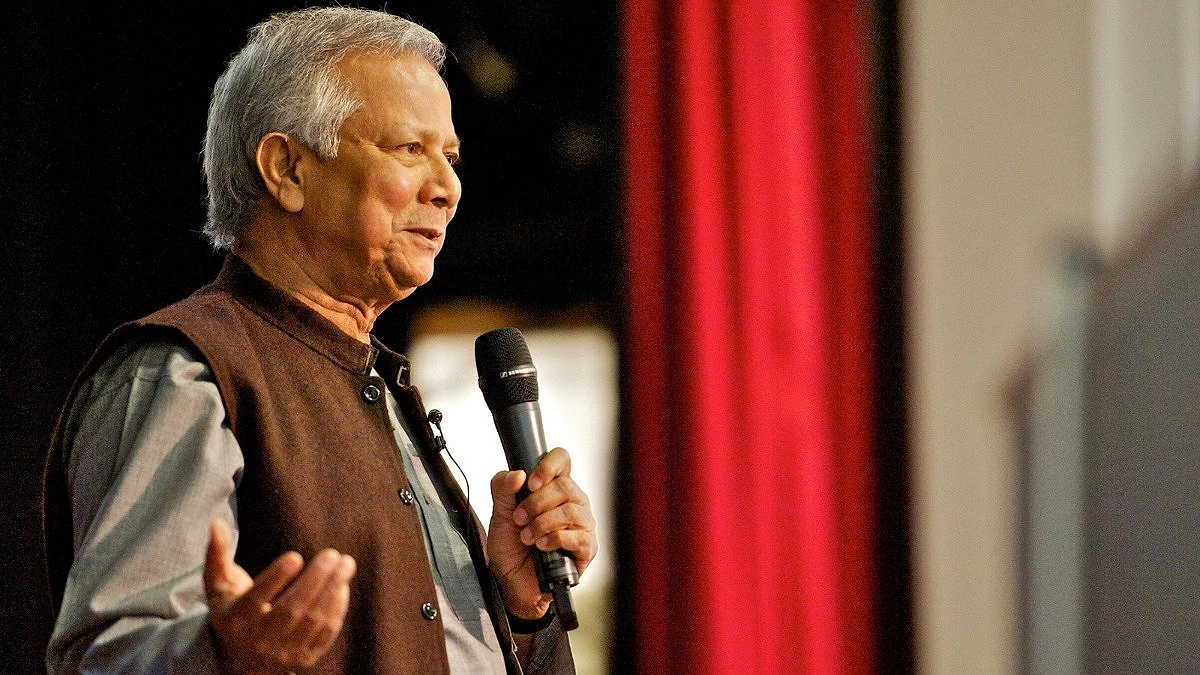
Collected Photo
It sounds good to hear—poverty and unemployment will go to museums, carbon emissions will drop to zero, and the environment will become pristine. This is the 'Three Zero' theory. And, it is this theory that has brought Dr. Muhammad Yunus, the former Chief Advisor to the interim government, to the global attention.
Following the July mass uprising, Dr. Yunus took over as the Chief Advisor to the interim government on August 8, 2024. Immediately after, his 'Three Zero' theory came into the spotlight. He has now finished a year and a half of governing the country, and an additional six months have passed since then. The big question now is: how much progress has this theory made in reality, or has there been any positive change at all in these three areas within the country?
Analysts say that in implementing the 'Three Zero' theory, Muhammad Yunus has scored a 'Zero'. This is because he has failed to apply even the minimum of this theory in Bangladesh during his tenure. Rather, in the past year and a half, poverty, unemployment, and carbon emissions have increased instead.
The 'Three Zero' theory is widely discussed across the world. Its implementation is crucial for a livable future world. Professor Yunus had the opportunity and capability, as Chief Advisor, to attempt to establish Bangladesh as a model for implementing the Three Zero theory. However, the reality is that the very proponent of this theory has walked the opposite path. Many also allege that he was too preoccupied with holding state power to take any initiative to implement the theory.
The Three Zero Theory: In November 2015, during the inaugural speech of the 7th Global Social Business Summit in Berlin, Germany, Dr. Yunus presented his dream. For over a decade, he has been envisioning a world achieving three zero goals: Zero poverty, Zero unemployment, and Zero net carbon emissions. According to Yunus, fulfilling these three goals would also achieve the UN-declared Sustainable Development Goals (SDGs).
In addition to publishing a book on 'A World of Three Zeros' in 2017, he has given lectures and statements on this topic at various times. After becoming the Chief Advisor to the interim government in August 2024, Dr. Yunus and his government officials became quite vocal about the Three-Zero theory. But in the past year and a half, far from any progress, he has not even taken any initiative in this regard.
Dr. Muhammad Yunus has been internationally promoting the 'Three Zero' concept. The Executive Director of Transparency International Bangladesh (TIB), Iftekharuzzaman, demanded that a white paper be published to present the accounts of the then government's activities and achievements in these three areas to the public.
He said, "As a member state of the UN, Bangladesh has failed to observe the International Clean Energy Day. The main purpose of this day is to raise awareness among people and encourage those in state power to take effective measures to reduce carbon emissions. In this regard, the interim government has failed to play an effective role. I am personally embarrassed that the very government led by the proponent of the Three Zero theory has failed to implement these goals."
The Executive Director of TIB also alleged that even though there was an opportunity to lay the groundwork for zero carbon emissions, the interim government failed to seize that opportunity. He said, "There is no satisfactory answer to the question of whether the government took any initiative that the next elected government could have built upon. The interim government must answer to the people of this country as to why this opportunity was lost."
Unemployment has increased: During the interim government's tenure, hundreds of factories were shut down in the country. The job market in the private sector contracted. At the same time, recruitment in public sector institutions was relatively low. As a result, far from unemployment decreasing towards zero, hundreds of thousands of people have actually become jobless. Data from the Bangladesh Bureau of Statistics (BBS) shows that the number of unemployed persons was 2.55 million in 2023. The following year, in 2024, it rose to 2.7 million. In reality, however, the number is believed to be even higher.
According to the BBS definition, among the working-age population, those who are engaged in at least one hour of wage or family work per week are counted as employed. But analysts argue that, in the Bangladeshi context, one hour of work is not reasonable for sustaining a livelihood. Thus, the same survey indicates that nearly 10 million people are not getting jobs matching their qualifications and potential. In other words, these people are effectively unemployed. Various studies suggest that currently, around 26 million people in the country are at high risk of poverty. In the last two years, 2 million people have lost their jobs.
Poverty rates have also increased: The latest World Bank report states that the poverty rate in the country was 20.5% in fiscal year 2023-24. In fiscal year 2024-25, it rose to 21.2%. The World Bank has also warned that the poverty rate could increase further. Meanwhile, data from the private research organization Power and Participation Research Centre (PPRC) shows that the poverty rate has now reached 27.93%. During a question-answer session in the National Parliament on April 1, Prime Minister Tarique Rahman said that poverty increased during the 18 months of the interim government, as reflected in various statistics.
Economist and researcher Dr. Jahangir Alam, speaking to Agamir Somoy, said: "Professor Yunus has walked completely opposite to his own theory during his time. Because, during the interim government, poverty increased from 18% to 23%. Many people lost their jobs. Investment stalled. Unemployment rose due to lack of new job creation. Borrowing over Tk 1 lakh crore has increased indebtedness. On the other hand, the environment was not good at all."
"Eighteen months is a long time. There was ample opportunity during this period to start working on implementing the Three Zero theory. Because many of those in Dr. Yunus's government were capable and skilled. But they could not do anything. Because they were busy trying to hold on to power as long as they could," he added.
Zero Carbon Emissions: One of the key components of the 'Three Zero' theory is zero carbon emissions. For that, increasing the use of renewable energy is essential. However, during the interim government's tenure, there were virtually no government-led renewable energy activities in the country. On the contrary, Letters of Intent (LOIs) for 37 private-sector solar power plants, totalling 2,660 MW of capacity, were cancelled under the Special Powers Act. Alongside the cancellation of LOIs, initiatives were also taken to re-determine tariffs for some solar power plants that had signed purchase agreements but had not completed construction. As a result, construction of many power plants was halted midway. Sector insiders say that if these obstacles had not been present, at least 2,000 to 2,500 MW of solar power would have been added to the national grid by now.
When asked about this, Adviser Fawzul Kabir Khan, who was in charge of three ministries in the interim government, told Agamir Somoy: "The work was not done mainly for two reasons. First, the addiction to 'mega projects.' Most businessmen and politicians do not want small projects. Second, the reluctance of engineers from various institutions under the power division."
"However, it will happen now. Because of the energy crisis. Gas supply is declining. Import dependence is increasing. There is no alternative but renewable energy. Besides, these tasks also take time," added this key adviser of the Yunus government.
Experts say that fossil fuel production is decreasing worldwide. Its prices are high, and it is also extremely harmful to the environment. On the other hand, renewable energy is environmentally friendly, and its prices are decreasing day by day. Considering these factors, various countries are turning to renewable energy, especially solar power. But despite the potential in Bangladesh, this sector has been neglected for a long time.
Shafiqul Alam, Energy Analyst at the international organization Institute for Energy Economics and Financial Analysis (IEEFA), told Agamr Somoy: Instead of canceling all previously approved LOIs, the interim government could have 'reviewed' the projects that had made good progress. There was scope to renegotiate prices through dialogue. Even then, some solar power could have been generated by now. Furthermore, if they had not rushed so hastily with rooftop solar installation, there would have been a chance of achieving a good result by now.
Regarding rooftop solar power, his suggestion was: before implementing the government's program, there was a need to run some pilot projects. That would have made it easier to identify problems and take subsequent steps.
Expressing some frustration, Md. Mostafa Al Mahmud, President of the Bangladesh Sustainable and Renewable Energy Association (BSREA), said: It is not possible to expand renewable energy by forcing it or rushing through it.
He alleged that the interim government actually wanted solar power activities to be destroyed. They did not take any advice from experts on this matter. They took all kinds of steps to discourage investment. As a result, officially, no electricity was generated from solar power for nearly two years.
Raising the allegation that the 'Three-Zero theory' is a kind of "stunt" by Dr. Yunus, Mahmud said that another major reason behind the lack of development in the renewable energy sector is the ignorance and apathy of bureaucrats.
He also raised questions about how the current government, with these same bureaucrats, will implement its target of generating 5,000 MW of electricity in the next five years. Environmentalists also have strong objections to the interim government's draft Energy and Power Sector Master Plan (EPSMP 2025). They say this plan is largely fossil-fuel dependent. It does not contain any clear guidelines that would allow Bangladesh to effectively transition to clean energy.
