
IMF calls for reforms as Bangladesh seeks new loan

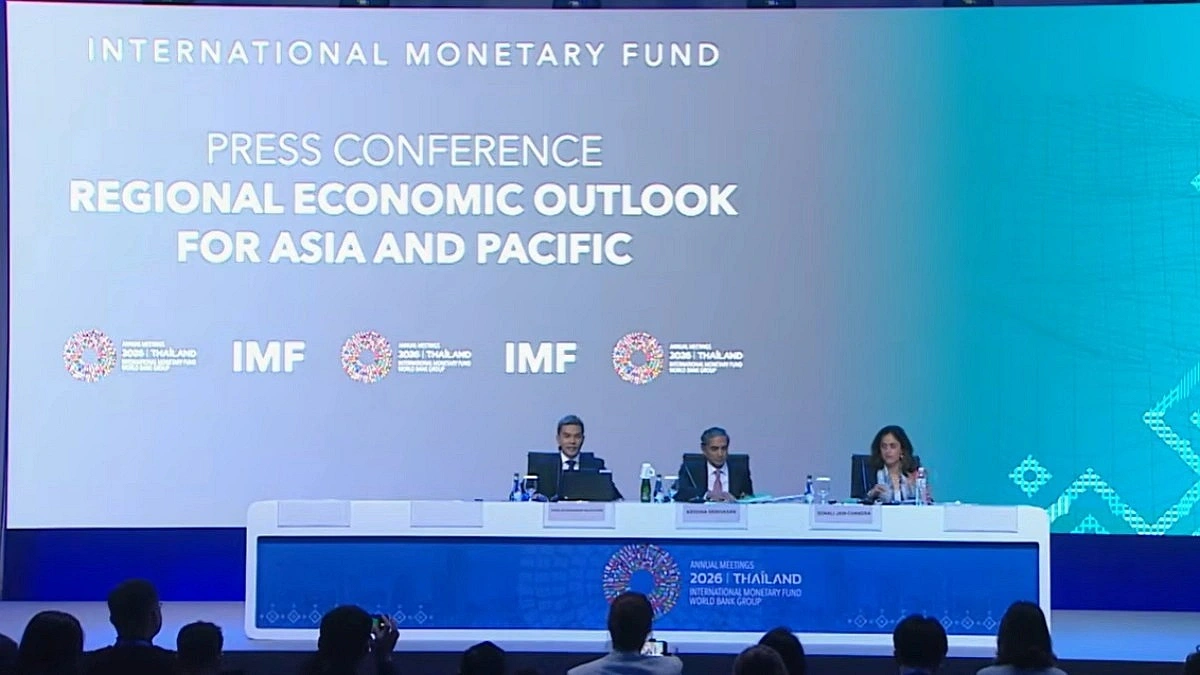
Photo: Agamir Somoy
International Monetary Fund (IMF) urged Bangladesh to tighten monetary policy, reform revenue collection, and implement financial sector reforms to secure further loans.
The organization considers that at present, Bangladesh is dealing with inflationary pressure, low revenue collection, and a weak financial sector. In this regard, coordinated revenue and financial sector reforms are necessary.
On Thursday morning local time, the IMF held a briefing on the economic situation of the Asia and Pacific zone at the Queen Sirikit National Convention Center in Bangkok, Thailand. Responding to a question concerning Bangladesh at the event, Krishna Srinivasan, director of IMF’s Asia and Pacific Department, made these remarks.
In January 2023, during the tenure of the ousted Awami League, the IMF approved a $4.7 billion loan proposal for Bangladesh. Later, the interim government increased that loan amount to $5.5 billion.
In May this year, the BNP decided to withdraw from that program. So far, Bangladesh has received a total of $3.8 billion across five installments. Meanwhile, on 3 June, IMF Bangladesh Mission Chief Ivo Krznar reported that the government has applied for a new package.
Srinivasan said according to the economic outlook for the Asia and Pacific region, the region’s economy is primarily driven by three forces.
First is the high energy dependency on imported oil and gas from the Middle East. Second is the rapid development and increased investment in the AI technology sector. Third is the trade crisis caused by tariff increases.
He added, “On the contrary, countries that are not directly benefiting from the technological revolution are seeing relatively slower growth. Overall, even amidst global economic uncertainty and geopolitical tensions, this divergent trend among Asian countries is quite clear. Based on economic policy formulation and structural reforms, this region is striving to maintain its strong position in the global economy in the coming days.”
During the press conference, a question was asked noting that Bangladesh has been facing severe inflation for the past three and a half years. In this context, it was asked whether it is possible to handle this inflationary pressure solely by further tightening monetary policy, or if more specific policy support is required, alongside how the IMF assesses Bangladesh’s current overall economic situation.
In response, Srinivasan noted, “I think our overall assessment is that facing various problems related to revenue, financial, and inflation continues. The impact of inflation reached 8 percent in September. To overcome this impact, maintaining a tight financial condition in Bangladesh is extremely important.
“In addition, beyond a tight monetary policy, several reforms are required. In particular, a credible strategy is needed to strengthen the financial sector, because the financial sector remains extremely weak at this moment. The revenue-to-GDP ratio has declined over time and is one of the lowest in the world (7 percent).
“Therefore, a coordinated effort in the revenue sector is necessary, because revenue is genuinely needed for critical development spending for the economy and to strengthen the financial sector. And that is why we are continuing discussions with the government of Bangladesh.”
He said, “Let me also say something regarding Bangladesh’s fund (loan) matters. As you know, after deciding not to continue disbursement operations under the previous loan program, the government requested the IMF for a new loan program in May. Against that backdrop, a team of our officials visited Bangladesh in July, where these reform issues were discussed.
“These closely align with the recommendations published in our article earlier this year. Since then, we have been engaged in regular discussions. We are in close contact with the authorities and look forward to assisting Bangladesh in implementing these much-needed reforms.”
