


TCB to procure essential goods worth Tk 8,000 crore

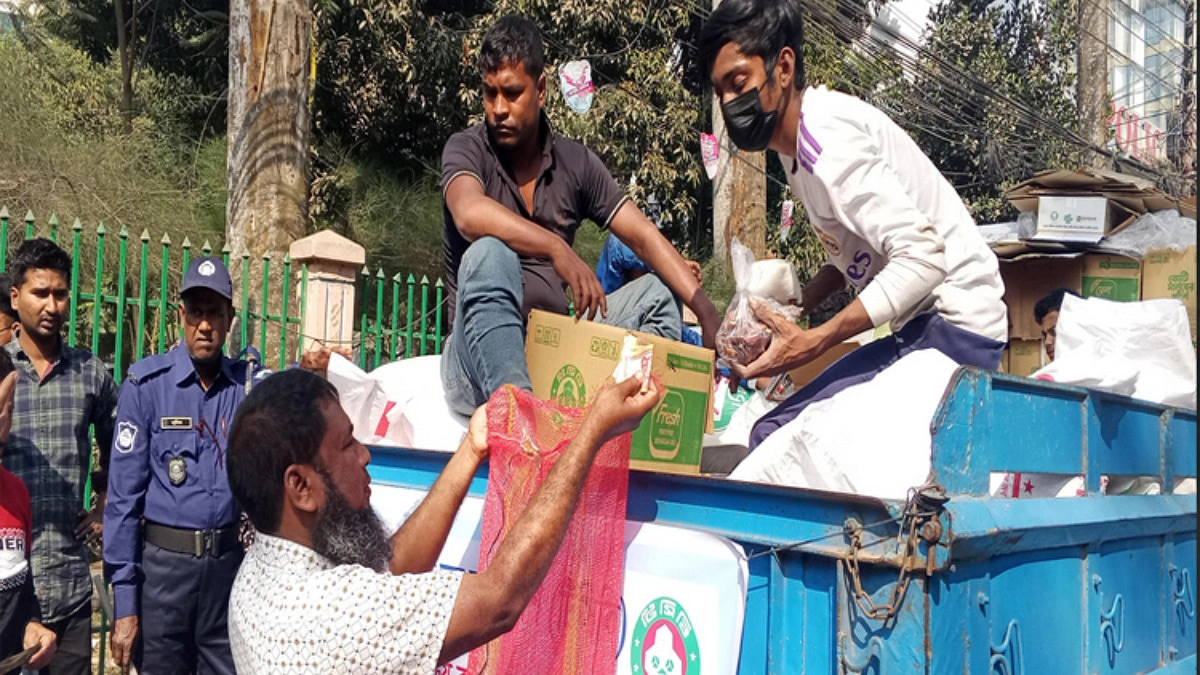
Representational image. BSS.
The Trading Corporation of Bangladesh (TCB), a state-run marketing agency, has planned to purchase goods worth approximately Tk 8,000 crore in the current fiscal year 2026-27 to keep the market for essential commodities stable. In addition to edible oil, red lentils (masur dal), and sugar, the agency will also buy chickpeas and dates.
Initially, TCB plans to source nearly half of these commodities from the domestic market and the remaining half from the international market. However, if international sourcing proves to be more competitive and reliable, the volume of imports may be increased.
TCB Chairman Brigadier General Mohammad Faisal Azad recently told about this in an interview with the state-run news agency BSS.
He said that if procurement from international markets is more competitive and reliable, the quantity sourced from abroad could be increased.
According to Ministry of Commerce sources, TCB has drawn up a procurement plan for the current fiscal year to ensure adequate supply of essential items. Under this plan, the agency will procure 220 million litres of edible oil, 220,000 metric tonnes of red lentils, 110,000 metric tonnes of sugar, 14,000 metric tonnes of chickpeas, and 4,400 metric tonnes of dates from local and international sources.
To ensure sufficient stockpiles and uninterrupted supply to consumers, TCB is regularly monitoring monthly demand, allocations, warehouse inventories, and supplies in the pipeline.
The agency has also taken steps to increase warehouse capacity to strengthen inventory management. Currently, TCB has 40 warehouses—9 owned and 31 rented. The total storage capacity is approximately 48,370 metric tonnes, of which owned warehouses account for 13,371 metric tonnes and rented warehouses for 34,999 metric tonnes.
TCB Chairman Faisal Azad said the current stock position for ongoing operations is satisfactory. He added that procurement and inventory management are being strengthened to ensure availability of essential commodities and keep the market stable, especially for consumers who receive goods with government assistance.
TCB is also working to reduce its dependence on government subsidies. The agency plans to buy goods at competitive prices and sell some items at a small profit margin to lower subsidy reliance.
Faisal Azad said the government is working to build TCB as an institution capable of responding more quickly to market demand. At the same time, the agency's role in controlling essential commodity prices and keeping the market stable is being expanded.
He said TCB supplies about 250,000 metric tonnes of edible oil annually, which accounts for approximately 15 percent of the country's total market. However, its effective market share at the household level is even higher.
In the case of lentils and sugar as well, TCB supplies a significant portion of household demand, which helps prevent abnormal price hikes of these commodities, he said.
TCB is also expanding its product list. Alongside edible oil, lentils, and sugar, it has started selling soap, detergent, and salt on a trial basis. Plans are in place to add flour, various spices, chili, and turmeric in the future.
Faisal Azad said, "These products will be supplied at prices lower than the regular market rate, but no government subsidy will be provided for them."
Currently, about 8 million smart cards have been approved by TCB. Of these, approximately 7.5 million cards have been distributed. The remaining beneficiaries are expected to receive their smart cards before the upcoming holy Eid-ul-Fitr.
Describing the smart card system as a dynamic process, he said that due to death, relocation, or other reasons, names may be added, removed, or changed in the beneficiary list.
TCB is also moving toward fully automating its supply system. Currently, dealers scan smart cards using mobile phones. There are plans to launch Point of Sale (POS) machines at sales centers soon, so that consumers receive transaction receipts.
Additionally, a new mobile-based system is being developed for smartphone users. Through this, beneficiaries will be able to digitally view their smart card information and make payments via mobile financial services or cash.
Faisal Azad said TCB has developed a system to which approximately 21 different programmes can be linked. In the future, other government agencies will also be able to integrate their beneficiary-oriented programmes with this platform.
He also spoke about initiatives to increase its own warehouse capacity. TCB wants to create an additional storage capacity of approximately 10,000 metric tonnes to reduce reliance on rented warehouses.
He said, "To increase procurement and expand the scope of market intervention, it is important to strengthen logistical capacity."
Regarding future strategy, the TCB chairman said the agency's goal is to deliver essential commodities to consumers at affordable prices while maintaining quality, and to expand the product list based directly on consumer demand.
He said, "We conduct surveys before launching any new product. If consumers tell us which products they need, we try to supply them. Our aim is to make people's lives easier."
He also clarified that purchasing newly added products is not mandatory. At the same time, he said, "We will not compromise on product quality."

