
World Bank urges reforms in three sectors to revive economy

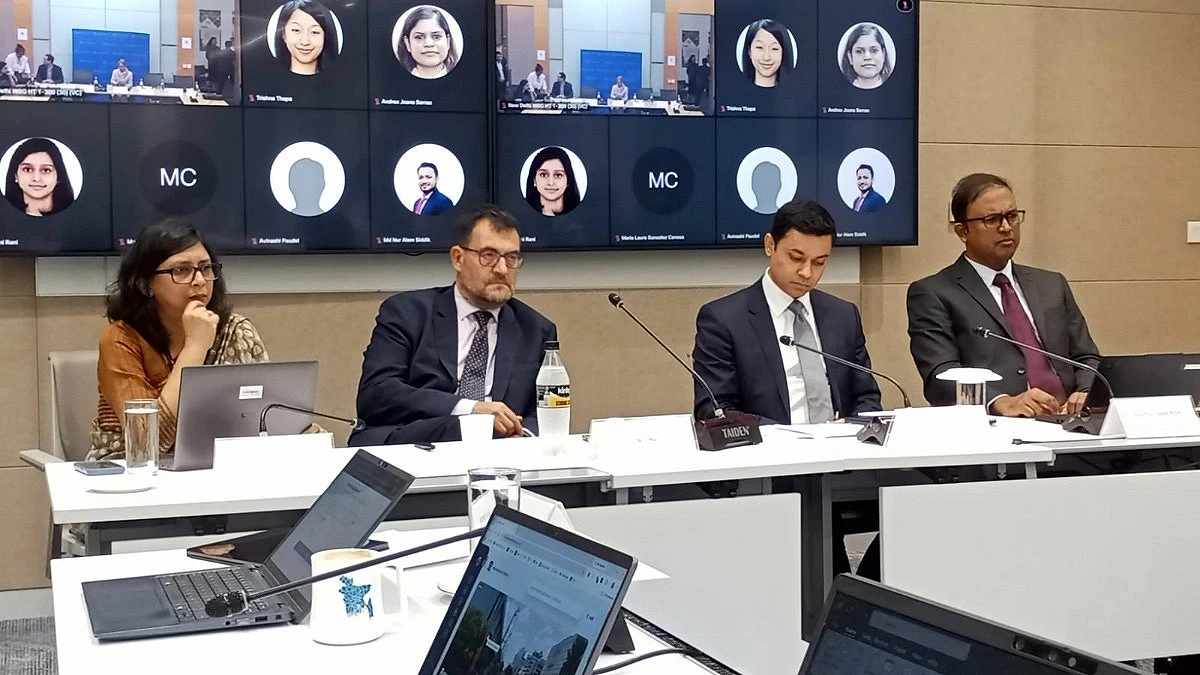
Photo: Agamir Somoy
The World Bank has emphasized reforms in three sectors to revive Bangladesh's economy. The sectors are banking, domestic revenue collection and energy. The organization has also forecast that GDP growth could be 3.4 percent in the current 2026 to 2027 fiscal year.
The information was presented in the Bangladesh Development Update report released on Tuesday, October 6. The report was unveiled at a press conference held at the World Bank office in Agargaon in the capital.
Jean Pem, the organization's divisional director, spoke at the press conference. World Bank Senior Economists Nazmus Sakib Khan and Dhruva Sharma presented the report.
Jean Pem said Bangladesh needs urgent financial, energy and revenue reforms to restore growth and create jobs. Economic growth in Bangladesh has slowed since 2023 due to rising energy sector challenges, weaknesses in the financial sector and weak domestic revenue collection. Long standing structural constraints and global uncertainty have also contributed to the slowdown.
The latest Bangladesh Development Update also forecast 3.4 percent growth for the 2026 and 2027 fiscal years.
The report said investment activity in Bangladesh has slowed, exports have lost momentum and inflation remains high. As a result, household purchasing power has declined while business costs have increased. Weaknesses in the financial sector continue to affect credit intermediation and investor confidence. Limited revenue resources have also constrained public investment. Despite these challenges, the external sector has remained stable with the support of strong remittance inflows and rising foreign exchange reserves. GDP growth could increase slightly to 3.9 percent in fiscal year 2028 if energy supplies gradually improve and the government's reform program gains momentum.
The report further said rapid and bold reforms in the banking sector, domestic revenue collection and energy sector are needed to avoid an economic downturn and return to a path of inclusive growth driven by private investment. Urgent measures are also needed to accelerate reforms aimed at protecting the poor and creating more and better jobs.
According to the report, poverty and inequality increased in fiscal year 2025 to 2026. More than 2.1 million additional people are living below the poverty line compared with the previous year. Job creation has stalled and women have lost jobs. Weaknesses in the banking sector have intensified. The non performing loan ratio increased from 30.6 percent in December 2025 to 33.2 percent in June 2026. Revenue collection at 8.3 percent of GDP remains among the lowest in the world. This is limiting government spending where it is needed. The revenue deficit increased from 3.5 percent of GDP in fiscal year 2025 to 3.9 percent in fiscal year 2026.
It also said social protection, energy and agricultural subsidies help protect poor and vulnerable people. However, nearly half of the poorest households remain outside social protection programs. Better targeting could significantly improve the poverty prevention impact of these programs. A more responsive social protection system can ensure that limited public resources reach poor and vulnerable households more effectively. The implementation and expansion of the government's Dynamic Social Registry, an integrated system designed to enable evidence based targeting and continuous enrollment of beneficiaries, will be crucial to addressing gaps in targeting and coverage.
The analysis found that combining multiple food subsidies and introducing Family Cards alongside better targeting of existing cash transfer programs could lift an additional 2.8 million people out of poverty.
The briefing said the Bangladesh Development Update is a complementary part of the World Bank Group's regional report South Asia Economic Update, which was also released today. It reviews economic prospects and policy priorities across South Asia.
As the region remains resilient to global shocks due to strong domestic demand, South Asia's growth is expected to rise to 6.9 percent this year. The report forecasts that growth will decline to 6.7 percent in 2027 as adverse conditions increase.
