
‘Miracle Car’ Toyota’s 62-year hand of friendship

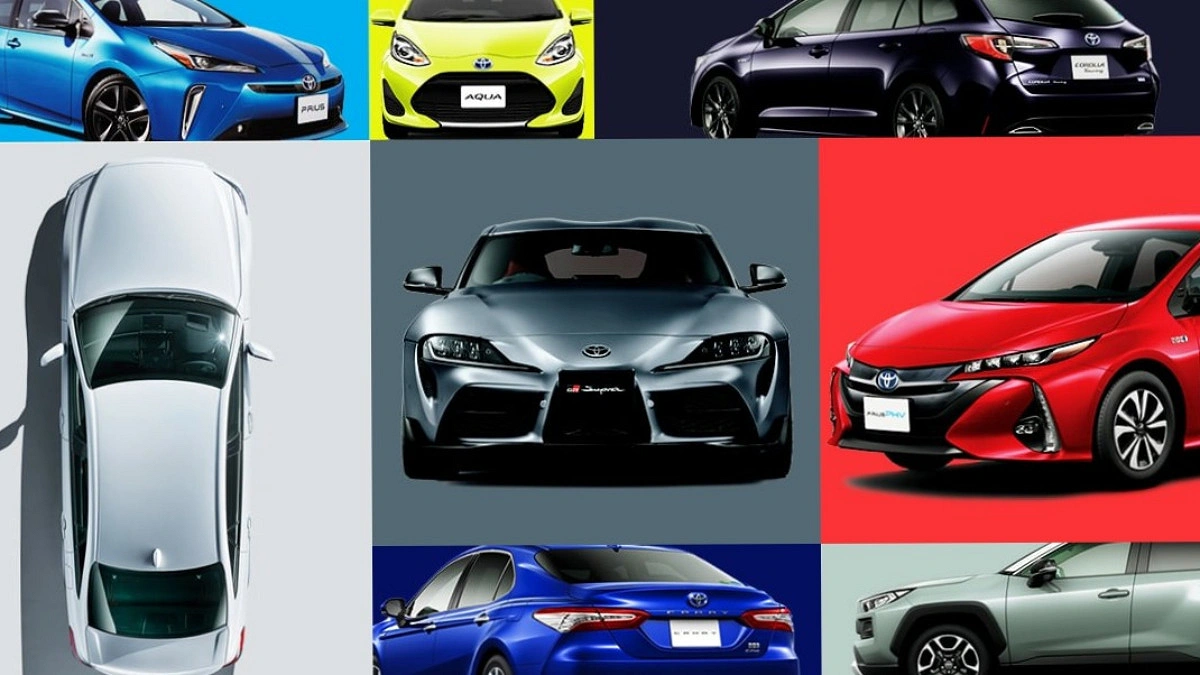
Collected Photo
The geographical distance between Japan and Bangladesh is nearly five thousand kilometers. However, from the busy thoroughfares of Dhaka to the highways connecting Teknaf to Tetulia, the two countries are bound by an unbreakable thread everywhere. And, the primary architect of that thread is the Japanese automobile giant, ‘Toyota’.
Bangladesh is like a living laboratory in the realm of Japanese four-wheelers. Although Bangladesh ranks 15th globally in terms of import units, it holds the 3rd highest position in the world for the use of 'Toyota' as a single brand on a country's internal roadways. As a result, at least 8 out of every 10 personal vehicles on the streets are Japanese-made, with the majority being various flagship models of Toyota.
At such a momentous time in this deep commercial relationship, a new political dynamic is emerging on the diplomatic stage. Centered around Prime Minister Tarique Rahman’s prospective visit to Tokyo on October 26, a new chapter is set to begin in the bilateral trade, strategic partnership, and economic diplomacy. Through this, 'Miracle Car' Toyota's 62-year hand of friendship is reaching forward.
According to sources concerned, among the key agenda items will be the future roadmap of the country’s trillion-taka automobile market, the tariff structure, and the strategic position of Japanese reconditioned cars in the hybrid-EV era.
As Japanese policymakers structure their ‘Vision 2030’ global automobile master plan, they view Bangladesh as a reliable ‘strategic node’ in South Asia for expanding Japanese auto parts, re-configuration, and the future electric and hybrid ecosystem. In the new global export and sales master plan published by Japan’s automobile sector targeting the year 2030, Bangladesh has been identified as one of the most promising commercial hubs in South Asia. Keeping that in mind, the report indicates that the market for Japanese used cars in the country will surpass $2.31 billion (nearly Tk28,000 crore) by 2031.
The report also mentions that in 2026, the country's Japanese car market will grow to reach $1.65 billion. From 2026 to 2031, the car market will expand at a compound annual growth rate (CAGR) of 7 percent.
Capitalizing on that potential, a new golden era is about to unfold in Bangladesh's automobile industry. Japanese automobile manufacturer ‘Toyota’ has decided to establish its own car assembly and manufacturing plant in Bangladesh. Recently, a high-level delegation led by Ichiro Kashitani, Vice Chairman of Toyota Group’s trading arm ‘Toyota Tsusho Corporation’, and Shigeru Harada, CEO of the Mobility Division, met with the Prime Minister in Dhaka to present the final outline of this investment plan. Under the initiative of Toyota Bangladesh, construction work for a Hybrid Electric Vehicle (HEV) manufacturing industry (plant) is scheduled to begin in 2027 in an economic zone of Bangladesh, guided by the development philosophy of "With Bangladesh, For Bangladesh." Emphasizing eco-friendly technology, this factory is expected to enter full-scale production by 2029.
Once local production of Toyota begins, significant import tariffs will be saved, bringing the prices of brand-new hybrid cars within the reach of ordinary consumers. Additionally, the project will generate vast employment opportunities for local engineers and technicians, along with training in advanced Japanese technology. Furthermore, the establishment of a massive backward linkage industry for spare parts will add new momentum to the country's economy.
In this context, Rabiul Alam, Secretary General of the Japan-Bangladesh Chamber of Commerce and Industry (JBCCI), told Agamir Somoy that policy stability and the simplification of the tariff structure are crucial to boosting investment in the Japanese automobile sector. Currently, due to frequent policy changes and high tariff rates, top automobile giants like Toyota are facing uncertainty regarding setting up large local assembly plants. If long-term duty benefits are provided for importing new and eco-friendly technologies (such as hybrid and electric vehicles) from Japan, and if port and logistics bottlenecks are reduced, both importers and local consumers will benefit. Ensuring an investment-friendly tariff policy in step with competing nations will further accelerate investment and the expansion of the assembly industry in Bangladesh's Japanese automobile sector.
According to global import ranking data, Japanese brands (Toyota, Honda, Nissan, Mitsubishi) single-handedly account for 75 to 80 percent of registered personal four-wheeler vehicles in Bangladesh. Bangladesh imports between 35,000 and 40,000 units of reconditioned cars annually from Japan.
It is learned that the commercial relationship of Japanese ‘Toyota’ in Bangladesh's four-wheeler market began in the 1960s. The first import of Toyota cars from Japan to Bangladesh (then East Pakistan) began on April 20, 1964. Renowned businessman Jahurul Islam signed an agreement with Toyota Motor Corporation through his enterprise. At that time, large American and European cars dominated the domestic market. Although customers were initially hesitant due to their smaller size, the ‘Toyota Corona’ captured 80 percent of the market in just 5 years due to its low fuel consumption and durability, earning a reputation as the ‘Miracle Car’. In 1981, ‘Aftab Automobiles’ began assembling Toyota and Hino vehicles in the country. Following the path of this historic initiative, Toyota stands today as the most popular brand in the country.
Bangladesh ranks 3rd in the world in using 'Toyota' as a single brand on a country's internal roadways. Mongolia holds the first position (85–90 percent), New Zealand ranks second (80–85 percent), East Africa holds the fourth position (70–75 percent), and Africa ranks fifth (68–72 percent), where used cars are imported directly from Japan.
When asked, Abdul Haq, President of the Bangladesh Reconditioned Vehicles Importers and Dealers Association (BARVIDA), told Agamir Somoy, "The Prime Minister's visit will have a positive impact on the reconditioned car market." He further added, "While it is good that a Toyota factory will be established in the country, the calculation of how Bangladesh will benefit from it needs to be brought forward."
