
Bangladesh's new plan for donors, less debt, more investment

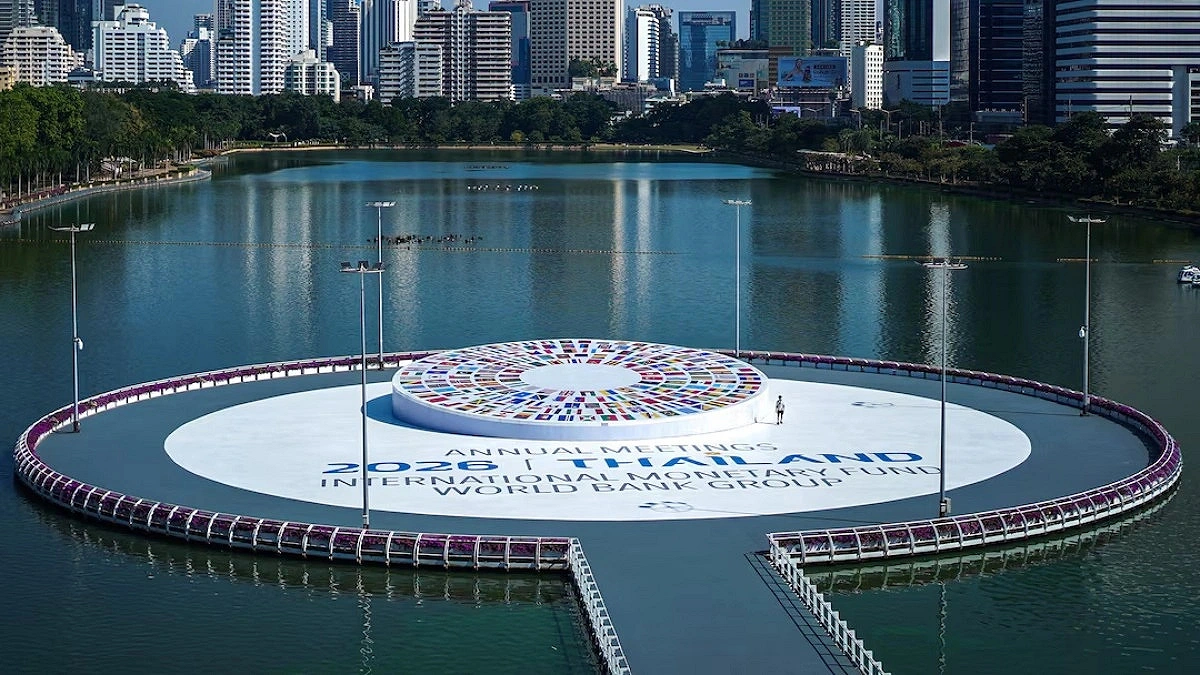
Photo: Agamir Somoy
To recover from the pressure of a fragile economy and the energy crisis, Bangladesh has presented its own strategy and reform outline at the annual meeting of the World Bank and IMF.
Bangladesh said there that the government will move away from global debt dependence and move directly toward investment. This action plan has been taken to increase revenue without raising tax rates, restore discipline in the banking sector, and protect the living standards of ordinary people through social protection.
On Wednesday, at the World Bank-IMF conference at the Queen Sirikit National Convention Center in Bangkok, these reforms were highlighted in a meeting with multilateral donor organizations, including the US Treasury.
After the meeting, Finance Minister Amir Khasru Mahmud Chowdhury said that reliance on traditional sovereign loans is being reduced, and emphasis is being placed on equity investment and joint direct investment with the support of the Chinese Exim Bank. In addition, in the vast context of importing aircraft, fuel oil, and essential goods from the United States, a strong demand has been made for US grants and special cooperation to protect the balance of payments and overall stability, which the relevant parties have received positively.
Finance Advisor Rashed Al Mahmud Titumir, coming out of the same meeting, said that because the fragile economy left behind by the previous government is being tackled with transparency and accountability without hiding anything, the World Bank, IMF, and US Treasury Department have expressed confidence in the government's reform strategy. He also said that negotiations with various donor organizations, including the World Bank, ADB, and Islamic Development Bank, are in the final stage, and it is expected that visible progress in the necessary financing will be achieved within the next two to three months.
At the meeting, Bangladesh said that effective executive measures have been taken to increase the tax-GDP ratio by expanding the tax base without raising tax rates, preventing tax evasion, and separating the responsibilities of revenue policy formulation and revenue collection.
At the same time, the process of restoring long-term confidence in the banking sector is ongoing through time-bound and specific measures to reduce defaulted loans, restructure the financial base of weak banks, and protect the interests of depositors.
In addition, special arrangements have been taken to protect low-income and marginalized people from the pressure of global inflation through public welfare-oriented social protection programs such as the Family Card and Farmers Card.
A special financing package of about Tk 60,000 crore has been finalized to restart closed factories and increase the flow of loans on easy terms to the private sector.
