
Seven Risks Identified in the Runways of Three Airports
- The runways of Jessore, Saidpur, and Shah Makhdum airports are in such a condition that accidents could occur at any time.
- Although the project deadline has expired, around 30% of the work is still incomplete.

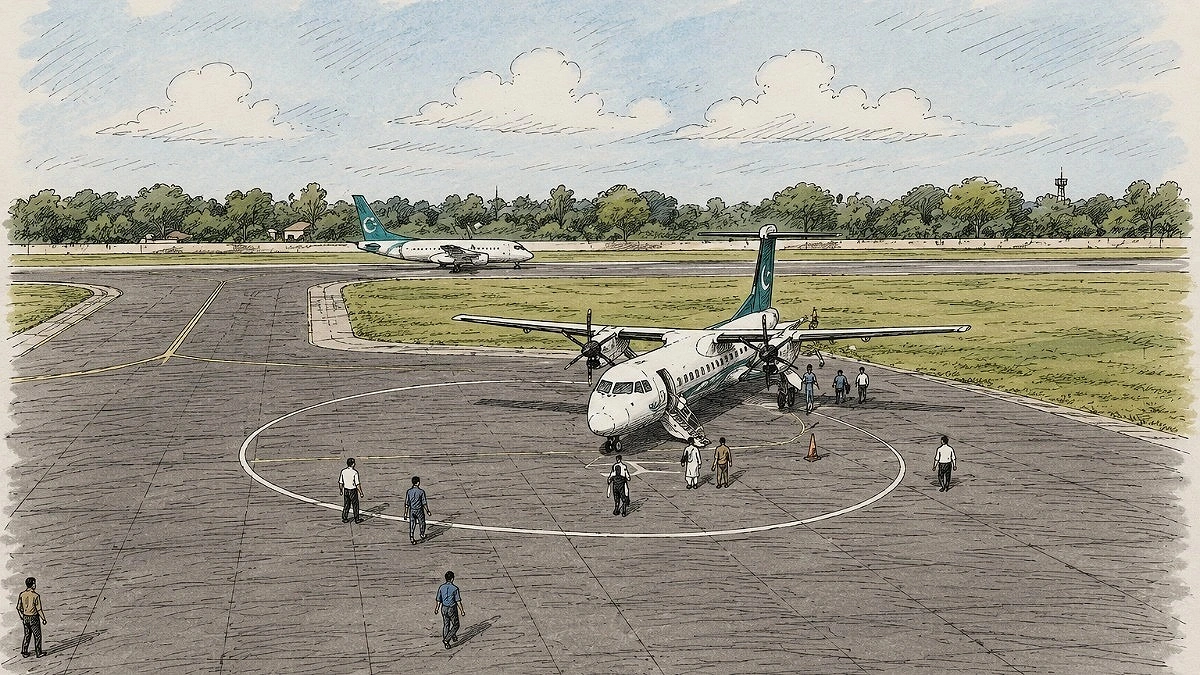
Collected Photo
Seven types of risks have been identified in the runways of three airports in Bangladesh. These include: insufficient runway strip width and runway end safety area (RESA), issues caused by partial overlay, water accumulation, absence of runway edge and threshold lighting, uncertainty regarding long-term durability, surface unevenness, and improper compaction.
These issues were identified during the evaluation of the project titled “Concrete Overlay of Runway Surfaces at Jessore, Saidpur, and Shah Makhdum Airports.” The project is also progressing slowly.
Former Secretary of the IMED (Implementation Monitoring and Evaluation Division), Abul Kashem Md. Mohiuddin, said that such risks should not exist at sensitive infrastructures like airports, as they can lead to accidents at any time.
Speaking to Agamir Somoy, he said, “These risks should have been identified and resolved at the very beginning by the Ministry of Civil Aviation and Tourism. But IMED only identified the problems at the end of the project period. The question is when will they be resolved?”
He added that if any negligence is found through investigation, those responsible must be held accountable. He also warned that due to slow implementation, there is a risk of increased costs and extended deadlines. Those responsible for timely monitoring failed in their duties, which he termed a serious lapse.
According to the draft of IMED’s intensive monitoring report, the total estimated cost of the runway improvement project for the three airports is Tk 5,667.6 million (566.76 crore). As of April, 56.66% of the budget has been spent, which is slightly more than half. The original project duration was from January 2021 to June 2023 (2.5 years). It was later extended to June 2026 without increasing the budget. That deadline is now approaching, but physical progress has reached only 73.09%. The project is being implemented by the Civil Aviation Authority of Bangladesh (CAAB).
The second draft report states that deficiencies in runway strip width and RESA have been identified as major safety risks. International standards require extending both runway ends up to 240 meters and increasing the strip width to 150 meters.
In addition, at Jessore Airport, partial overlay has created operational safety risks. A full and uniform overlay across the runway is recommended.
Waterlogging has been observed in parts of all three airports’ runways, which can damage pavement in the long term. Proper drainage systems are needed, especially during heavy rainfall.
Runway edge and threshold lighting installation work is still incomplete. Moreover, approach lighting systems have not yet been started. This could pose serious risks for safe landing during night operations and adverse weather conditions. Immediate completion of these lighting systems has been recommended.
The report also highlights risks related to the long-term durability of the runways. To ensure durability, effective drainage, proper slope design, and improved water runoff capacity are necessary. It also recommends avoiding excessive re-overlay and instead adopting a structured rehabilitation plan.
Surface unevenness of the runways is also a safety concern. The report suggests prompt identification and targeted repairs, re-leveling, and strengthened quality control to ensure safe and stable aircraft operations.
Compaction issues have also been found in some areas, particularly uneven density in joints and newly laid concrete sections. This may also compromise aviation safety, requiring special attention.
An IMED official told Agamir Somoy that the project is unlikely to be completed by June, making an extension unavoidable. However, it is still uncertain whether the cost will increase. He noted that delays have been caused by delayed fund disbursement, administrative complications, and weak supervision.
