
People angry over gas and power crisis, workers face insecurity

Graphics: Agamir Somoy
On one hand, there is a gas crisis, and on the other, load shedding. Public anger is growing as people struggle to get gas and electricity. With power remaining unavailable for hours, incidents of attacks on electricity distribution companies are increasing. At the same time, employees of gas distribution companies are also facing severe security concerns.
The Rural Electrification Board (REB) is the country’s largest electricity distribution agency. The organization distributes electricity across the country through 80 Palli Bidyut Samities. In rural areas, load shedding is around 40 percent, leaving many areas without electricity for 12 to 15 hours. Against this backdrop, the Bangladesh Palli Bidyut Association sent a letter to the Inspector General of Police on Wednesday requesting enhanced security at Palli Bidyut Samity offices and facilities across the country.
The letter said electricity generation has been disrupted due to the fuel crisis and intense heat. As a result, electricity supply has fallen 40 to 50 percent below demand in recent days, increasing load shedding. With an average of 8 to 12 hours of load shedding every day, angry people have attacked and vandalized Palli Bidyut substations in various areas. As a result, employees there are facing severe security concerns. The letter requested that their safety be ensured.
State Minister for Power, Energy and Mineral Resources Anindya Islam Amit said on Wednesday that the crisis had suddenly resurfaced because fuel could not be supplied from the floating tower Summit due to rough conditions in the Bay of Bengal. He said the government was making its utmost efforts to resolve the problem.
Saying that no one has control over natural disasters, he said the gas and electricity situation would improve somewhat by Wednesday afternoon. Load shedding would also decrease.
The state minister said the crisis was continuing because of the Awami League government’s wrong policies regarding electricity and energy. He said the country would have faced this crisis at some point.
The state minister for power again apologized to the people for their suffering.
Graphics: Agamir Somoy
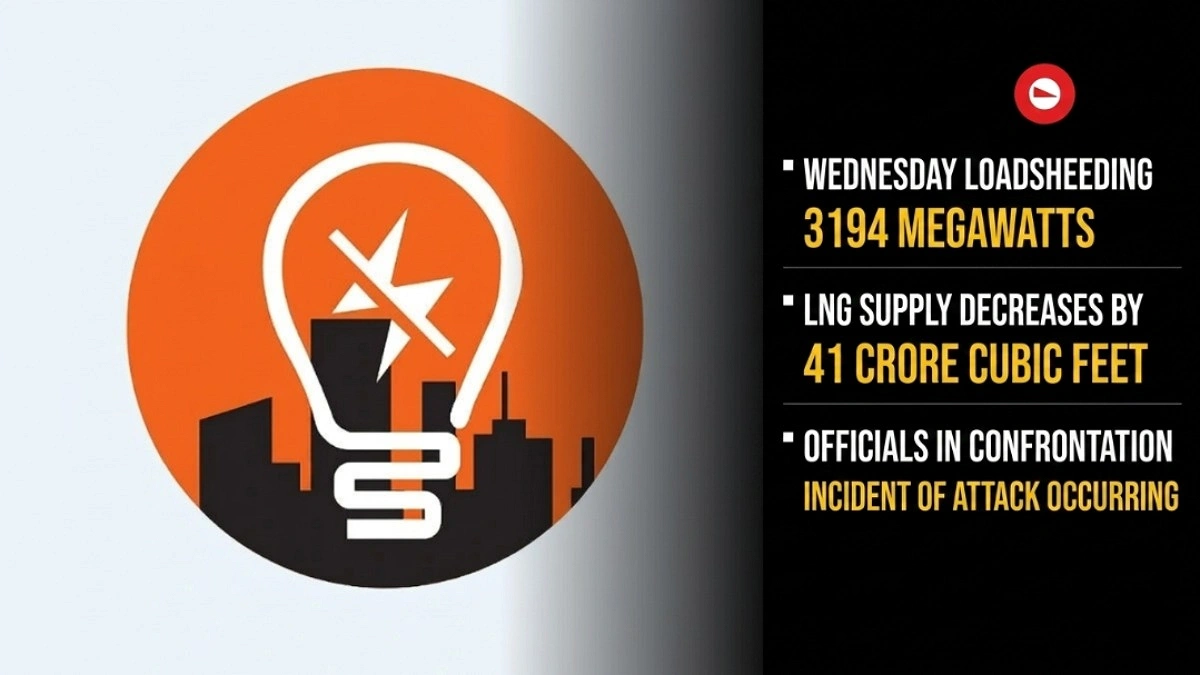
On Wednesday, the highest level of load shedding was 3,194 megawatts. Earlier, load shedding had exceeded 3,700 megawatts.
At present, out of 50,020,000 electricity customers in the country, around 40 million are REB customers. That means around 80 percent of the total customers are covered by these samities. About 60 percent of the electricity generated is also supplied to areas under their coverage.
Alongside the existing fuel crisis, load shedding has increased significantly in recent times after an LNG terminal was damaged. As a result, electricity customers in various areas have been protesting and vandalizing facilities for several days.
On August 10, angry customers attacked the substation of the Jamurki Palli Bidyut office in Mirzapur, Tangail, protesting prolonged power outages and frequent load shedding. A lineman named Abdul Latif was beaten there. He was admitted to Tangail General Hospital in critical condition.
The following day, angry customers vandalized the Palli Bidyut office in Nawabganj, Dinajpur, because of severe load shedding. Earlier, on the night of August 1, local customers surrounded the Aftabganj Palli Bidyut Area Office and staged a protest against load shedding.
On the same day, residents in Ishwardi, Pabna, confined a meter reader of Palli Bidyut Samity 1 for nearly four hours over allegations of unbearable load shedding and high electricity bills. As the situation became tense, officials also faced the anger of customers.
There are allegations that some areas of Netrokona are experiencing up to 18 hours of load shedding during the day and night. Dissatisfaction among customers is growing due to prolonged power outages. An application was submitted to the deputy commissioner and superintendent of police seeking security measures amid fears of a major attack at any time.
The Domar Zonal Office in Nilphamari also submitted a written request for security to the local police station. Police surveillance in plain clothes has been introduced there, while night patrols have been increased.
A letter was recently sent to the district superintendent of police seeking security for employees working in the Gopalganj area of West Zone Power Distribution Company.
Graphics: Agamir Somoy
Gas supply falls again
Gas shortages worsened after an LNG terminal in Maheshkhali, Cox’s Bazar, shut down on July 21. Some relief returned after the terminal was partially reopened 15 days later and gas supply improved. However, an LNG carrying cargo could not be connected to a terminal operated by Summit because of adverse weather, reducing gas supply to around 200 million cubic feet. Combined LNG supply from the two terminals to the national grid is now around 410 million cubic feet. The two terminals have a combined capacity of 1.1 billion cubic feet.
Meanwhile, although the Excelerate Energy terminal damaged in an accident is operating partially, there are plans to temporarily shut it down to restore it to full capacity. It currently supplies around 300 million cubic feet of gas per day. Under normal conditions, the terminal has a capacity of 550 to 600 million cubic feet.
Gas shortages have increased again since Tuesday as adverse weather disrupted LNG supply. The impact is being felt across all sectors, from households onward. Lines of vehicles at CNG stations have been growing since Tuesday night. People are becoming frustrated after waiting in line for hours without getting gas.
At around 11:30 PM Tuesday, a long line was seen at a CNG station in Kallyanpur. Suddenly, station employees announced over the microphone, “There is no gas pressure. Please do not stand in line anymore.”
Professor Dr. M Shamsul Alam, energy adviser to the Consumers Association of Bangladesh, told Agamir Somoy, “This long standing crisis cannot be solved overnight. However, there is an opportunity. The current government must move away from the previous pattern and bring major changes to the power and energy sector. First, irrational spending in this sector must be reduced. Incompetent people must be removed and the right people must be placed in the right positions.”
“Right now, it is very important to increase the use of solar power to overcome the crisis. If expensive furnace oil based power plants are scrapped, Tk 42,000 crore can be saved, which can be used to import 20 million tons of coal a year. This would make it possible to generate electricity from coal fired power plants at comparatively lower costs. At the same time, it is essential to increase the use of renewable energy,” he added.
Comparing the power and energy sector to a critically ill patient, the expert said, “The government is in the dark because those in the ministry and around the government are misleading it. The government must understand this. Otherwise, the crisis will worsen further.”
Meanwhile, former BUET professor and energy expert Dr. Ijaz Hossain advised everyone to use energy economically. He said, “The time has come to overhaul the power and energy sector. The problem will not be solved with imported LNG. It is very important to put strong emphasis on gas exploration within the country.”
