
Resignations of ministers and state ministers

Collected Photo
In Bangladeshi politics, while a ministerial post is a symbol of power and responsibility, that very responsibility sometimes becomes the cause of resignation. At various times since independence, ministers and state ministers have left their posts due to administrative crises, controversial statements, political disagreements, or personal decisions. In some instances, resignations came under the pressure of public criticism and allegations, while in others, the process of completely stepping down remained complex even after announcing a resignation.
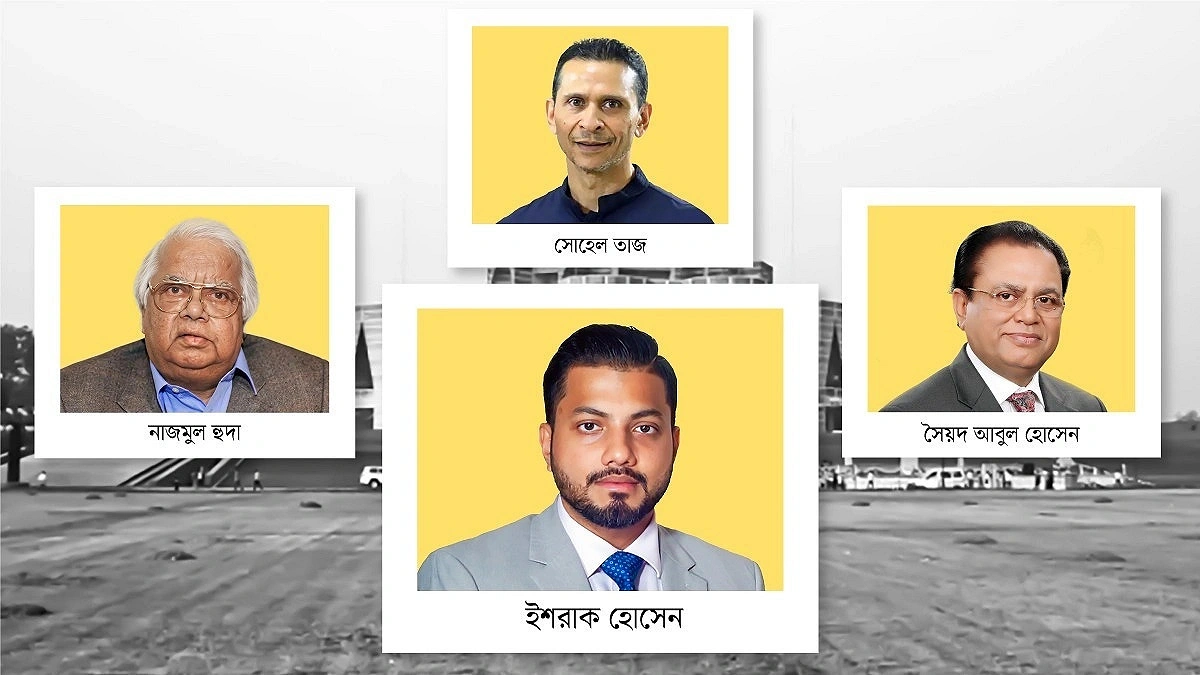
In recent times, the announcement of resignation by State Minister for Liberation War Affairs Ishraque Hossain has once again brought that age-old question to the forefront—under what circumstances does it become difficult for a minister or state minister to remain in office? A brief overview of the ministers and state ministers who resigned for various reasons between 1991 and 2026 is presented below for the readers of Agamir Somoy.
1. Example of Resignation Amid Fertilizer Crisis and Farmer Unrest
There are precedents in Bangladesh politics of cabinet members bearing the responsibility for public interest crises. During the BNP government's 1991–1996 term, dissatisfaction grew among farmers over a fertilizer shortage. In the backdrop of the fertilizer supply crisis and the resulting protests, the resignation of Industry Minister Zahiruddin Khan became a major attention of discussion at the time.
2. Resignation Over Policy Disagreements
There are also instances of cabinet members resigning due to policy differences with the government. In the 1990s, Information Minister of the BNP government Nazmul Huda came into the spotlight over his stance regarding the Caretaker Government system. Various reports noted that differences of opinion had developed between him and the government on this matter. Later, he was asked to resign.
Nazmul Huda was one of the founding members of the BNP. When the BNP formed the government in 1991, he was appointed Information Minister. Later, when the BNP returned to power in 2001, he was given the responsibility of Communications Minister.
3. Resignation of State Minister Over Slum Eviction Controversy
After the Awami League government came to power in 1996, a controversy erupted over slum evictions in Dhaka. Media reports indicated that following this event, State Minister for Housing and Public Works Afsaruddin Ahmad was asked to resign. The incident stands as an example of how government decisions on socially sensitive matters like slum eviction can generate intense political pressure. He was the younger brother of Bangladesh's first Prime Minister, Tajuddin Ahmad.
4. Resignation of Syed Abul Hossain Over Passport Controversy
In the 1990s, a controversy arose surrounding the passport usage of State Minister Syed Abul Hossain. He was first appointed as State Minister for Local Government, Rural Development and Co-operatives in the Awami League government formed in 1996. Following discussions regarding his holding of two passports and using a green passport for official work, news of his resignation was published in 1997.
In subsequent years, he held important responsibilities in the government. When the Awami League formed the government again in 2009, he served as the Minister of Communications in Sheikh Hasina's cabinet. Amid allegations of a corruption conspiracy raised by the World Bank regarding the Padma Bridge project during that period, he was removed from the Ministry of Communications near the end of 2011. He last served as Communications Minister until December 5, 2011. On the same day, he was assigned responsibility for the newly formed Ministry of Information and Communication Technology (ICT). Even after taking charge as ICT Minister, the World Bank maintained its condition that he be completely removed from the cabinet for funding the Padma Bridge project to proceed. Consequently, in an effort to restore the World Bank loan, he officially submitted his resignation letter on July 23, 2012, which was accepted by then Prime Minister Sheikh Hasina.
5. Amir Khosru's Resignation Over Policy Issues
During the 2001–2006 term of the BNP-led government, Commerce Minister Amir Khosru Mahmud Chowdhury became a subject of discussion surrounding several issues. While serving as minister, reports of his differences of opinion with then Finance Minister Saifur Rahman surfaced in the news media. On March 25, 2004, Amir Khosru submitted his resignation letter, and his resignation took effect on that very day. Following his resignation, then Home Minister Altaf Hossain Chowdhury succeeded him.
6. Resignation of State Minister for Energy Over Niko Car Controversy
In 2005, controversy erupted surrounding State Minister for Energy A. K. M. Mosharraf Hossain after reports emerged that he had accepted a costly vehicle from Canadian energy firm Niko. Allegations of taking unethical favors were raised over the incident. Amid the controversy, then Prime Minister Khaleda Zia instructed him to resign. Following the directive, he submitted his resignation letter to the President on June 18, which was accepted. However, media reports noted that he had denied the allegations.
7. Sohel Taj's Resignation Citing Personal Reasons
In 2009, State Minister for Home Affairs Tanjim Ahmad Sohel Taj submitted his resignation letter within nearly five months of taking office. He cited personal reasons. However, various news reports at the time also highlighted interference in ministry work and disagreements over administrative decisions. There was prolonged complexity surrounding the acceptance of his resignation letter. Later, in 2012, he also resigned from his position as a Member of Parliament.
8. Suranjit Sengupta's Resignation Following Money Recovery Incident
In 2012, a major controversy arose surrounding Railway Minister Suranjit Sengupta. Political circles began discussing the matter intensely after news broke of a large amount of cash being recovered from a vehicle carrying his assistant private secretary and railway officials. In this situation, Suranjit announced his resignation, stating that he was stepping aside in the interest of a neutral investigation. However, although he submitted his resignation letter, Prime Minister Sheikh Hasina retained him in the cabinet as a minister without portfolio.
9. Latif Siddique's Loss of Cabinet Post Following Controversial Remarks
In 2014, then Minister Abdul Latif Siddique faced controversy over comments he made regarding Hajj and the Tablighi Jamaat at an event in the United States. His remarks sparked criticism across religious and political spheres. Later, he was removed from the cabinet. In 2015, he also resigned from his post as a Member of Parliament.
10. Resignation of Dr. Murad Hassan Over Remarks and Conduct Controversy
In 2021, State Minister for Information and Broadcasting Dr. Murad Hassan faced severe backlash over controversial remarks and audio recordings that leaked on social media. As discussion intensified in political circles over the situation, Prime Minister Sheikh Hasina asked him to step down. On December 7, 2021, he submitted his resignation letter.
11. Ishraque Hossain's Resignation Announcement
Most recently, controversy surrounding State Minister for Liberation War Affairs Ishraque Hossain stemmed from a video showing him displaying a firearm during an anti-drug operation in Dhaka's Gendaria. After the video surfaced publicly, discussions erupted on social media and across political circles. Reports were also published regarding a police investigation being launched into the incident.
Although news of his resignation spread on the night of October 18, the report of his resignation was denied in a message sent by him. The following day, on October 19, Ishraq himself announced during a press conference at the National Press Club that he was voluntarily stepping down from his duties as state minister. He shared that the Prime Minister had given her consent to this decision.
