
Japan visit opens doors but Bangladesh must be ready

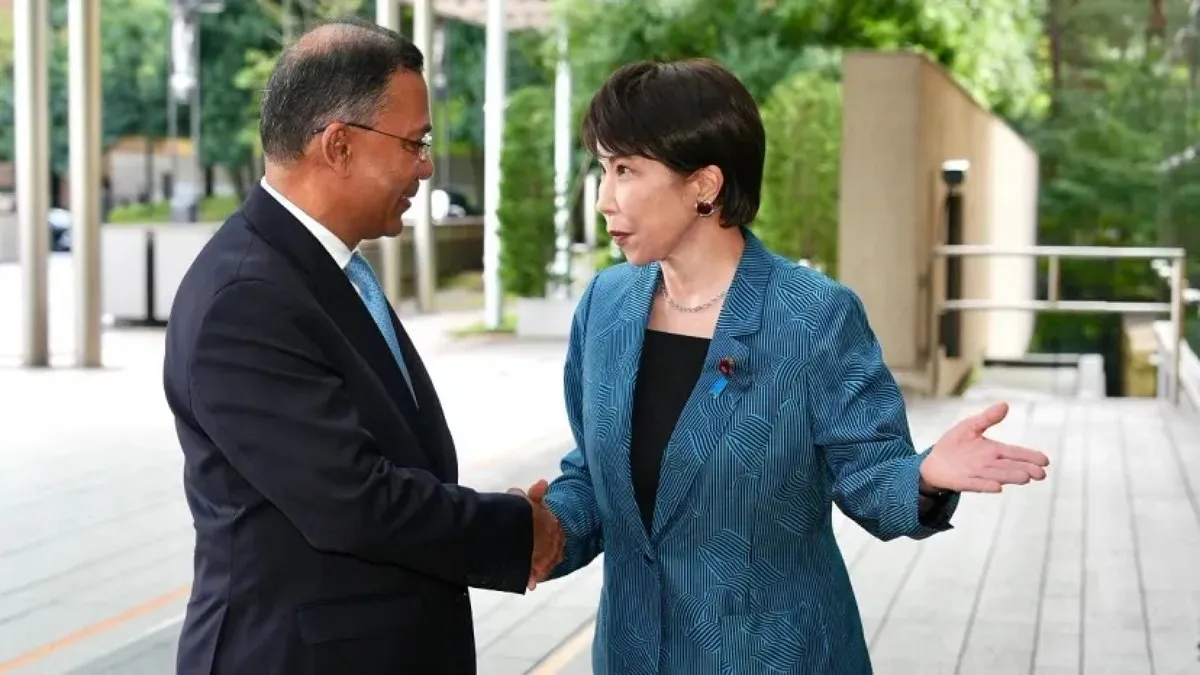
Photo: PMO
Prime Minister Tarique Rahman concluded a four-day visit to Japan, creating the potential to elevate relations between Bangladesh and Japan to new heights.
During the visit, discussions were held regarding top-level bilateral meetings, joint declarations, cooperation agreements, loan and grant commitments, and private-sector investment. The potential for ¥ 1 trillion in Japanese investment over the next five years and the decision to advance the “BIG-B” initiative were the notable achievements of the visit.
However, the extent to which these commitments will contribute to actual investment, job creation, and technological capacity building depends on Bangladesh’s preparedness.
Bangladesh Institute of International and Strategic Studies (BIISS) former chairman Munshi Fayez Ahmed believes that to capitalize on this opportunity, it is essential to create a skilled workforce, ensure technology transfer, and enhance national financial capacity.
On 26 October, Tarique arrived in Tokyo, Japan, for the four-day visit. On the second day of the visit, he held a bilateral meeting with Japanese PM Sanae Takaichi. The joint declaration published after the meeting highlighted commitments to expand economic ties and increase cooperation in investment, trade, energy security, infrastructure, and industrial sectors.
The joint declaration noted the potential for ¥ 1 trillion in private-sector investment from Japan over the next five years. It also highlighted the prospect of creating nearly 2,00,000 jobs through this investment.
This presents a major opportunity for Bangladesh in job creation, export diversification, and the development of manufacturing industries. However, how prepared Bangladesh is to harness this potential remains critical.
According to Fayez, to reap the benefits of foreign investment, a skilled workforce capable of utilizing relevant technology must be developed. Avenues should be explored to make laws, regulations, and management more investment-friendly. Obtaining investment commitments alone will not suffice; the capacity to operate new industries and technologies must also be built.
One of the most important aspects of the visit was the decision to advance the “BIG-B” or Bangladesh-Japan Special Economic Partnership initiative. Plans are in place for integrated cooperation in developing infrastructure for power, energy, deep sea ports, industry, and information and communication technology (ICT).
The initiative to turn the Matarbari-Moheshkhali region into a key hub for energy, industry, and supply chain logistics centered around the Matarbari Deep Sea Port is also significant.
Stakeholders say if this plan is implemented, Bangladesh could become a vital hub for regional trade and supply systems. At the same time, it is essential to verify whether these projects meet Bangladesh’s actual needs.
Fayez believes that the terms, utility, and long-term benefits of projects undertaken with foreign assistance must be thoroughly reviewed. Without provisions for technology transfer, Bangladesh’s expertise will not improve even if foreign experts work on these projects.
In his view, building the capacity to absorb new technology and move forward to the next stage should be one of the primary goals of such cooperation.
During the visit, Japan promised a grant of up to ¥ 2.12 billion for supplying patrol vessels to strengthen coastal security. In addition, cooperative initiatives were taken in economic relations, agriculture, employment, skill development, fisheries and livestock, and addressing climate change.
Commitments were also received for loan assistance of around $295.5 million for two development projects. The private sector was also given priority during the visit.
At an investment forum organized by the Japan External Trade Organization (JETRO) and the Japan-Bangladesh Committee for Commercial and Economic Cooperation, the PM called on Japanese business leaders to increase investment in Bangladesh.
Seventeen memorandums of understanding (MoUs) were signed between private entities of the two countries. State Minister of Foreign Affairs Humaiun Kobir said based on these understandings, potential investment opportunities worth nearly $6 billion could be created.
During the PM’s discussions with various Japanese corporations, including Marubeni, potential investments in industrialization, renewable energy, agro-processing, and manufacturing industries were highlighted.
Visiting a liquefied natural gas (LNG) terminal and power plant in Futtsu City, Chiba Prefecture, Japan, provided an opportunity to gain firsthand experience regarding energy infrastructure.
To sustain the benefits of foreign investment, Munshi Fayez Ahmed stressed the importance of building national financial capacity alongside developing a skilled workforce. According to him, instead of continuously relying on foreign loans for development projects, measures must be taken to increase the government’s own revenue and savings.
Opportunities for in-country training by foreign experts and hands-on learning by sending Bangladeshi workers abroad must be expanded. At the same time, it is necessary to align the education system and technical training with the demands of new industries.
At the end of the visit, Humaiun evaluated it as one of the most successful visits by any head of government in recent times. In his view, a new dimension has been added to Bangladesh-Japan relations through this, and Bangladesh is being considered a key partner in investment and economic cooperation.
However, according to Fayez, alongside expanding cooperation with Japan and China, relations with India must also be brought to a healthy and effective level. A stalemate in relations with an important neighboring country could dim overall diplomatic success.
Therefore, alongside forging new economic partnerships, existing relationships must also be effectively advanced.
