
16,000 Bangladeshis in Saudi prisons
- Bangladeshis do not get proper legal assistance
- Suspicion remains if two executed people had received consular assistance or not

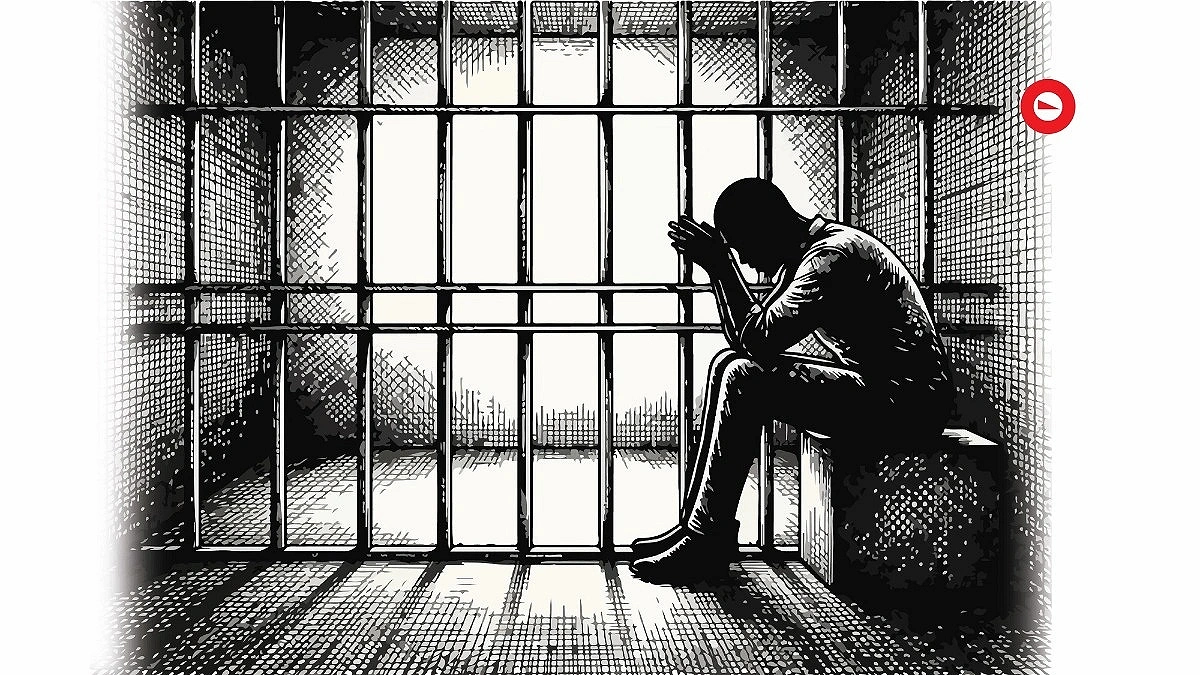
Graphics: Agamir Somoy
After Saudi government executed two Bangladeshis on Wednesday (October 14), Bangladesh offcicials figured out that some 16,000 Bangladeshis are imprisoned in various prisons of Saudi Arabia for committing diveresed crimes, mostly peddling drugs.
Saudi government has accused them of being involved in various criminal activities. However, several officials of Bangladesh's Ministry of Expatriates' Welfare and Overseas Employment and the Wage Earners' Welfare Board have said they do not have any official or complete statistics on the matter. The figure is mainly known based on estimates given by officials at the Bangladesh Embassy in Riyadh.
After the execution of two Bangladeshis in Saudi Arabia last Wednesday, the relevant authorities have become active. Following this, responsible officials said letters have been sent to the embassy concerned seeking complete information on the prisoners. Md. Asaduzzaman, Director General (Additional Secretary) of the Wage Earners' Welfare Board, told Agamir Somoy, "Letters will be sent to the embassies to collect accurate and complete information about Bangladeshis imprisoned abroad. Besides, if any expatriate has been convicted, detailed information about them will also be collected. Work on this has already begun."
In February this year, Saudi Arabia's Ministry of Foreign Affairs informed the Bangladesh Consulate General in Jeddah through a 'Note Verbal' about 158 Bangladeshi prisoners. According to Agamir Somoy's analysis, among these prisoners' cases, drug-related cases are the highest at about 48 percent. About 8 percent are accused of theft. About 7 percent are imprisoned under orders of the public prosecution. About 3 percent each are imprisoned on charges related to bribery transactions and harassment. About 2 percent are accused of violating station policy and harassing children. In addition, 12 percent are imprisoned for prostitution, immoral acts, and location-related offenses. Besides, 20 percent face 16 types of charges including ICT, fraud, and money laundering.
Mohammad Ali from Sylhet used to drive a car in Riyadh, the capital of Saudi Arabia. But about 7 months ago, Saudi law enforcement agencies arrested him and sent him to a deportation center on charges of working elsewhere on his own responsibility without working under his employer (kafala).
Mohammad Ali's nephew Kamal Mia said his uncle sometimes calls him from jail. Relatives in Saudi Arabia have visited him, but they cannot figure out what to do to get him out of jail by facing legal complications.
According to international human rights organizations, poor and low-income expatriate workers are being subjected to serious judicial discrimination, such as not getting proper interpreters in court, being unable to afford legal assistance or appoint a lawyer, and forced confessions through torture. After the execution of two expatriates last Wednesday without any prior permission or information to Dhaka, immigration experts have raised new questions about the legal protection of expatriate workers.
Both Bangladesh and Saudi Arabia are signatories to the Vienna Convention. According to this convention, if a citizen of any country is arrested abroad, there is an obligation to immediately inform the consular department or embassy of that country at the request of the detainee. However, it remains unclear whether the two executed Bangladeshis received proper consular assistance. Bangladesh's Ministry of Foreign Affairs has said the matter came to their attention only after news was published in the media.
Saudi Arabia is Bangladesh's main labor market. According to the Bangladesh Bureau of Manpower, Employment and Training (BMET), currently 60-65 lakh Bangladeshis are living and working in the country. Especially in 2025, a record nearly 7.5 lakh Bangladeshi workers went to Saudi Arabia.
Saudi Arabia is Bangladesh's largest source of remittances. In the 2025-26 fiscal year, 584 crore 88 lakh 70 thousand dollars came to Bangladesh from Saudi Arabia, which is about 16.4 percent of total expatriate income. In Bangladeshi taka, its value stands at about 72 thousand 263 crore taka.
According to information from the Labor Welfare Wing of the Bangladesh Consulate General in Saudi Arabia, there are various specific allegations against imprisoned Bangladeshis, including drugs, theft, bribery, immoral acts, harassment, violating station policy, harassing children, violating ICT laws, assault, iqama fraud, money laundering, and begging.
According to international human rights organizations, the rate of executions in Saudi Arabia has increased significantly in recent years. From January 2014 to April 2026, more than two thousand people were executed in the country, 75 percent of whom were expatriate workers from various countries.
A joint report published last May by four international human rights organizations—Mina Rights Group, European Saudi Organisation for Human Rights, Alqst for Human Rights, and Reprieve—said that a record 345 people were executed in 2024, including 138 foreign nationals (122 of whom were drug case defendants) and a total of 9 women, including 4 Nigerian women. In 2025, this number rose to 356, including 240 drug case defendants and 188 foreign nationals.
Although the Saudi government claims that in 2021 it drafted a penal code in line with international standards, reports by human rights organizations say that 44.4 percent (1 crore 57 lakh) of Saudi Arabia's total population are foreigners. However, 75 percent of those sentenced to death in drug-related cases are foreign nationals. They are subjected to serious discrimination such as lack of interpreters in the judicial process, lack of access to legal assistance, and forced confessions.
To overcome this crisis, Dr. Selim Reza, Associate Professor at North South University and Director of the Center for Migration Studies (CMS), has urged giving expatriate workers adequate knowledge of Saudi law and increasing manpower at the Bangladesh Embassy. He said, "Saudi Arabia is governed by Shariah law. If we cannot send workers with sufficient knowledge about local laws, such unwanted incidents may rise further in the future."
According to the Overseas Employment and Migrants Act of 2013, the clear responsibilities of the Labor Wing or Labor Welfare Branch of Bangladesh embassies abroad are to protect the rights of expatriates, inspect workplaces, attest appointment letters, recover unpaid wages, and provide consular and legal assistance to expatriates in legal trouble.
However, a study by the Center for Higher Studies and Research at Bangladesh University of Professionals found that, compared with millions of expatriates in a vast country like Saudi Arabia, the embassy's labor welfare branch faces a severe shortage of adequate manpower, logistics, and necessary legal funds. As a result, it becomes difficult for the labor wing to conduct effective legal battles on behalf of Bengali-speaking expatriates in the Saudi judicial system or to regularly inspect expatriates' working conditions.
