
Politics of Bangladesh
Ziaur Rahman remains relevant today in stability, good governance, and honesty

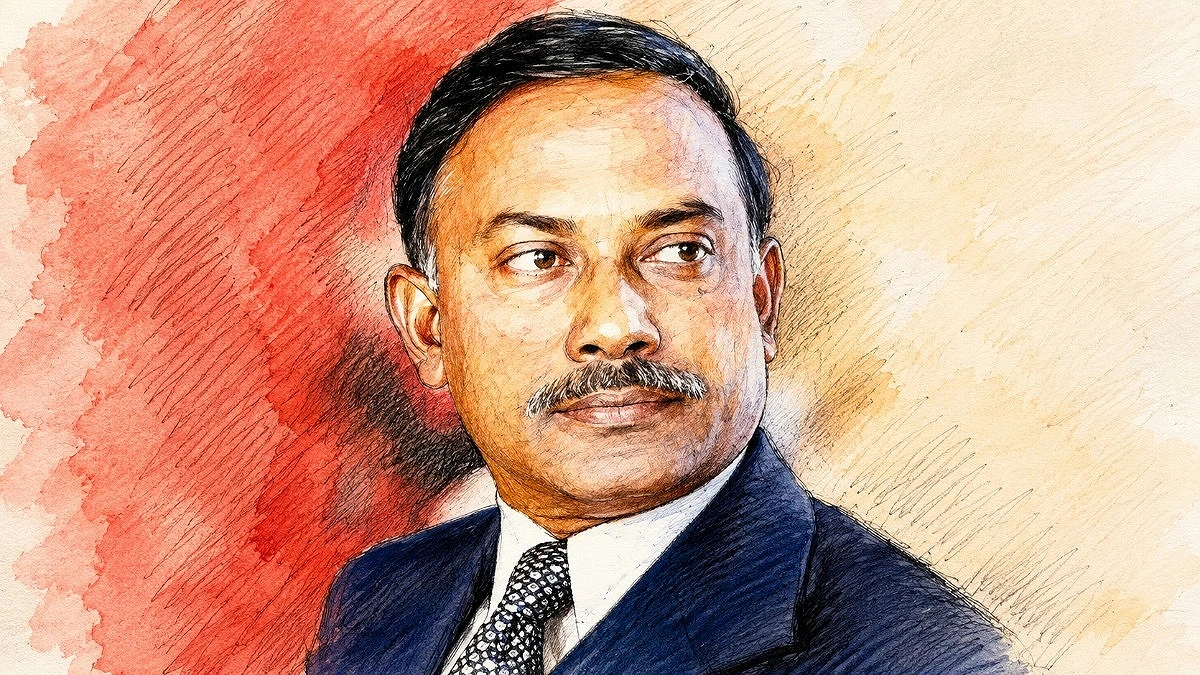
Graphics: Agamir Somoy
In Bangladesh's political history, there are certain leaders whose influence lingers in people's hearts even after time has passed. Shaheed President Ziaur Rahman is one of them. More than four decades have passed since his martyrdom, yet his name, philosophy, and statecraft still come up in political discussions. The question is—why does he remain relevant?
According to political analysts and senior BNP leaders, three factors keep him in discussion even today: stability, good governance, and honesty. These three qualities in statecraft set him apart.
Symbol of stability
After independence, Bangladesh was going through a difficult time. Political instability prevailed. There was weakness in administration. The economy was also in crisis. In such a reality, Ziaur Rahman came to the fore.
Senior BNP Standing Committee member Dr. Khondkar Mosharraf Hossain believes that Ziaur Rahman led the country during a time of crisis. He declared independence in 1971 during the nation's direst hour. Later, he took over the country's leadership in the changed circumstances of November 7, 1975. After that, he began fundamental reforms of the state.
"During his time, multi-party politics returned. The press gained relative freedom. Initiatives were taken to activate local government. Efforts were made to bring discipline to the administration and political structure. This created a stable environment."
According to Dr. Mosharraf Hossain, Ziaur Rahman introduced a new national identity. Through the concept of "Bangladeshi nationalism," he tried to unite the people of the country under a new political identity. His patriotism and personal integrity earned people's trust. That is why people still remember him.
Philosophy of good governance
An important aspect of Ziaur Rahman's political philosophy was establishing administrative efficiency and accountability. He believed in the politics of development and production. He was not limited to urban-centric development; he emphasized agriculture, the rural economy, and local development.
Initiatives such as canal digging programs, increasing agricultural production, and decentralization gained importance during his administration. Efforts were made to bring momentum to the administration.
BNP Standing Committee member Dr. Abdul Moyeen Khan said, "Ziaur Rahman chose the politics of development and production. He tried to make the country's economy production-oriented. He emphasized agriculture, industry, and employment. The main goal of his politics was to bring visible change to people's lives. That is why he gained popularity among the people. His development vision remains relevant to many even today."
The political value of honesty
Personal integrity has always been an important factor in Bangladeshi politics. In Ziaur Rahman's case, this is seen as one of his greatest strengths. Despite being in power, he was never accused of amassing personal wealth. His lifestyle was comparatively simple.
According to political observers, ordinary people saw him as an honest and responsible leader. He viewed politics not as a means for personal gain but as a duty to run the state. That is why his personal image is still discussed positively.
The foundation of the BNP's political platform
When discussing the BNP's political philosophy, Ziaur Rahman's principles come first. Nationalism, a production-oriented economy, decentralization, and pragmatic statecraft—these issues form the core of the party's ideology. However, there is also discussion about whether the BNP, despite having been in power several times, has drifted away from Zia's ideals.
Professor Kazi Mohammad Mahbubur Rahman of the Department of Political Science at the University of Dhaka said, "Ziaur Rahman, the sheaf of paddy (party symbol), ordinary people, and Bangladeshi nationalism—these are all intertwined. The sheaf of paddy is not just a party symbol; it is also a symbol of a political philosophy."
In his view, "The concept of Bangladeshi nationalism was Ziaur Rahman's great political wisdom. This concept attempted to include not only the Bengali ethnic group but also non-Bengalis, indigenous people of the hills and plains, and various other identities. As a result, it became a broad political idea."
Professor Mahbubur Rahman also believes, "Development makes people happy, but development alone cannot secure a lasting place in people's hearts in the long term. Political connection and the ability to reach people are also essential. Ziaur Rahman remains in discussion today because he was able to connect with the people."
Why is he still relevant?
A leader's relevance depends on the timeliness of their ideas. That is what we see in Ziaur Rahman's case. Political stability, good governance, and personal integrity—these three issues remain important in Bangladeshi politics today.
Times have changed. Political realities have also shifted. But people's expectations have not changed. People still want a stable state, effective governance, and honest leadership. It is from that perspective that the political philosophy of Shaheed President Ziaur Rahman comes back into discussion and finds relevance once again.
