
Tk 426 crore rehabilitation project
Consultants take a bite out of street children’s share
- Tk 7 crore proposed for consultancy despite no technical or complex work
- Questions raised over the justification for Tk 61.39 crore in outsourced manpower costs
- Tk 1.01 crore proposed for purchasing new vehicles instead of renting them

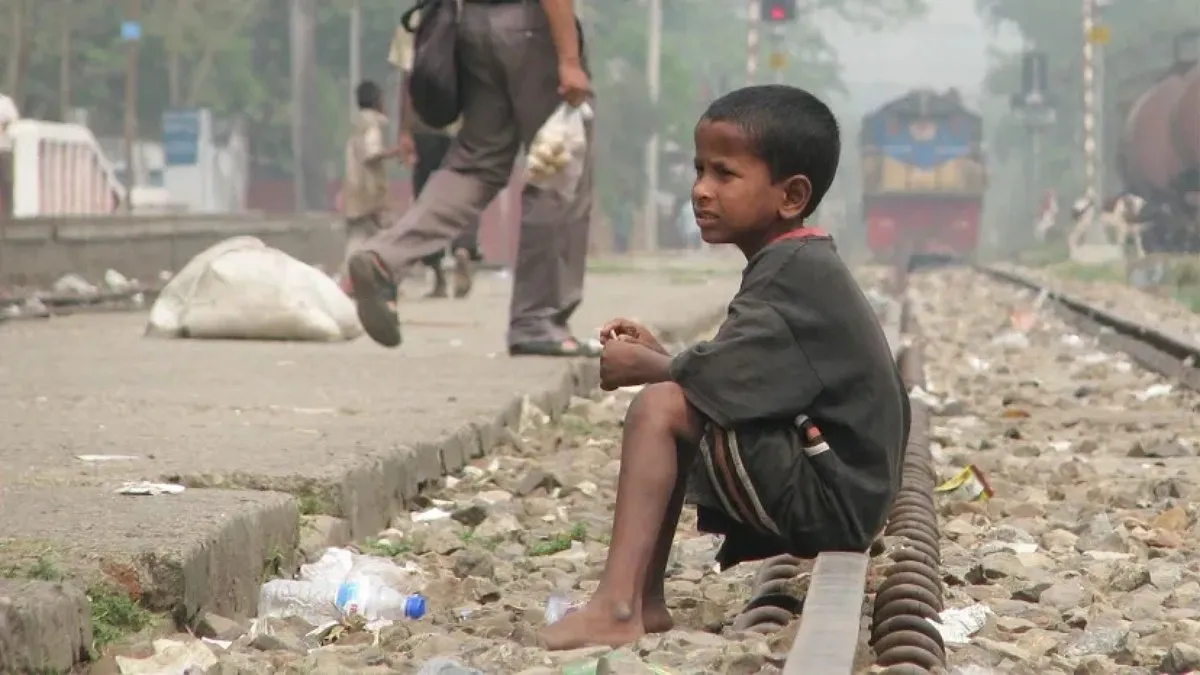
Collected Photo
A major humanitarian initiative on paper aims to provide street children with safe shelter and a better future. However, the noble initiative is beginning with a list of excessive and unnecessary expenditures.
The project titled “Rehabilitation of Street Children and Children at Risk with Accommodation Facilities” has an estimated cost of more than Tk 400 crore and will be implemented by the Bangladesh Shishu Academy. Despite involving no technical or complex work, the project has proposed Tk 7 crore solely for consultancy services. Officials at the Planning Commission have been left stunned by the proposal.
Questions have also been raised over several other expenditures in the project, apart from the consultancy costs. The project will be placed before the Project Evaluation Committee (PEC) of the Planning Commission at a meeting scheduled for Sunday.
The Ministry of Women and Children Affairs has proposed the street children rehabilitation project. The total estimated cost is Tk 426 crore 24 lakh 64 thousand. It will be implemented in 12 city corporation areas across 31 districts in all eight divisions of the country.
The PEC meeting on Sunday will be chaired by Md. Ehsanul Haque, Member (Senior Secretary) of the Socio-Economic Infrastructure Division. Sources said questions would be raised about the justification for the proposed consultancy expenditure, the types of consultants required and the basis for determining the estimated costs. Project officials will also face questions over several other expenditures.
If the project receives approval at a meeting of the Executive Committee of the National Economic Council (ECNEC) after completing all procedural requirements, it will be implemented by the Bangladesh Shishu Academy. The project is scheduled to begin this year and be completed by June 2031.
Asked about the matter, Md. Ehsanul Haque told Agamir Somoy, “The matter is being reviewed under the supervision of my division head (Additional Secretary Dr. Shah Md. Helal Uddin). It has not yet reached me. However, I can say that the Prime Minister does not favor such unnecessary expenditures. We are also trying to scrutinize the proposal as strictly as possible to determine its justification. If consultancy services are genuinely required for this project, that is a different matter. If they are not necessary, recommendations will be made accordingly at the PEC meeting.”
Officials concerned at the Ministry of Women and Children Affairs said the project was being undertaken to ensure the overall development of street children and children at risk through coordinated initiatives and to integrate them into mainstream society.
The project will also seek to reunite or transfer 6,600 children separated from their families to their families and communities. In addition, 1,900 street children or children at risk will be provided with shelter, while 4,500 children will be brought under formal and non-formal education. As part of the project, 150 open schools for street children will be established. Each school will enroll an average of 30 children.
The major activities under the project include transforming vulnerable street children into skilled workers through technical training and providing financial assistance to make 5,700 street children self-reliant.
Conditional cash transfers will also be arranged for 5,500 children’s families. During the project period, 6,600 children will be handed over to close relatives. A total of 5,500 families will receive monthly stipends of Tk 1,000 for 60 months. In addition, one-time financial assistance will be provided annually to 1,140 children, totaling 5,700 children over the project period, to help them become self-reliant.
A responsible official at the Planning Commission told Agamir Somoy, “The proposal has already been reviewed, and questions have arisen over the proposed expenditures in several areas. Project officials will be asked to respond to these issues at the PEC meeting.”
Abul Kashem Md. Mohiuddin, former secretary of the Implementation Monitoring and Evaluation Division (IMED), considers such a large consultancy allocation in a project of this nature a clear waste of public money.
He told Agamir Somoy, “Consultancy services are generally required under the contractual conditions of foreign-funded projects, often as a mandatory requirement. Consultants are also needed for technical assistance projects. However, consultancy services are not compatible with the activities of this proposed project. Instead, consideration could be given to whether this money could be used for the welfare of street children.”
Responding to a question, he said, “Sometimes, various personnel are recruited under the name of consultants and paid hefty salaries. Later, they fail to perform any particularly effective work. This situation should be addressed.”
An official concerned at the Planning Commission said other proposed expenditures facing scrutiny in the project include Tk 61 crore 39 lakh for outsourced manpower. Questions will be raised at the PEC meeting about whether approval from the Finance Division has been obtained for this expenditure.
Project officials will also be questioned about whether the costs of computer equipment, software, office equipment, furniture, books, stationery, consumables, sports equipment, bedding, clothing and other items have been verified by a market price verification committee in accordance with the relevant circular.
The project has also proposed Tk 1 crore 1 lakh for purchasing one jeep and one microbus. A recommendation may be made to arrange rented vehicles instead.
Meanwhile, Tk 2 crore 3 lakh 42 thousand has been allocated for repair and maintenance of motor vehicles, furniture, computers, office equipment, residential buildings and non-residential buildings. Detailed explanations will be sought regarding the basis and justification for estimating these costs.
Questions will also be raised about the basis and justification for expenditures on medical services, grants, research, domestic travel, management, publicity and advertising.
The justification for the proposed Tk 1 crore 8 lakh expenditure on telephone services will also be questioned.
