
Water bus set to return to Dhaka waterways, major challenges ahead

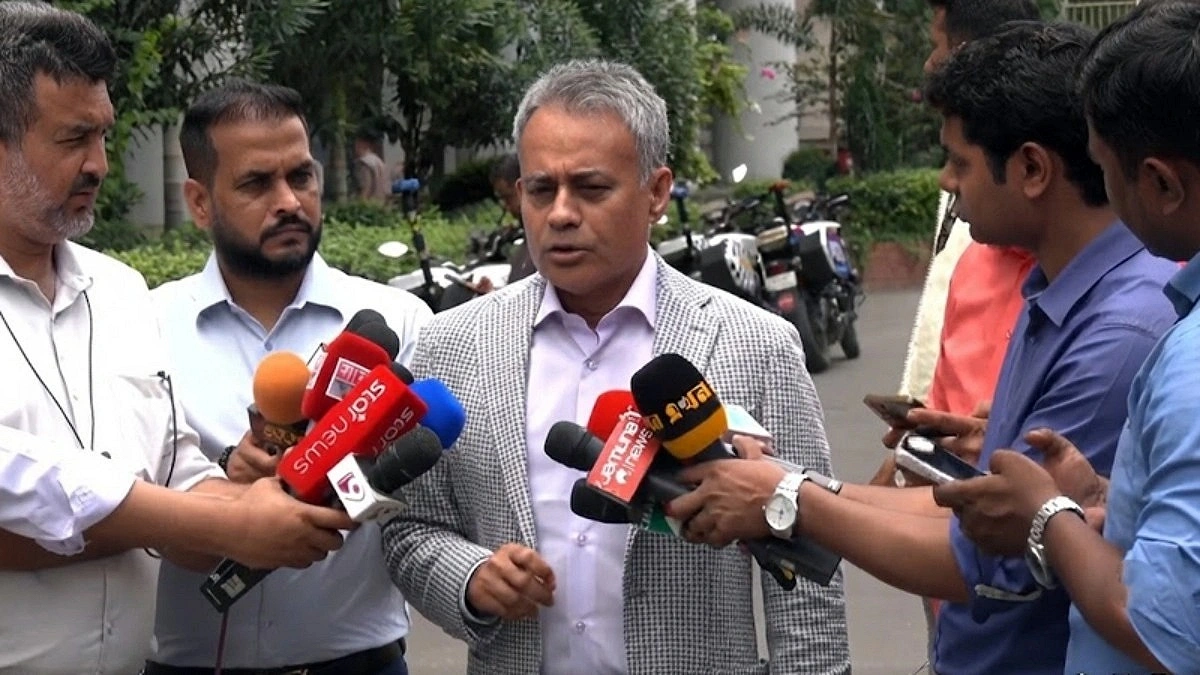
Road Transport and Bridges Minister Shaikh Rabiul Alam
The government has taken the initiative to relaunch passenger water bus services on the rivers surrounding the capital, Dhaka. However, Road Transport and Bridges Minister Shaikh Rabiul Alam said major challenges including river pollution, navigability problems, infrastructure limitations, and attracting passengers must be addressed before the initiative can be implemented.
He said the goal is to finalize the necessary planning within the next two to three months and involve the private sector.
He made the remarks on Sunday after a follow up meeting on plans to introduce passenger friendly water transport on the rivers surrounding Dhaka while speaking to reporters at the Secretariat.
The minister said there are plans to develop the rivers surrounding the capital not only as a mode of transportation but also as tourism friendly waterways. To achieve this, a route is being considered that would start from Gabtoli, pass through Ashulia, Tongi, Narayanganj, Sadarghat, and Bosila, and return to Gabtoli.
He said the biggest problem at present is river pollution. According to a government survey, waste is being discharged directly into the rivers from 21 points under the Dhaka South City Corporation, 16 points under the Dhaka North City Corporation, and 66 points under Dhaka WASA.
In addition, polluted waste is being discharged into the rivers from around 150 points belonging to various industrial factories. Altogether, waste is entering the rivers through 424 locations. The relevant agencies have been instructed to submit plans to stop these sources of pollution.
Shaikh Rabiul Alam said, “Many people lose interest in traveling by water because of the foul smell and garbage in different parts of the rivers. If pollution can be controlled and the environment improved, water buses could become popular not only for transportation but also for recreation.”
He also said that although some areas experience navigability problems during the dry season, conditions are relatively better during the monsoon. A project had previously been undertaken to bring water from the Jamuna River to maintain the flow of the Buriganga, Dhaleshwari, and Balu rivers, but it was never implemented. For now, preparations are underway to launch the service under the existing conditions.
The minister said that the Bangladesh Inland Water Transport Corporation previously operated the service, but it was discontinued after incurring losses of nearly Tk 570 million over the past 10 years. This time, several private companies have expressed interest in operating the service. Discussions are also underway regarding their involvement.
Explaining the reasons behind the losses, he said there were not enough water buses in the previous service. As a result, passengers had to wait for long periods. While traveling to the same destination by road took 30 to 40 minutes, the journey by water took one and a half to two hours. This caused passengers to lose interest. However, if an adequate number of water buses operate at scheduled intervals, passenger numbers may increase, although operating costs will also rise.
Shaikh Rabiul Alam also said, “Although the water bus service at Hatirjheel has been successful, the distance there is shorter and passenger demand is higher. The same model will not be fully effective on the longer river routes surrounding Dhaka. Therefore, the plan is giving importance to tourism alongside passenger transportation.”
He said several bridges also pose major challenges to the project. In particular, there is not enough clearance for water buses to pass beneath the railway bridge at Tongi. Since raising the railway bridge is not feasible, an alternative arrangement is being considered under which passengers would disembark on one side, cross the bridge, and board another waiting water bus on the opposite side.
The minister said no separate budget has yet been allocated for the project. For now, the relevant agencies will carry out the necessary work within their respective responsibilities. Budget allocations will be made in the future if additional funding is required.
Shaikh Rabiul Alam said, “Various departments have already been assigned responsibilities. Progress will be reviewed again within the next two months, followed by another meeting. After that, a final decision will be made regarding private sector participation, river pollution control, and the launch of a passenger friendly water bus service.”
