
Bangladesh seeks partnership with Saudi Arabia beyond remittances

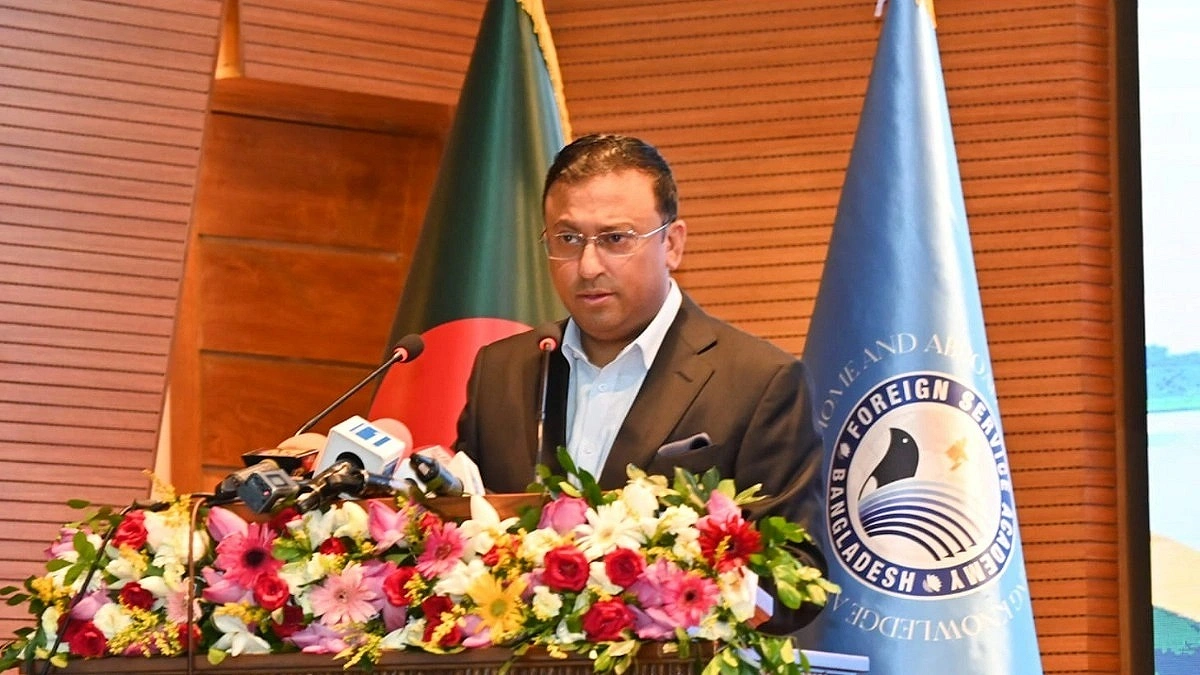
Collected Photo
State Minister of Foreign Affairs Humaiun Kobir said Bangladesh aims to move away from a relationship dependent on labor export and remittances to expand investment, technology, skilled human resources, and business partnerships with Saudi Arabia.
To achieve the objective, discussions are underway between the two nations regarding the formation of a potential investment fund. Bangladesh also views a potential defense agreement with Saudi Arabia positively, provided it aligns with national interests.
He made these remarks on Saturday morning at a national seminar titled “From Workforce to Strategic Partnership: New Thinking on Bangladesh-Saudi Arabia Relations”.
North South University, the Bangladesh Institute of International and Strategic Studies (BIISS), and the Foreign Service Academy jointly organized the seminar.
Kobir added that the relationship between Bangladesh and Saudi Arabia is built on religious faith, history, people-to-people contact, and mutual respect. Over recent decades, this relationship has expanded significantly. Millions of Bangladeshi workers employed in Saudi Arabia contribute to the host country’s economy and society.
Alongside the remittances they send home, the skills and knowledge they acquire remain vital for Bangladesh.
However, Kobir noted that the bilateral relationship now stands at a critical crossroads. The core question is not whether to deepen ties, but how far the two countries can advance the relationship.
For a long time, labor export and remittances have served as the main foundation of bilateral ties. While this foundation remains important, it cannot represent the upper limit of the relationship.
As a result, both nations must expand the scope of their economic and strategic partnership. Saudi Arabia’s “Vision 2030” is driving major economic changes by prioritizing economic diversification, investment, technology, human resource development, and global partnerships.
Meanwhile, Bangladesh is entering a new phase of economic transformation, creating an alignment of mutual interests between both nations, Kobir said.
He emphasized that investment should be Bangladesh’s top priority in bilateral cooperation. Potential opportunities for investment exist across various sectors, including renewable energy, power, infrastructure, ports, logistics, agriculture, fisheries, food security, healthcare, pharmaceuticals, information technology, and artificial intelligence.
Kobir added that discussions are ongoing regarding a potential investment fund with Saudi Arabia to foster joint investments and partnerships in priority sectors. However, building an environment of trust is essential to attract investment.
To achieve this, Kobir stressed the need for transparent and predictable policies, reducing unnecessary bureaucratic hurdles, improving coordination among government agencies, and ensuring timely decision-making.
He said under the leadership of Prime Minister Tarique Rahman, Bangladesh’s government has presented a business- and investment-friendly budget. The goal of investment is not merely to import capital, but to secure productive investment that generates employment, facilitates technology transfer, and builds internal capacity.
Highlighting the solid reputation of Bangladeshi workers in the Saudi labor market, Kobir noted that demand for skilled and trained workers will increase in the future. Professionals will be required in sectors such as construction, healthcare, hospitality, engineering, logistics, digital services, and advanced technology.
Therefore, focus must shift from simply exporting laborers toward developing skilled and professional manpower. To achieve this, cooperation among training institutes, universities, and industrial establishments in both countries must be strengthened.
Authorities must ensure that training and skill certifications align directly with the demands of the Saudi labor market. This approach will benefit both workers and employers while creating a positive impact on the economies of both nations.
Kobir said technology and knowledge exchange presents another vital area for partnership. While Saudi Arabia invests heavily in technology and emerging industrial sectors, Bangladesh possesses a young and growing digital workforce. Combining these dual capabilities can unlock new avenues for cooperation.
Bangladesh occupies a strategic geographical position connecting South Asia and Southeast Asia, while Saudi Arabia sits at the crossroads of Asia, Africa, and Europe. Leveraging the geographical locations of both nations offers opportunities to expand cooperation in ports, maritime shipping, logistics, aviation, and freight transport.
The interest demonstrated by private sector firms in Bangladesh’s ports and logistics infrastructure underscores the potential. He confirmed that discussions are underway with relevant organizations regarding future cooperation in these areas.
Kobir affirmed that safeguarding the welfare, dignity, and rights of Bangladeshi workers in Saudi Arabia remains a top government priority. Bangladesh welcomed Saudi Arabia’s cooperation in regulating the labor recruitment system and protecting the interests of both workers and employers.
He asserted that Bangladeshi workers should be viewed not merely as a labor source, but as partners in development. Ample opportunities exist to enhance connectivity among private sectors, universities, research institutes, and young entrepreneurs of both nations. Alignment of interests is also growing in fields such as food security, climate resilience, and clean energy.
According to Kobir, progress in bilateral relations should not be measured strictly by the number of workers sent or the volume of trade conducted. Instead, the relationship must be propelled forward by enhancing worker skills, diversifying goods, expanding technology, and solidifying economic and institutional partnerships.
Elevating ties with Saudi Arabia to a higher plane remains a key government priority. A robust partnership already exists in maritime security, while positive talks continue regarding a defense agreement. Bangladesh will view the proposed defense agreement positively if it serves national interests and aligns with shared objectives.
Responding to a query regarding Bangladesh’s potential accession to the Mecca Agreement, Kobir remarked that millions of Muslims live in the region encompassing Mecca and Medina. Peace and stability in the Middle East are vital for Muslim nations. Leveraging Bangladesh’s peacekeeping expertise from worldwide UN operations could contribute positively toward establishing regional peace and stability.
Highlighting the political relations between Bangladesh and Saudi Arabia are reaching new heights, Kobir said the Crown Prince of Saudi Arabia extended an invitation to Tarique to visit the Kingdom. He accepted the invitation and may visit to Saudi Arabia in future.
Similarly, the Crown Prince has expressed interest in visiting Bangladesh, Kobir noted.
He added that Bangladesh seeks to establish a comprehensive partnership with Saudi Arabia across all sectors. In its foreign relations with other countries, Bangladesh prioritizes investment and business partnerships over dependency. Bangladesh no longer wishes to remain dependent on other nations or rely on foreign aid.
Instead, it aims to advance through investment and commercial partnerships, aspiring to be a nation that does business with the world rather than asking for help from the world.
Kobir concluded that the foundation of trust built between both countries must be fortified through visionary planning, investment, and ambition. Bangladesh seeks to transition from a labor-dependent relationship to human resource development, from remittances to investment, and from traditional cooperation to an innovation-driven partnership.
