
Over 25 million people face multidimensional poverty in Bangladesh
- Approximately 43.3 million more people at risk
- 1.2 billion people worldwide living in acute multidimensional poverty
- India and Pakistan rank behind Bangladesh; Nepal, Bhutan, Sri Lanka, and the Maldives are ahead

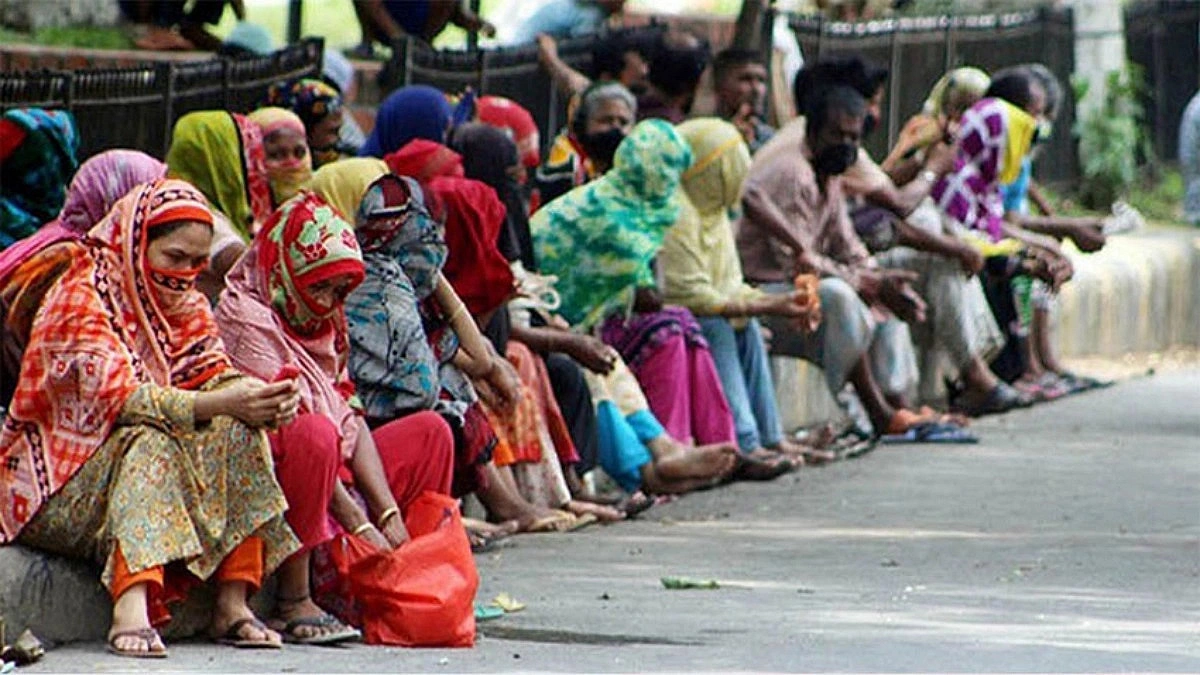
Collected Photo
More than 25.9 million people in the country are living in multidimensional poverty, with approximately 6.8 million experiencing extreme poverty. This picture was revealed in the Global Multidimensional Poverty Index (MPI) 2026 report published by the United Nations Development Programme (UNDP). The report was jointly released on October 12 by UNDP and the Oxford Poverty and Human Development Initiative, a research organization at the University of Oxford.
The report utilized data from Bangladesh's 2022 Demographic and Health Survey. However, the number of multidimensionally poor individuals in the report was calculated based on the population projection for 2024.
The Global MPI measures deprivation across 10 indicators divided into three dimensions: health, education, and standard of living. Health includes nutrition and child mortality; education includes years of schooling and school attendance; and standard of living assesses cooking fuel, sanitation, drinking water, electricity, housing, and assets. A person is considered multidimensionally poor if their deprivation score is at least 33.33 percent. The MPI value is the product of the poverty headcount ratio and the intensity of deprivation.
According to the report, Bangladesh's survey-based multidimensional poverty rate for 2022 stands at 14.9 percent, with an MPI value of 0.067. The same report notes that approximately 43.3 million people are vulnerable to multidimensional poverty.
When asked about the UN report, Dr. Mustafa K. Mujeri, economist and former Director General of the state-owned research organization Bangladesh Institute of Development Studies (BIDS), told Agamgir Somoy, "Bangladesh was making rapid progress. However, the pace of human resource development remains very slow. As a result, the trend of developmental progress has reversed in many areas."
High inflation, sluggish economic growth, and employment pressures are jointly worsening the strain on poor and low-income populations. According to the economist, in this situation, alongside an increase in the number of people in extreme poverty, those living just above the poverty line could slip into poverty at any moment.
Trend of Progress
Bangladesh has made remarkable progress in reducing multidimensional poverty. According to harmonized timeline estimates, between 2014 and 2022, the country's MPI value decreased from 0.145 to 0.050. The poverty rate dropped from 30.5 percent to 11.5 percent.
In 2014, approximately 48.2 million people in Bangladesh were multidimensionally poor. By 2019, that number had fallen to around 27.1 million. In 2022, the count decreased further to nearly 19.5 million. This means that over eight years, nearly 28.7 million people escaped multidimensional poverty. Due to this progress, Bangladesh is among the 33 countries that halved their MPI values in less than 15 years.
Global Overview
According to the Multidimensional Poverty Index, 1.2 billion people across 108 developing countries live in acute multidimensional poverty. Among them, 998 million of the world's poor reside in rural areas, while 16.7 percent—or 200 million people—live in urban areas. Children account for 51.5 percent of the poor, or 617 million individuals, meaning one in every three children lives in multidimensional poverty.
Serbia has the lowest multidimensional poverty rate at 0.1 percent, whereas Chad records the highest rate at 84.2 percent. In South Asia, more than 390 million people experience acute multidimensional poverty, with Afghanistan recording the region's highest rate at 64.9 percent.
Bangladesh has a multidimensional poverty rate of 14.9 percent. In comparison, Nepal's rate is 13.9 percent, Bhutan's is 9.8 percent, Sri Lanka's is 2.9 percent, and the Maldives' is 0.8 percent. Higher rates than Bangladesh are found in India (16.4 percent), Pakistan (38.3 percent), and Afghanistan (64.9 percent).
Bangladesh's Challenges
Despite progress, Bangladesh continues to face significant challenges. About 44.5 percent of the country's total population—approximately 43.3 million people—are vulnerable to multidimensional poverty. While this group is not currently multidimensionally poor, they suffer from one or more deprivations, leaving them at risk of falling into poverty due to economic shocks, illnesses, or natural disasters.
Deprivation in education is the largest contributing factor to multidimensional poverty in the country, accounting for 37.7 percent of overall poverty. Within this sector, lack of years of schooling affects 8.4 percent of the population, and school attendance deficits affect 4.4 percent.
In terms of standard of living, 9.1 percent of the population experiences housing deprivation, 8.7 percent suffer from inadequate sanitation, and 7.7 percent lack basic household assets. In the health sector, nutritional deprivation affects 5.6 percent of the population. The average intensity of deprivation among multidimensionally poor people in Bangladesh is 44.5 percent, meaning they are deprived in an average of nearly 4.45 out of the 10 weighted indicators.
Economist Mustafa K. Mujeri said, "To reduce multidimensional poverty, education, health, basic infrastructure, energy, and socio-economic support must be strengthened simultaneously."
