
Dr. Najibur Rahman’s death on Metro Rail raises questions about riders' ‘Common Sense’

Representational image. Agamir Somoy photo.
Dr. Najibur Rahman, 64, died four days ago after falling ill and collapsing in a coach of the Dhaka Metro Rail. His son alleged that his father had asked fellow passengers for a seat shortly before his death, but no one came forward to offer him one. The allegation has once again brought the issue of passengers’ sense of mutual responsibility on public transport into focus.
Some say that a lack of empathy and common sense is evident in many situations, not just on public transport.
Dr. Najibur was a teacher at the National University. He collapsed on the metro rail floor within one to two minutes of asking for a seat.
His eldest son, Nakibur Rahman, is a member of the National Citizen Party (NCP) and also works at a private organisation. Speaking to Agamir Somoy on Wednesday, he expressed his deep disappointment. “I am not saying that my father would not have died if someone had offered him a seat. Still, if someone had allowed my father to sit down, he would have felt at least a little more comfortable. Perhaps he would not have collapsed onto the floor like that,” he said.
What Happened
Dr. Najibur went to the University of Dhaka in the morning to attend an event for teachers. After the programme, he arrived at Shahbagh Metro Station around 3 pm to head for Uttara. He was accompanied by a colleague who teaches at Bangladesh Open University.
According to Nakibur Rahman, the metro rail is usually crowded. Unable to find seats, both men stood holding the handrails. As passengers jostled in the crowded train, they became separated by some distance. Around 3:30 pm when the train reached the Shewrapara area, his father began to feel unwell. He repeatedly asked nearby passengers for a seat, but no one offered him one.
A short while later, when he fell to the floor of the metro rail, passengers standing nearby tried to lift him up. Many of them began saying that he had asked for a seat just moments earlier, yet none of them had offered him one. Hearing the commotion, Dr. Najibur’s colleague rushed to the scene and quickly realised the seriousness of the situation. He later understood that his colleague had passed away.
‘We Could Not Be Notified Because His Phone Was Locked’
Dr. Najibur had high blood pressure and diabetes. His son said, “After my father was taken off the train at Uttara North Station, the Ansar members called the emergency service number 999 for assistance. He was subsequently taken by ambulance to Crescent Hospital. Since my father’s phone was locked, we could not be contacted through it.”
Nakibur went to the hospital after receiving the news from his father’s colleagues. At around 5 pm, doctors informed him that his father was dead.
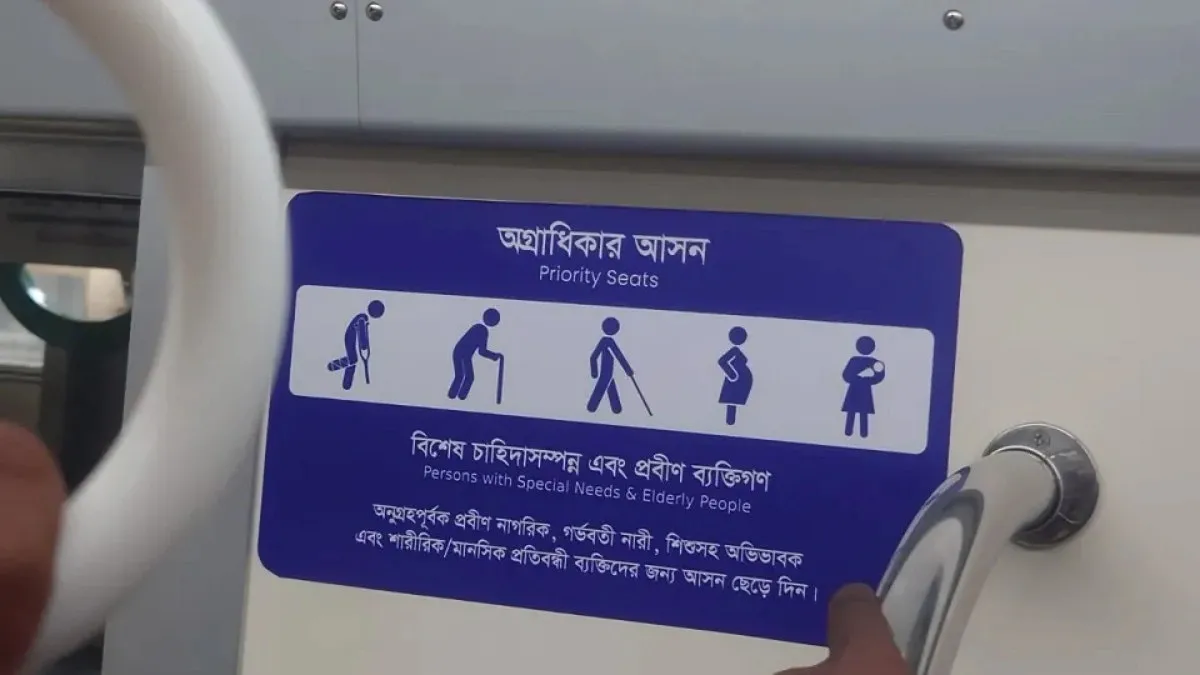
Dr. Najibur’s wife and younger son were in Saudi Arabia at the time to perform Umrah. Complications involving their flight tickets prevented them from returning promptly. His other two children live in New Zealand. Dr. Najibur was buried in Gournadi Upazila. Earlier, his funeral prayer was held after the Isha prayer on the premises of IES Mosque in Sector 5 of Uttara.Nakibur believes that everyone should show compassion towards elderly, sick and differently-abled passengers on public transport, although he does not blame anyone for what happened.Speaking to Agamir Somoy, he said, “I am not blaming anyone for my father’s death. The passengers there tried to lift him up, and the Ansar members also provided assistance.” However, he believes the outcome might have been different if such assistance had been offered in the beginning.“The metro rail is for everyone. Children, pregnant women and elderly people all use it. It is not necessary to give up your seat every time. However, we should look out for them, help them if they feel unwell and even offer assistance such as wiping away their sweat.”Following the incident, questions have been raised about the use of priority seats on the metro rail. To assess whether these seats are being used according to the rules, passengers’ movements were observed at several stations on Wednesday afternoon.Metro Rail Line 6 operates between Uttara North and Motijheel. Some passengers said that many people travelling towards Uttara board trains bound for Motijheel at Secretariat or Dhaka University stations. Their intention is to wait until most passengers get off at Motijheel, freeing up seats so they can sit during the journey back to Uttara.As the metro rail begins its journey from Motijheel towards Uttara, the number of passengers increases at every station.Meanwhile, signs above the priority seats in every carriage read: “Please offer your seat to senior citizens, pregnant women, guardians accompanying children, and people with physical or mental disabilities.”However, young and middle-aged men were also seen occupying these seats alongside elderly passengers. When elderly passengers boarded at some stations, a few occupants gave up their seats, while others remained seated.At Shahbagh Station, student Mehedi Hasan gave up his seat after noticing an elderly passenger. Speaking to Agamir Somoy, he said, “Our metro journey takes only a few minutes. Standing for that short time will not harm us. But elderly people find it difficult to travel while standing. They may even become unwell amid the jostling.”While getting off the train at Motijheel after travelling from Farmgate, 68-year-old Shakhawat Hossain said, “Sometimes, young men give up their seats when I board the metro rail. However, there are also times when I have to travel standing.”In his view, children should be taught at home which passengers deserve priority on public transport.Saidur Rahman, executive director of the Road Safety Foundation, said he had never managed to find an empty seat on the metro rail. He pointed out that young passengers are often seen occupying seats, which can cause difficulties for elderly and sick travellers.“There are not enough facilities for children and elderly people on our public transport systems. A large number of people travel by metro rail. Therefore, awareness must be raised at stations about giving up seats for elderly people, pregnant women and people with special needs.”He also recommended conducting awareness campaigns through schools, colleges, other institutions and the media. He emphasised the importance of providing first aid facilities as well.Speaking to Agamir Somoy, he said, “There should be a designated first aid facility at every station so that anyone who suddenly falls ill can receive immediate assistance.”Meanwhile, media professional Najmus Sakib Rahman believes that, alongside displaying instructions on priority seats, it is essential to check whether the rules are being properly followed.He said, “Dr. Najibur’s death has brought our lack of judgment, or common sense, into focus. We often know the rules and regulations, but lose the ability to recognise when and where we need to behave humanely.”“Showing empathy on public transport is part of our mutual responsibility. Today, someone else may need our help; tomorrow, we could find ourselves in the same situation. Therefore, the most important thing is to understand the circumstances and come forward spontaneously to help,” he added.
