
Silent Victims, Reckless Blackmailers

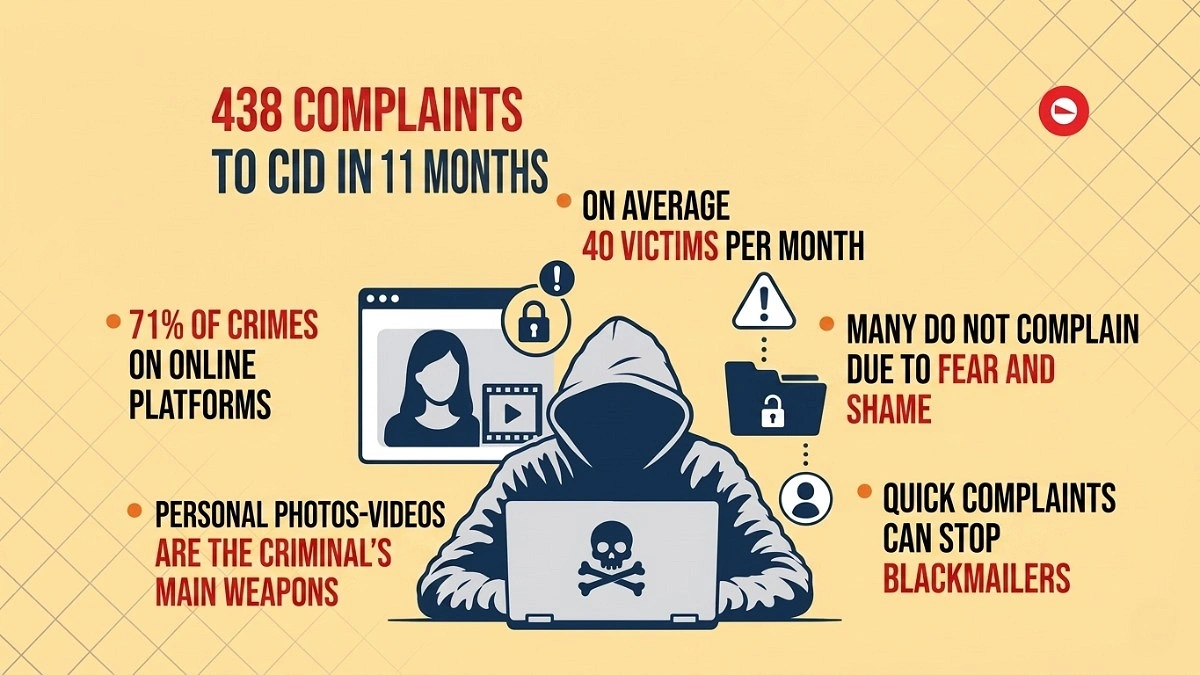
Graphics: Agamir Somoy generated by AI
A few photos, some personal information, or a video—one moment of carelessness can place them in someone else’s hands and become a source of long-term fear. As technology advances, cybercrime is also increasing. Personal photos, videos, and information are increasingly being used for blackmail on social media and other online platforms.
Data from the Cyber Police Center (CPC) of the Criminal Investigation Department (CID) shows that on average about 40 people file complaints of blackmail every month. Between June last year and April this year, a total of 438 complaints related to blackmail and threats were registered with the CPC.
Police officials working on cybercrime cases say that the actual number of victims is much higher than the number of complaints. However, most victims remain silent due to concerns about social reputation, family pressure, or fear of exposure. Many avoid seeking legal help, and this silence creates the biggest opportunity for criminals.
According to CID data, the majority of complaints are related to digital or online platforms. Out of 438 cases, 348 occurred through social media, messaging apps, and other online platforms. The most common cases involve fake identities used to build friendships, collecting personal photos or information, hacking accounts, or extorting money by threatening to leak intimate images.
Another 67 victims reported direct threats or blackmail via mobile phones, while 23 cases involved other traditional or miscellaneous forms of blackmail.
Cybersecurity experts say that criminals exploit the unregulated use of social media and users’ lack of awareness about sharing personal information. In many cases, offenders maintain contact for a long time using fake identities to build trust, later turning that relationship into a tool for blackmail.
They also note that most victims do not speak out due to fear, shame, and concerns about social humiliation, which makes offenders more daring.
CID spokesperson and Special Superintendent of Police Jasim Uddin Khan told Agamir Somoy that efforts are underway to identify and bring offenders to justice using information technology after complaints are received. However, alongside police action, citizens must also be more aware. He advised avoiding clicking unknown links, not sharing sensitive information or photos with strangers, and contacting the nearest police station or the CID Cyber Police Center immediately if blackmailed.
The CID official added that preventing misuse of technology requires not only law enforcement but also increased family and social awareness. He emphasized that the sooner victims report incidents, the easier it becomes to identify and stop the criminals.
