
Cabinet Division instructs use of paper pens in government offices

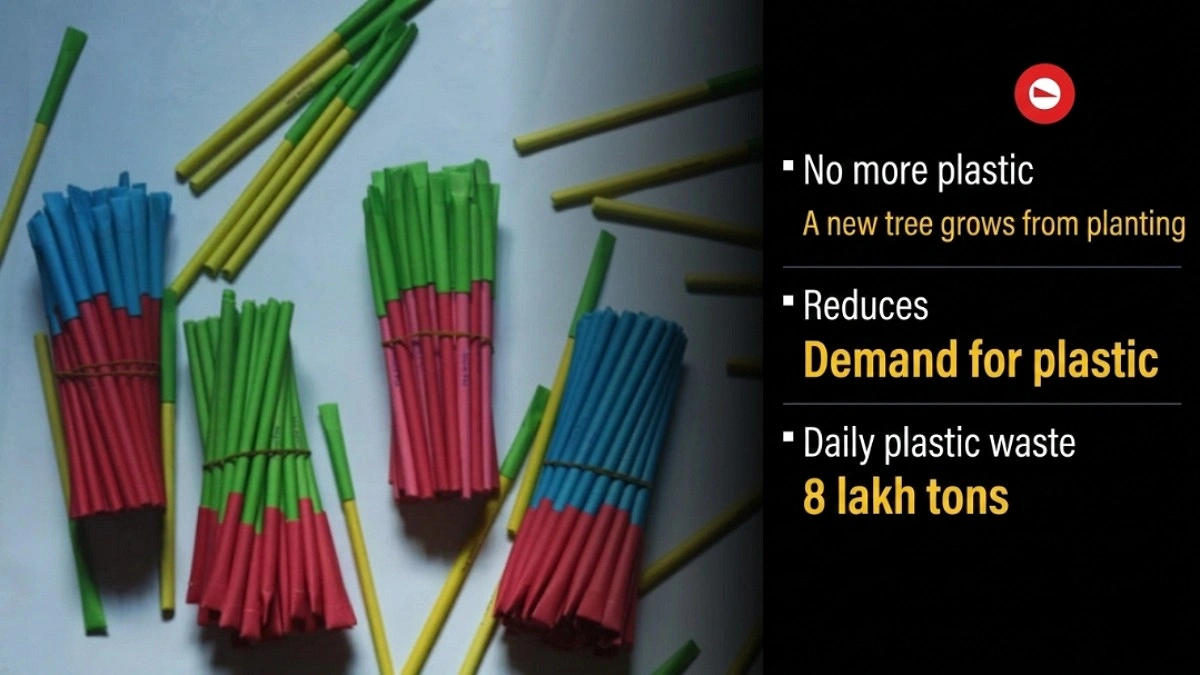
Graphics: Agamir Somoy
The Cabinet Division has instructed all government offices, including the Prime Minister’s Office, to use environmentally friendly pens instead of plastic pens. On July 28, letters were sent to the secretaries of all ministries, divisional commissioners, deputy commissioners (DCs) and upazila nirbahi officers (UNOs), asking them to take necessary measures to ensure the use of pens made from recycled paper. Following this, the ministries have sent letters to offices under their jurisdiction, asking them to take the necessary measures, according to sources concerned.
In the letter mentioned, “Plastic pollution is currently one of the major environmental challenges worldwide and in Bangladesh as well. The uncontrolled use of plastic and plastic waste are putting the environment and human health at risk. Considering the overall situation, the Government of Bangladesh is committed to reducing the use of plastic and increasing and promoting the use of environmentally friendly alternative materials. In this context, replacing plastic pens in government offices with pens made from recycled paper and using recycled paper can play an effective role in environmental conservation and reducing plastic waste. In this regard, ministries and divisions, as well as directorates, departments, offices, agencies and other relevant institutions under them, are hereby requested to gradually encourage and prioritize the reuse of recycled paper and other materials in government work, as well as the use of pens made from recycled paper.”
It is learned that the main feature of environmentally friendly pens is that paper is used instead of plastic. Each environmentally friendly pen costs Tk 3 to Tk 5 to produce, including the cost of paper, glue and the refill. These pens are sold for Tk 5 to Tk 7 each. Once the ink runs out, planting these paper made pens in the soil can result in the growth of different types of plants. The use of these pens will reduce the demand for plastic and help reduce weather and climate change. It will help restore environmental balance. Environmentally friendly pens are already being produced in various parts of Bangladesh. These pens are available in different parts of the country, including the capital.
Around 800,000 tons of plastic waste are generated in Bangladesh every day. Of this, 36 percent is recycled, 39 percent is used for landfilling, while the remaining 25 percent is directly added to the environment as a pollutant. Single use polythene bags are among the most harmful forms of plastic waste. This is because their widespread use and improper management are obstructing the normal flow of canals, rivers and drains. This is causing waterlogging. Although the use of polythene was banned by law in 2002, around 1,200 factories are producing polythene in the country due to inadequate enforcement. Most of these factories are concentrated in Dhaka.
