
Democracy, humanity, and capability must be achieved

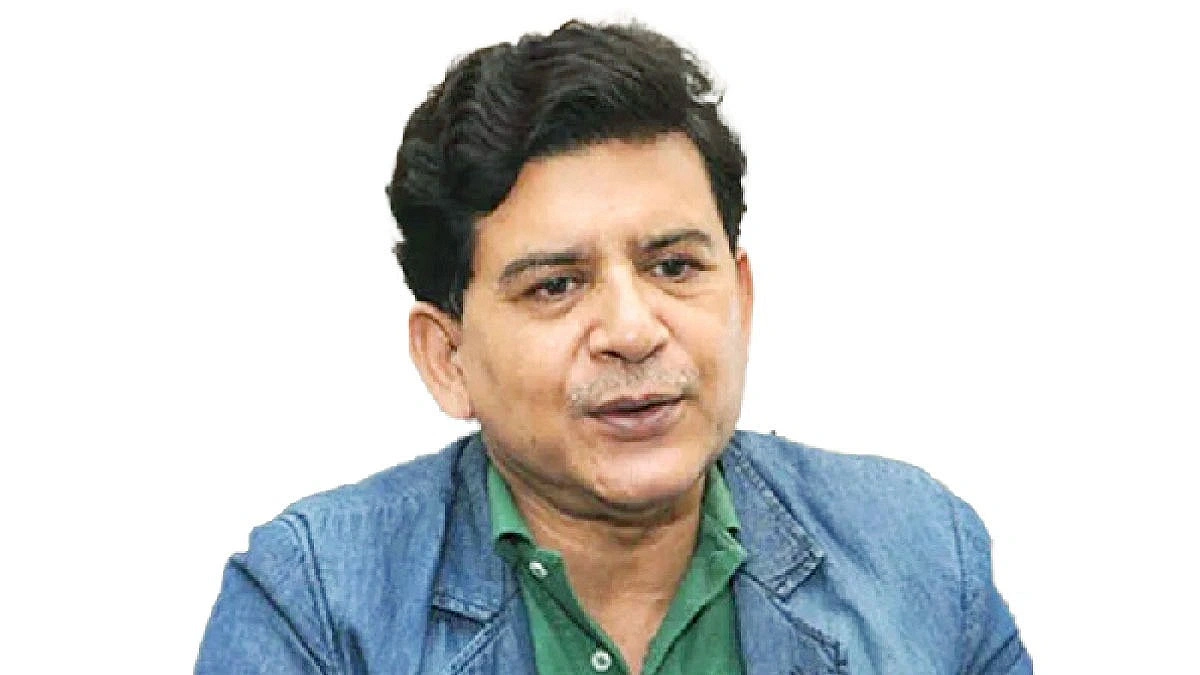
Hossain Zillur Rahman. Photo: Agamir Somoy.
Since independence until today, cultural transformations have taken place across various sectors of the country; from trade and commerce to the mass media—the touch of change has been felt everywhere. Yet, nothing seems to touch our bureaucracy. Carrying the legacy of British colonial culture, this institution has still not been able to break free from its controlling mindset. The year 2050 is still a long way off. We are usually absorbed in the day-to-day analysis of various important matters. However, looking at a slightly more distant analysis is also crucial. And to make those distant dreams a reality, we must correctly perceive the present and bring about some desired changes to the structure of the state. To put it better, the state must acquire three important characteristics—accountable democracy, humanity, and capability.
Authoritarian rule has emerged in the country at various times since independence. Most recently, we have witnessed an extremely authoritarian regime for nearly a decade and a half, especially over the last decade. It is from this tragic experience that various quarters have long been calling for long-term state reforms. In terms of these reforms, while it is crucial to look at the institutional framework of the state on one hand, it is equally vital to look at the interrelationship between the state and society on the other. This is because a colonial character exists at all levels of the state. Although the "ruler-subject" culture of the British colonial era has been abolished on paper, and subsequently democracy has arrived, voting has been introduced, and various other elements are being added—the process of state governance has fundamentally failed to overcome its colonial character. And the bearer of this colonial character of the state is the bureaucracy. The "ruler-subject culture," meaning that very spirit, remains active within the bureaucracy. Consequently, a distance between the common people and the state has always persisted. The British left in 1947, after which Pakistan was formed, then Bangladesh was born, the 1990 uprising took place, and most recently the 2024 uprising occurred; yet we have failed to deal a major blow to key fundamental characteristics of the state, such as the bureaucracy.
Even if we speak of legal reforms, the CrPC (Code of Criminal Procedure, 1898) from that colonial era still remains. In other words, the colonial character persists here as well. Toward the end of the British colonial era, a nationalist movement began within the bureaucracy, and toward the end of the Pakistani era—meaning during the liberation struggle of Bangladesh—nationalist ideologies existed within the bureaucracy as well. As a result, a public aspiration was created to transform into a humane state. The aspiration was that we must transcend the colonial culture of rulers and subjects. However, that very culture kept returning to the bureaucracy and eventually took on a nearly permanent form.
Now, looking at the bureaucracy, it is visible that a section carries the legacy of the original colonial culture. The administrative cadre is the heir to that colonial culture within the bureaucracy because the tendency to "control" is more prevalent among them. For instance, every sector, including education, health, and statistics, remains under the control of administrative bureaucrats. Their control even extends to specialized organizations like ports. They are fiercely holding onto their control. As a result, developing a "professional attitude" within the administration has gradually become difficult here.
If I imagine the Bangladesh of 2050, I will certainly hope that the administrative culture inherited as a colonial legacy must come to an end. In addition, a system of "checks and balances" over the administrative control of bureaucrats must be ensured, alongside guaranteeing the judiciary the opportunity to function independently. It is true that even after an elected government came to power following the instability that succeeded the 24' uprising, signs of that desired change are still not visible. The interim government also had an opportunity; they possessed immense political capital. That capital was public support, but they could not achieve it. Those who are in power now have proven their public support through votes; they have both the opportunity and the time. The interim government failed because those in charge lacked experience and efficiency in managing the bureaucracy. Furthermore, the preparation and deep initiative required to end the colonial bureaucratic culture were also absent within the interim government. Instead, the interim government placed the bureaucracy in the driving seat from day one.
If we want to see Bangladesh in a different light in 2050, then these three characteristics—"democratic, humane, and capable"—must be achieved. To achieve this, the ruling class must adopt a mindset of change. The venues of accountability and the institutions must be strengthened. Only then will the culture of these institutions be reformed. To make this happen, we need a democratic discourse. Civil society and others generally hold highly one-sided discussions on this issue; their discussions regarding institutional power are relatively minimal. Amidst the rules, regulations, and practices through which our administrative culture has imposed itself so heavily, the institutions are left weak.
Another aspect that urgently needs to be changed is the culture of keeping local government weak. Local government must be elevated from a toothless, obedient, junior subordinate employee level. Only then will the institution eventually become a countervailing body for the common people at the local level. The Union and Upazila Parishads are tactfully kept weak. Importance should also be given to the Zilla Parishads; however, the Zilla Parishads have essentially become institutions for rehabilitating bureaucrats and political party activists. Urgent reforms are required to make the local government level independently capable. Here, on one hand, local governments must be freed from the reality of bureaucratic subordination, and on the other hand, they must also be kept free from attempts to turn them into obedient institutions of the "MP-Raj" or Member of Parliament.
We have become accustomed to the word democracy, but we understand nothing by democracy other than elections. We must add the word humane to democracy. The combination of these three words—democratic, humane, and efficient—is needed. Democratic means accountability, humane is the culture, and efficiency is the capability of state institutions and strategic policies. Together, these three must make the word democracy meaningful.
The matter of state capability has been neglected for over 50 years. Yet, this is exactly where attention is needed. One of the primary conditions for building capability is the formulation of an effective education system. Radical changes are required from primary to higher education. It is not just the institutional structure of education that needs to change; the educational vision of the nation must also be correct. We need to break away from the culture of merely forming education commissions that produce nominal, perfunctory reports.
To understand our deficit in terms of capability, one only needs to look at public transport. Public transport is undervalued the most here—from a policy-making level. In all functional countries across the world, personal cars exist, but importance is given to public transport. To be a functioning and capable state, public transport is one of the foundational elements. Europe would not have achieved so much without public transport, nor could women have moved around without fear without public transport. This mobility would not have existed without public transport. On the other hand, inequality is higher in America. The reason for this is that there is a major deficit of public transport in that country. Even in the developing countries of the world, public transport receives distinct importance. Our political leaders always say that the country will become like Malaysia or Singapore; however, they do not mean this in a "functional state or democratic" sense. They only speak of seeing some of the shining buildings that exist in Malaysia and Singapore. They do not give importance to the aspects of a functional state. Anti-corruption commissions work very powerfully in those countries. They remain silent on this matter as well. They will only say that there is a shining building there, so a shining building must be built here too. At any rate, by 2050, we must achieve such capability in public transport that a young woman from Kurigram, not just from Dhaka or Chittagong, can come to Dhaka alone without any hesitation or fear to attend an examination. This is mobility, because when we want democracy, we also expect its visible results. And this result is not a desire for opulence; rather, it is a tolerant, comfortable, and dynamic life.
The democratic, accountable, humane, and capable state that we need might indeed be achieved by 2050. In this regard, the ruling governments must be sincere. Furthermore, our world of aspirations needs to be refined in order to drive it toward disciplined success.
Author: Advisor to the Former Caretaker Government
