
Saudi Arabia executes 363 foreign nationals in three years, how many were Bangladeshis?

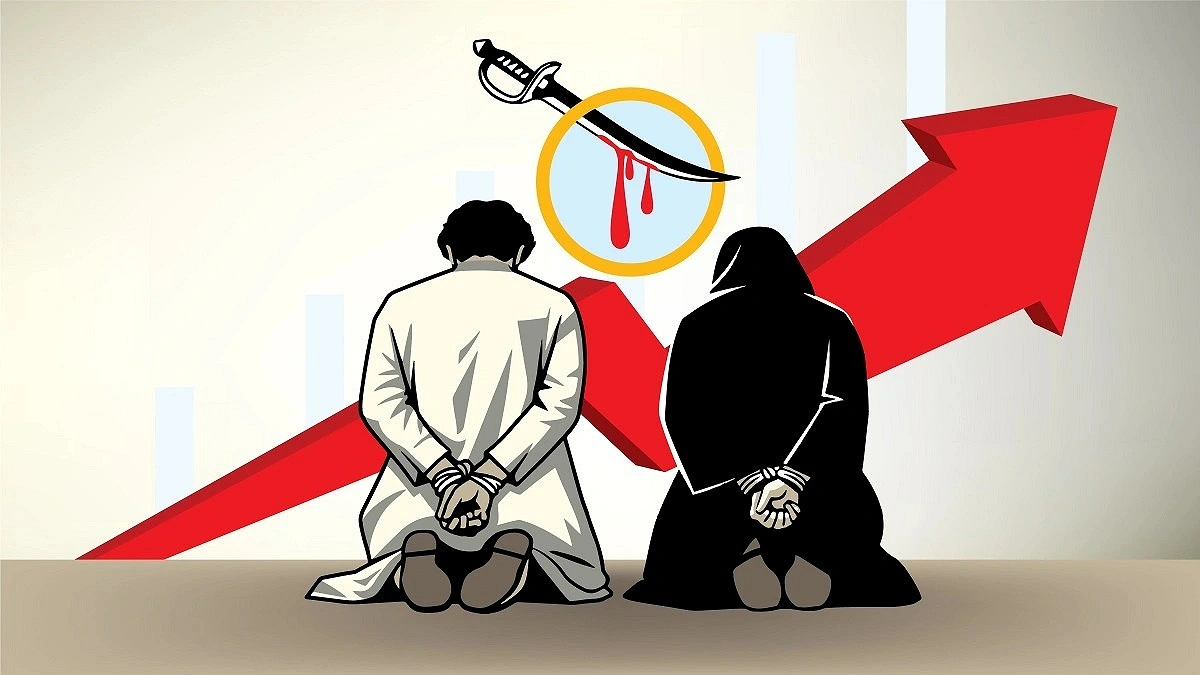
Graphics: Agamir Somoy
Which countries carry out the most executions in the world? When looking for an answer to this question, Saudi Arabia consistently ranks among the leading countries.
Amid discussions following the recent executions of two Bangladeshis in the Middle Eastern country, statistics show that Saudi Arabia executed 864 people on various charges over the past three years.
Data from the European Saudi Organization for Human Rights (ESOHR) also show that 108 people were executed in the country during the first six months of 2026.
According to Amnesty International, China leads the world in executions, followed by Iran. Saudi Arabia ranks third.
According to ESOHR, a total of 1,585 people were executed in Saudi Arabia between 2015 and 2023.
Amnesty International reported that Saudi Arabia executed 172 people for various crimes in 2023. The figure doubled the following year to 345. Calculations show that one person was beheaded every 25 hours in the country that year.
The highest number of executions in a single year occurred in 2025. Saudi Arabia executed a total of 347 people that year.
Of the 864 people executed in Saudi Arabia over the three years from 2023 to 2025, 363, or nearly 40 percent, were foreign nationals. At least 11 of them were Bangladeshis.
ESOHR data show that most foreign nationals executed in Saudi Arabia came from countries in Asia and Africa.
Notable countries of origin include Somalia, Ethiopia, Pakistan, Egypt, Afghanistan, Jordan, Nigeria, Syria, Iran, Sudan, India and Bangladesh.
ESOHR’s annual report records the executions of eight Bangladeshis in Saudi Arabia in 2023. A total of 38 foreign nationals were executed in the country that year.
In 2024, Saudi Arabia executed 138 foreign nationals, including one Bangladeshi. A large proportion of these foreign nationals were sentenced to death for drug related crimes and murder.
In 2025, the year with the highest number of executions, 188 foreign nationals were executed. They accounted for 52 percent of the total. However, information is unavailable on whether any Bangladeshis were among them.
Most executions of foreign nationals in 2025 were carried out for drug smuggling or other drug related offenses. A total of 240 people were executed for such offenses.
ESOHR data indicate that Bangladeshis were among the 108 people executed in Saudi Arabia during the first six months of 2026. However, its report does not specify how many Bangladeshis were executed. Two more Bangladeshis, Nazrul Islam and Sweety Akter, were executed after June this year.
Of the 108 people executed during the first six months of this year, 49 were Saudi nationals. The remaining 59, or 54 percent, were foreign nationals. This means the proportion of foreign nationals among those executed in Saudi Arabia this year was the highest in recent years.
Among them, 71 people were executed on drug related charges, 25 for murder, nine for security related offenses and three for other reasons.
The report states that the 59 foreign nationals executed during the first six months of this year included citizens of Bangladesh, Afghanistan, Pakistan, Ethiopia, Sudan, Yemen, Syria, Jordan, Somalia, Egypt, Nigeria, Benin, Iraq, Kuwait, Kenya and Uganda. However, it does not specify how many citizens of each country received the death penalty.
On October 14, Saudi Arabia’s Ministry of Interior announced the executions of two Bangladeshi nationals. Although the ministry said they had been punished for immoral activities, it did not provide details of the offenses.
Meanwhile, the Bangladesh Consulate in Jeddah said Saudi authorities had not informed Bangladesh before carrying out the executions. A diplomatic letter has been sent to the Saudi authorities seeking an official explanation and detailed information about the incident.
What are the reasons for the death penalty?
Saudi Arabia’s judicial system operates through a combination of Islamic Sharia law, written laws and royal decrees. Punishments are determined by the nature of the offense, the evidence and the applicable legal provisions.
The country imposes the death penalty for serious drug offenses, particularly drug importation and distribution. However, the punishment is not the same for all drug related offenses. Depending on the nature of the offense and the applicable law, penalties may include imprisonment, fines or more severe punishment.
In cases of intentional murder, the death penalty may be imposed under the principle of qisas, or retributive justice. However, the outcome of a case may change if the victim’s heirs grant forgiveness or accept compensation under specific legal conditions.
The death penalty may also be imposed for offenses such as terrorism, attacks on security forces and involvement in serious terrorist activities.
Saudi authorities maintain that the death penalty is a necessary punishment to protect public order and security.
Human rights organizations raise concerns
International human rights organizations have long expressed concern over the extensive use of the death penalty in Saudi Arabia. The practice of executing people for drug related offenses has drawn particular criticism.
According to Amnesty International, the death penalty for drug related offenses is inconsistent with international human rights standards. The organization opposes the death penalty for all types of crimes.
Following the executions of the two Bangladeshis, Human Rights Watch reported the execution of another person last Saturday. The man, named Hassan Al Faraj, was punished for an offense he committed during his adolescence.
According to ESOHR’s report, 83 of the 108 executions carried out during the first six months of 2026 were for offenses that did not involve allegations of intentional killing.
The organization has also raised concerns about the transparency of judicial proceedings, access to legal assistance and defendants’ opportunities to defend themselves. There have also been allegations that these opportunities are more limited for foreign nationals.
