BNP: A people’s party born in a period of crisis


Graphics: Agamir Somoy
Throughout the long journey of Bangladesh’s politics, certain parties have expanded beyond the electoral field to establish themselves as enduring political forces. The Bangladesh Nationalist Party (BNP) is one such organization. Commencing its journey on September 1, 1978, the party is celebrating the 48th anniversary of its foundation today. At its inception, the party faced political instability and deep-seated divisions on one hand, and the urgent need for a functional, multi-party political space on the other. Filling that vacuum, the political framework initiated by martyred President Ziaur Rahman eventually evolved into one of Bangladesh’s primary political powers.
The trajectory of the BNP is deeply intertwined with the evolution of Bangladesh’s state, society, and politics. The foundational philosophy of Ziaur Rahman, the strategy of bringing diverse viewpoints onto a single platform, grassroots party building, the subsequent movement for democracy under Khaleda Zia, transitions in and out of power, prolonged opposition politics, lawsuits, imprisonment, and returning to state power in 2026—together, these milestones mark a significant chapter in the country's political history.
The Vacuum Behind Its Inception
At the time of BNP's birth, Bangladeshi politics was fraught with instability. The Fourth Amendment in 1975 introduced a presidential system alongside a one-party political framework, effectively halting the operations of other political parties through the establishment of BAKSAL. Following the assassination of Bangabandhu Sheikh Mujibur Rahman, the nation entered a chaotic phase marked by coups, counter-coups, and military rule. During this turbulent period, the absence of an organized, nationwide political alternative to the Awami League became clear. Recognizing the need to restructure the political landscape, Ziaur Rahman initiated a fresh platform centered around nationalist politics. According to Banglapedia, he announced his 19-point program in 1977, forming a new political alliance around the Nationalist Democratic Party (JAGODAL). Against the backdrop of the 1978 presidential election, this initiative expanded, culminating in the formal launch of the Bangladesh Nationalist Party (BNP) in the Ramna area on September 1.
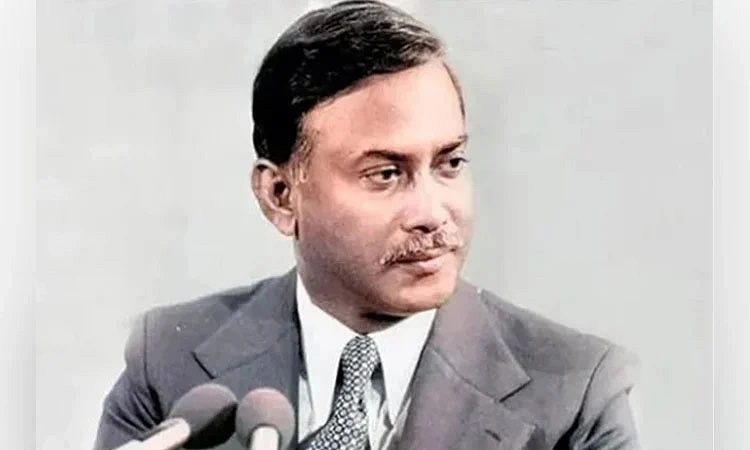
Ziaur Rahman. Photo: BSS file.
A defining characteristic of the BNP was that it did not emerge around a single ideology. Instead, bringing leaders and activists from broad political backgrounds onto a unified platform was central to its formation. Politicians from Muslim League-aligned nationalist backgrounds, leftist leaders, and figures from various other political streams found a place in the new party. The inclusion of key figures such as A.Q.M. Badruddoza Chowdhury, Shah Azizur Rahman, Moudud Ahmed, and Kazi Zafar Ahmed highlighted this wide political spectrum. From the outset, the goal was to forge a broader political unity centered on nationalism rather than restricting politics to a single class or doctrine.
Translating Nationalism into a Political Identity
At the core of Ziaur Rahman's vision was "Bangladeshi Nationalism." The BNP manifesto similarly prioritized national unity, democratic framework, economic self-reliance, and national sovereignty. The 19-point program focused heavily on agriculture, food production, administrative decentralization, public engagement, industrial growth, rural development, and the welfare of women, youth, and workers. This agenda laid the groundwork for BNP's political identity as a "people's party." A signature aspect of Zia’s approach was moving beyond urban power centers to engage directly with rural communities. By traveling across the country, connecting with farmers and workers, expanding local organization, and linking political messaging with tangible development projects, he established a broad social foundation for the party.
Rapid Local Expansion as a Key Political Success
One of Ziaur Rahman’s greatest political achievements was rapidly expanding a national party down to the local level. BNP did not remain confined to the capital. By incorporating political figures across various ideologies and social classes, the organization quickly gained ground in regions throughout the country. The party's resounding victory in the 1979 parliamentary election served as the first major electoral validation of that organizational growth. Zia’s political approach proved vital here: he relied on more than just speeches, emphasizing hands-on organizational work in the field. Consequently, the concept of the "grassroots field" became a core pillar of BNP's politics early on. That initial investment laid the groundwork for the party's future electoral viability, capacity to mobilize movements, and rural-to-urban organizational presence.
Enduring Beyond Zia’s Assassination
Following the assassination of Ziaur Rahman in Chattogram in 1981, a natural question arose: could a party so heavily reliant on his personal popularity and leadership survive? This marked BNP's second major political test. In the wake of his death, Khaleda Zia stepped into the political spotlight. Having previously lived primarily as a homemaker, circumstances thrust her to the forefront of national politics. She eventually assumed leadership of the BNP, progressively taking organizational and political control of the party. Over time, Khaleda Zia's identity fused with BNP to such an extent that she became the defining figure of its second chapter. Her biggest test came during the anti-Ershad movement. Following a prolonged struggle, alliance politics, and a mass uprising that led to the fall of the Ershad regime in late 1990, the path to electoral democracy reopened. In the 1991 general election, BNP emerged as the largest party in parliament with 140 seats, making Khaleda Zia the country's Prime Minister.
Multiple Terms in Power and Political Resilience
Despite facing political crises, the obligation to step down, and subsequent electoral defeat in 1996, the BNP did not collapse; instead, it reorganized through opposition politics. In the 2001 general election, BNP secured a major victory by winning 193 seats, returning Khaleda Zia to the premiership. According to Election Commission data, BNP captured 40.97 percent of the total vote in that election. Khaleda Zia’s personal electoral appeal further reflected the party's broad social foundation. Across five national elections between 1991 and 2008, she contested 23 constituency seats and won every single one—a rare feat in Bangladesh's electoral history.
However, BNP's history extends beyond its successes. A recurring pattern throughout its political journey is that losing power never led to the complete dissolution of its organization. Despite severe pressure on leadership, the arrest of central leaders, and extensive legal cases filed against field-level activists, the party's cadre remained committed. The prolonged period from 2008 to 2024 served as another test of endurance for the party. The outcome of that trial manifested in the 2026 general election, where BNP returned to state power with a decisive victory after nearly two decades.
The Narrative of a "People's Party"
The label "People's Party" is not a neutral political descriptor; it is a core element of BNP's self-identity and a long-standing belief among its supporters. However, several political factors support this claim:
Inclusivity: From its inception, the party sought to unite people across diverse political beliefs and social classes under one platform.
Broad Social Alliance: Its core political philosophy—Bangladeshi Nationalism—built a wide-ranging social coalition.
Organizational Persistence: The party maintained a functional nationwide organizational structure despite prolonged periods out of power.
Electoral Performance: Voting outcomes in 1991, 2001, and most recently in 2026 demonstrate BNP's consistent ability to mobilize substantial public support under distinct political landscapes.
Ultimately, BNP's primary challenge as a "People's Party" lies in how it governs while in office. Articulating public aspirations from the opposition is relatively straightforward; fulfilling those expectations while holding power presents a much tougher hurdle. Moving forward, the party's performance on key issues—law and order, corruption control, job creation, commodity pricing, institutional reform, and political tolerance—will determine how effectively BNP lives up to its identity as a party of the people.