
Nomination-deprivation wound has not healed in BNP
- Separate Faction of Rebels and Expelled Members created
- Fears of Infighting in Local Elections predictable

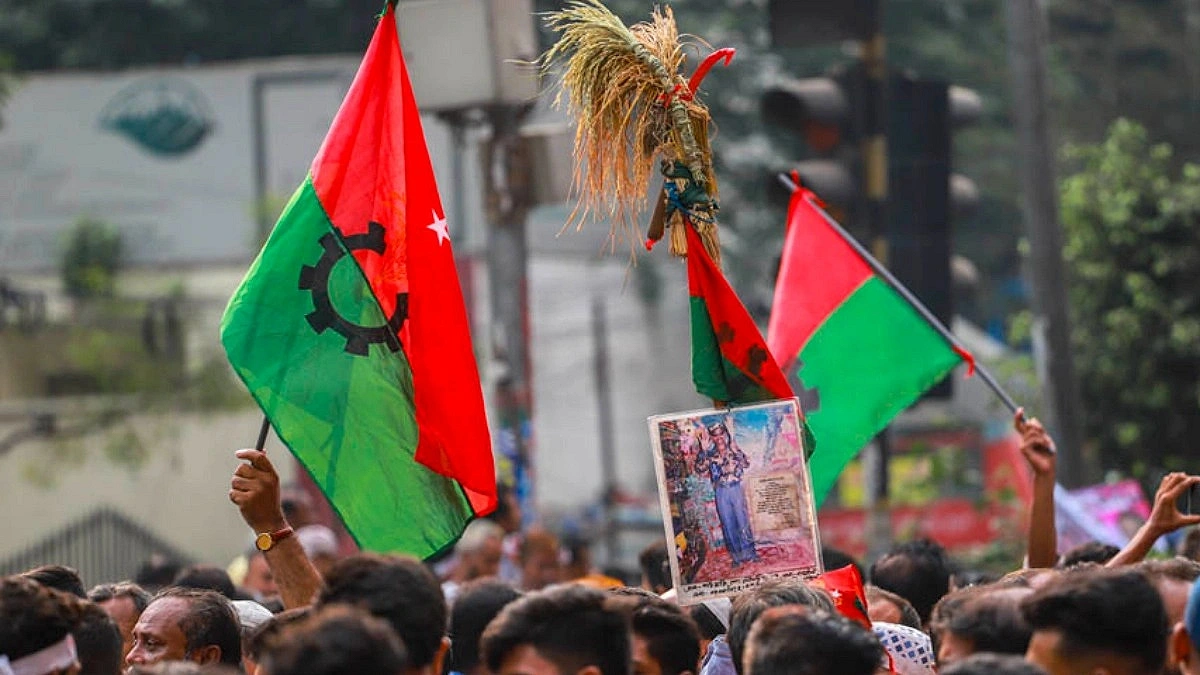
The fallout from nomination disputes in over fifty constituencies still persists. Photo: Collected.
After success in national politics or a change of power, strengthening field organization has now become the biggest challenge for many parties. In some places, nomination-centered disputes, in others leadership conflicts, and elsewhere old-versus-new clashes and organizational inactivity have made the internal picture of parties complex. An Agamir Somoy serial feature on this is to be carried out in a few installments. Today's feature is the opening one.
The dispute over nominations before the national parliamentary election, rebellion in the electoral field and subsequent expulsions—that wound has not yet healed in BNP. Even though the party has come to power, full unity has not returned at the grassroots. Many leaders who did not get nominations contested against party candidates and were expelled. Many of them also won the election. As a result, despite expulsion orders, their influence in local politics remains intact.
Leaders who withdrew from the election after not getting nominations have also retained their respective spheres. Their followers are still active separately alongside the party leadership. In some places, multiple groups have emerged around rebel candidates; in others, around the leadership of upazila BNP. This division from the national election now threatens to spread to local government elections.
According to party sources and conversations with field-level leaders and activists, the aftermath of nomination disputes still persists in more than fifty seats. For voting against party candidates, central and grassroots leaders as well as nearly 500 activists who supported them were expelled. Most of them have still not been able to return to the party.
Local government elections are scheduled to be held at the beginning of next year. In this vote, which is going to start with the Union Parishad election, even though there will be no party symbol, BNP’s local support will be important. Already in various areas, three to four leaders are preparing to become candidates. Each side wants its own person to be seen as the candidate.
According to political analysts, if the nomination disputes from the national election are not resolved, they may also affect local government elections. Especially in areas where rebel candidates won or built strong spheres, it may be difficult to unite around the party-backed candidate.
Separate spheres around the expelled: Patuakhali-3 (Galachipa-Dashmina) constituency is one example. In the 13th national parliamentary election, BNP supported Gono Odhikar Parishad president Nurul Haque Nur in this seat. The party nomination seeker was Hasan Mamun, a member of the central executive committee and former president of the Dhaka University unit of Chhatra Dal. After not getting the nomination, he became an independent candidate. The party expelled him. During the election, a section of BNP worked for Nur. Nur won the election. Currently, he is the state minister for expatriates’ welfare and overseas employment. However, although Hasan Mamun remains expelled, a section of BNP in Galachipa is still active around him. There have also been demands to withdraw his expulsion order. On the other hand, there are separate political spheres centered on the upazila BNP leadership and on Nur. There is still no BNP committee in Dashmina upazila.
The picture in Jhenaidah-4 constituency is the same. Here, the BNP nomination seeker was Saiful Islam Firoz, central senior joint secretary of Jatiyatabadi Swechchhasebak Dal and former acting president of Chhatra Dal. Before the election, Gono Odhikar Parishad general secretary Rashed Khan joined BNP and contested under the paddy sheaf symbol. At the demand of local leaders and activists, Firoz became an independent candidate. He was expelled for contesting against the party candidate. But it is known that a large section of local BNP is still with him.
On the other hand, another group exists around Rashed Khan and Hamidul Islam Hamid. Hamid is former senior joint convener of Kaliganj upazila BNP in Jhenaidah. Murshida Zaman, wife of the party’s former MP, the late Shahiduzzaman Beltu, and an adviser to the district BNP, is also leading a separate sphere there.
In the Natore-1 constituency, the BNP-nominated candidate was Farzana Sharmin. On the other hand, after not getting the nomination, the party’s central assistant office secretary, Taiful Islam Tipu, became a rebel candidate. The party expelled him. But a section of local BNP is still with Tipu. Farzana Sharmin won the election and is currently serving as State Minister of Social Welfare.
In the Tangail-3 constituency, BNP central executive committee member Obaidul Haque Nasir received the party nomination. On the other hand, after not getting the nomination, BNP Chairperson’s Advisory Council member and former state minister Lutfar Rahman Khan Azad became a rebel candidate. Although expelled, he won the election. A section of local BNP is still with him.
In the Kishoreganj-5 constituency, before the election, Bangladesh Jatiya Dal Chairman Syed Ehsanul Huda joined BNP and contested under the paddy sheaf symbol. On the other hand, after not getting the party nomination, BNP central executive committee member Sheikh Mojibur Rahman Iqbal became a rebel candidate. A large part of local BNP and associate organizations worked for him openly or covertly. Although the party expelled him, Iqbal was elected as a member of parliament. Many of his followers are still with him.
Slow progress in lifting expulsions: For contesting against party candidates, more than fifty central and grassroots leaders of BNP, along with nearly 500 activists who supported them, were expelled. Many of them have applied to return to the party. But so far, the expulsion orders of only six grassroots people have been revoked. In early last August, the central leadership revoked the expulsion orders of six leaders of Narail Sadar, municipal and Lohagara BNP. No decision has yet been made about the rest. As a result, many expelled leaders remain organizationally outside the party but are active in local politics.
Open infighting: After BNP came to state power, the dominance of local leadership and conflict between new and old activists also increased grassroots infighting. Around the party’s 48th founding anniversary on September 1, incidents of conflict came to the fore in at least five districts. There were conflicts among leaders and activists in Barishal, Patuakhali, Munshiganj, Chattogram and Narayanganj. More than fifty people were injured in Galachipa of Patuakhali, and at least 25 were injured in Sreenagar of Munshiganj and Sitakunda of Chattogram. Many party leaders believe these incidents are an expression of grassroots division. As local elections draw nearer, disputes over candidate selection may increase.
Local elections will be a big test: This vote, which is going to begin with the Union Parishad election, is being seen as a big organizational test for BNP. The party wants to maintain the continuity of its national election victory in local elections as well. For this reason, for several months, BNP Chairperson and Prime Minister Tarique Rahman has been holding organizational meetings with district leaders. He has directed grassroots leaders to coordinate with all sides and select a single candidate. The party will support the most qualified candidate. Leaders and activists have been told that even if a candidate receives party support, they must win based on popularity.
Party sources say assigned leaders are holding meetings with all relevant sides and possible candidates. Their message is one—whoever the party supports, everyone must ultimately work for that person. Possible candidates are also committing to this. But how effective this commitment will be at the field level—that is now the question.
Will expelled leaders remain on the side of the party candidate? The biggest uncertainty for BNP is the position of expelled leaders. Whether they will work for the party-backed candidate or take a separate position with their followers is still not clear. A former central BNP leader, expelled for voting against the party candidate in the last election, said, “With me are elected upazila chairmen, municipality mayors and Union Parishad chairmen. They will vote. Even for UP member posts, our candidates will be there. The party has not reached any compromise with us that we will make concessions. We will field candidates in every phase of the local government elections.”
His statement made clear the position of a section of expelled leaders. They are still trying to hold on to their political strength.
BNP Joint Secretary General Syed Emran Saleh Prince said that in the changed circumstances, local government elections are going to be held during an elected democratic government. The elections will be completely free, fair and neutral.
In his words, since BNP is in power, many in the party may be interested in the elections. But the most qualified candidate will be given party support with everyone. There is no scope to support someone whom ordinary people do not like.
He expressed hope that those who went outside the party decision in the last election, and those who supported them, will also remain on the side of the party-backed candidate this time.
Prince also said, “They have already realized their mistake. Many have applied seeking forgiveness to return to the party. The party will consider their applications after seeing their role in the upcoming election.”
