
Strengthening climate resilience
Environment state minister meets CIF over funding announced for Bangladesh

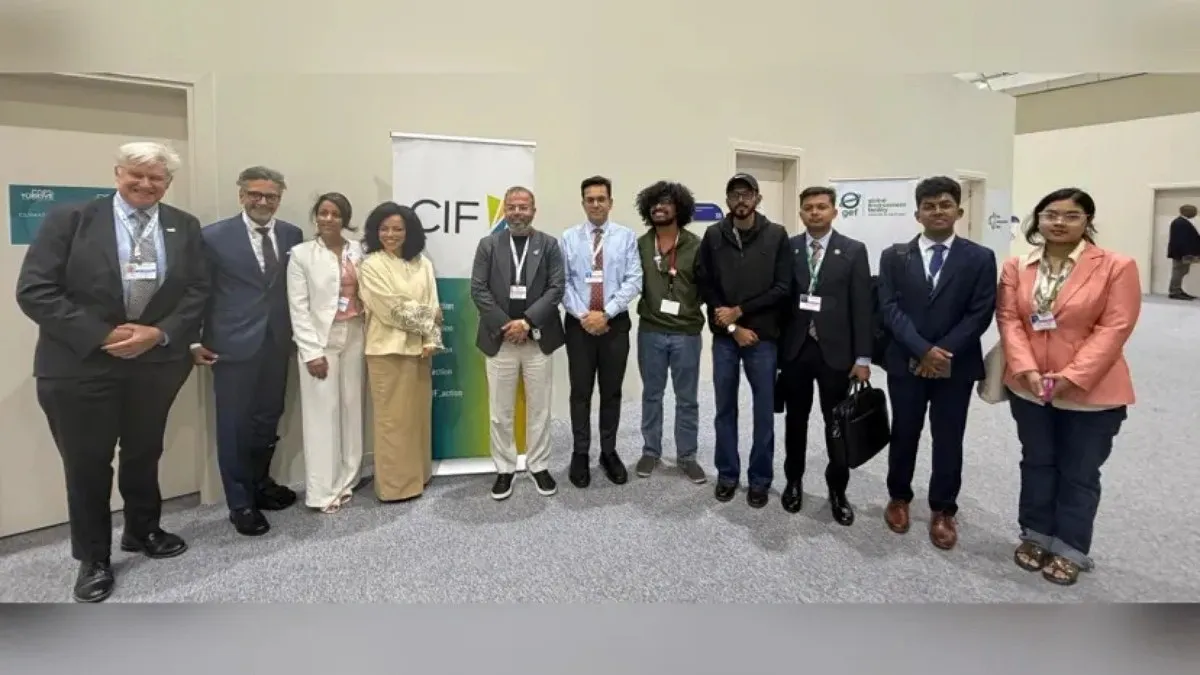
Collected Photo
State Minister for Environment, Forest and Climate Change Sheikh Faridul Islam has met senior officials of the Climate Investment Funds (CIF) to discuss the process of releasing $30 million in funding announced for Bangladesh to address the impacts of climate change and strengthen the country’s resilience.
The meeting discussed the selection of priority projects for the funding, plans for utilizing the money and ways to strengthen future cooperation.
The meeting was held on Saturday (November 14) at the CIF office located at the COP conference venue in Türkiye, in the afternoon local time. CIF Chief Executive Officer Tariye Gbadegesin and Head of Partnerships and Stakeholder Engagement Jacob Thoppil attended the meeting. Climate finance expert Shah Adnan Mahmud and Amanullah Parag of Youth for NDC represented Bangladesh.
During the meeting, various aspects of effectively utilizing the funding announced for Bangladesh under CIF’s ARISE program were discussed.
CIF representatives said the program primarily aims to turn climate risks into investment opportunities and protect economies from financial losses caused by climate change.
The program offers opportunities for substantial co-financing through partnerships with six multilateral development banks. It also provides access to various financial instruments, including grants, contingent grants, concessional loans, equity investments and guarantees.
The funding can be used to strengthen climate resilience in the agriculture, water, energy, transport and industrial sectors.
Regarding the disbursement process, CIF representatives said a country-led investment plan would be developed based on Bangladesh’s national priorities and the needs of climate-vulnerable sectors. The plan will be formulated with support from the Asian Development Bank (ADB). Implementation of the funding will proceed based on this plan.
During the meeting, State Minister Sheikh Faridul Islam highlighted climate risks and infrastructure challenges in Bangladesh’s coastal areas.
He said many cyclone shelters built in coastal areas 10 to 15 years ago had been damaged by salinity. At the same time, the shortage of safe drinking water is making life increasingly difficult for coastal communities.
He emphasized the importance of developing cyclone shelters for multiple uses. This would allow the facilities to provide shelter during disasters while also serving educational and livelihood-related activities at other times of the year.
The meeting also discussed the possibility of installing solar power systems on shelter rooftops and supplying surplus electricity to the national grid.
