
No emotion, only legal process: law minister on Sheikh Hasina

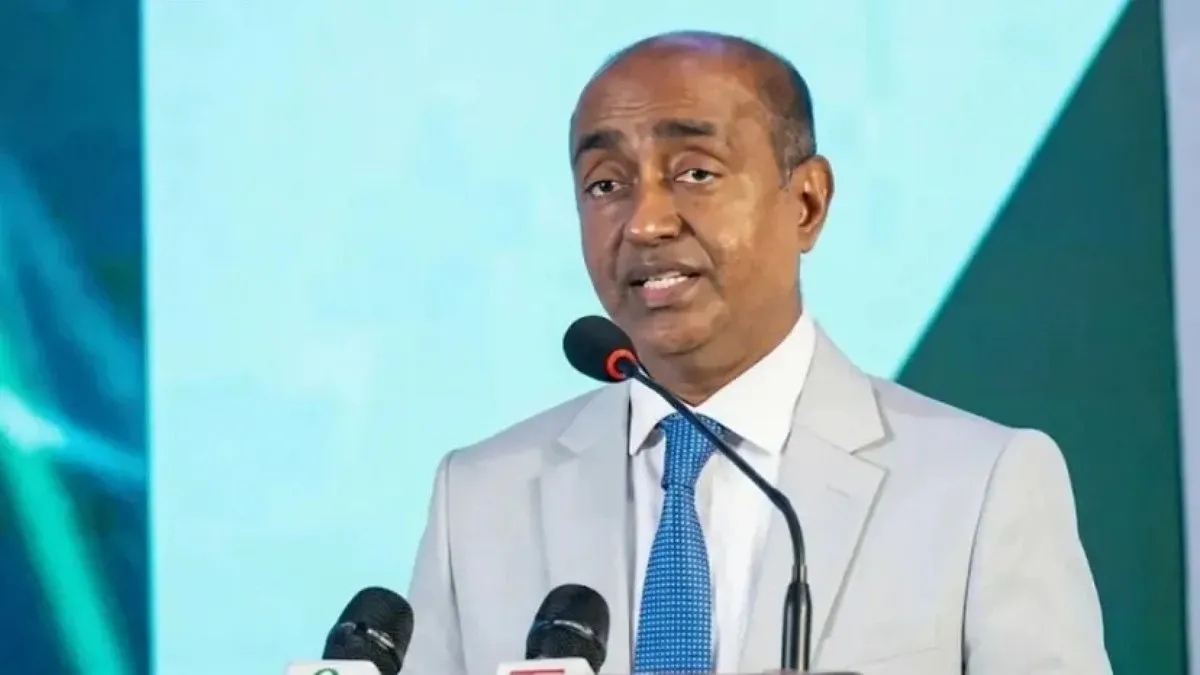
Photo: Law, Justice and Parliamentary Affairs Minister Md Asaduzzaman
Law, Justice and Parliamentary Affairs Minister Md Asaduzzaman has said the government is pursuing legal procedures to bring Sheikh Hasina back to Bangladesh.
Sheikh Hasina, who took refuge in India after being ousted from power during the July Mass Uprising two years ago, has said she plans to return to Bangladesh in December.
The announcement by the president of the Awami League, whose political activities are currently banned, has sparked discussions across the country’s political landscape. Home Minister Salahuddin Ahmed, State Minister for Foreign Affairs Humayun Kabir and several other government officials have also commented on the matter.
When asked about the issue at a press conference at the Home Ministry’s conference room at the Secretariat last Monday, Home Minister Salahuddin Ahmed said, “Why are you talking about December? We have already sent requests to the neighboring country through the Ministry of Foreign Affairs under the extradition treaty to bring back fugitive, convicted killers, perpetrators of genocide, fascist Sheikh Hasina and her associates who have been convicted and sentenced, including those sentenced to death and life imprisonment. Why December, then? If they are returned or extradited today, we will bring them under the law. We will take action in accordance with the court’s verdict.”
State Minister for Foreign Affairs Humayun Kabir also spoke on the issue last Thursday. He said, “As Sheikh Hasina is a death row convict, no ordinary passport or travel pass will be issued to bring her back from India. She will be brought back from Delhi under the existing extradition treaty between the two countries.”
Following these statements, the law minister has now commented on the matter.
On Sunday morning, Md Asaduzzaman attended a training workshop titled “Integrity in Judicial Proceedings” at Hotel Holiday Inn in Tejgaon, Dhaka. Transparency International Bangladesh (TIB) organised the event. TIB Executive Director Iftekharuzzaman was also present.
After the event, journalists asked the law minister about Sheikh Hasina’s return to Bangladesh.
In response, Md Asaduzzaman said, “We are doing whatever is legally required regarding Sheikh Hasina. We will deal with the matter in accordance with the law. You will see that whenever we take any action, there will be no question of emotion. The matter is that I, we, will enforce the law.”
Asked whether the government would pursue a legal battle in an Indian court to bring Hasina back, the law minister said, “That is a matter for the Indian government. We have requested them under the prisoner exchange treaty. If they hand her over to us, we will bring her under the law through due process in the manner required.”
Although the government has referred to the prisoner exchange treaty, Sheikh Hasina is reportedly staying in India as a “state guest.” Asked how this would affect the matter, the law minister said, “To me, she is a criminal. Her identity for us is that she is a convicted criminal sentenced by our tribunal.”
Bangladesh and India signed an extradition treaty in 2013, which was subsequently amended in 2016. Under the agreement, the two countries can hand over fugitives or convicted criminals at each other’s request.
Sheikh Hasina was sentenced to death by the International Crimes Tribunal in a case involving crimes against humanity during the suppression of the student and public uprising in July and August 2024. Former Home Minister Asaduzzaman Khan Kamal was also sentenced to death in the same case.
Earlier, speaking at the training workshop on “Integrity in Judicial Proceedings,” the law minister said that intellectual corruption had caused more damage to Bangladesh’s judiciary than financial corruption.
He also called for identifying individuals who were intellectually biased and corrupt and had brought the Supreme Court into question. He urged TIB to move beyond the perception that corruption refers only to financial irregularities.
At the event, the minister said, “Financial corruption has caused less damage to the judiciary than intellectual corruption has caused to Bangladesh. I would not say that the verdict on the 13th Amendment was a by-product of financial corruption. It was a by-product of intellectual corruption.”
Transparency International Bangladesh (TIB) and the United Nations Development Programme (UNDP) jointly organised the three-day workshop with the participation of 25 judges from subordinate courts.
Speaking at the event, TIB Executive Director Iftekharuzzaman said, “TIB does not consider only the abuse of financial power as corruption. We also consider the abuse of intellectual, political, administrative and social power for personal or group interests to be corruption. Irregularities in the judicial system are not limited to financial transactions or illegal exchanges.”
Among others, Romana Schweiger, Senior Adviser on Rule of Law, Justice and Human Rights at UNDP Bangladesh; Mohammad Touhidul Islam, Director of Outreach and Communications at TIB; and Mohammad Badiuzzaman, Director of Research and Policy at TIB, were present at the event.
