
World Toilet Day Today
Where is the comfort in public toilets?

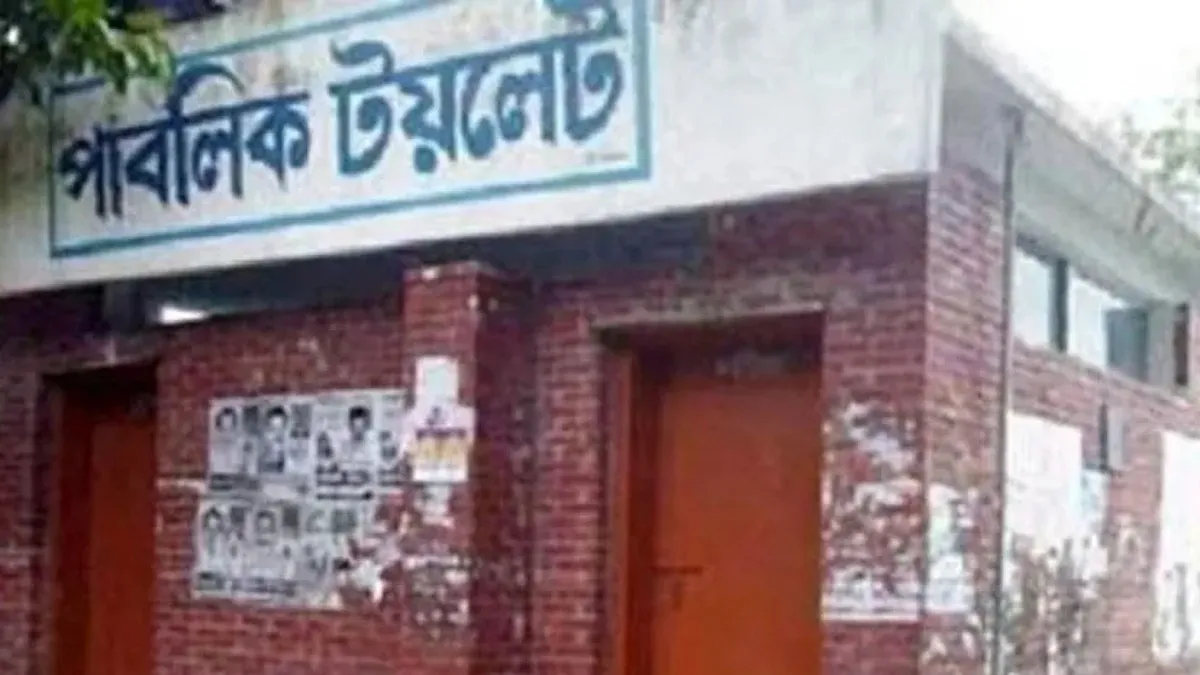
Collected Photo
Nasima Begum (48) had gone to Karwan Bazar to buy vegetables and chicken when her daughter, who was accompanying her, started menstruating. Her mother quickly bought sanitary napkins and looked for a public toilet nearby. However, the facility was dirty and filled with a foul smell. Water had overflowed from the floor and spilled outside. Her college-going daughter was unwilling to use the toilet under any circumstances.
The incident took place on Wednesday afternoon. After much persuasion, the mother finally convinced her daughter to use the facility. The girl entered the toilet holding up her salwar with one hand and covering her nose with her scarf with the other. The entire incident took place in front of this correspondent.
At around noon on the same day, Anowara Haque (28) got off the metro rail at Farmgate. She was heading to Lalmatia. On the way, she used the Ekanto Toilet on Indira Road. Built with support from international organization WaterAid, the public toilet left the private sector employee satisfied.
Both public toilets are operated under the city corporation. However, there is a significant difference in the availability and quality of services. The main reason lies in differences in their maintenance and supervision systems. Experts believe political commitment is also essential to ensure proper management, maintenance and service quality at public toilets.
Dr. Nishat Parveen, deputy chief health officer of Dhaka South City Corporation, said the corporation did not have enough manpower to operate the facilities on its own initiative. As a result, public toilets built by the corporation have been leased out to private operators since the beginning. These facilities are generally managed well. However, some toilets became unusable because they were not leased out. Work is underway to address the problem. In addition, sites have been finalized for the construction of 11 new public toilets.
Over the past decade, 21 public toilets have been built in Dhaka with support from WaterAid. Public toilets constructed with the city corporation’s own funds are operated through leaseholders. The leaseholders change following political transitions. Meanwhile, WaterAid-supported toilets are maintained by the nongovernmental organizations Bhumijo and Dushtha Shasthya Kendra. WaterAid provides technical support to monitor service quality.
The toilets remain open from 6:00 am to 10:00 pm. They are designed to accommodate women and people with disabilities. The facilities have modern infrastructure and separate arrangements for men and women. They also have elevated toilets and shower facilities. Visitors can purchase sanitary napkins, soap and shampoo there.
Anowara Haque said, “There is no unpleasant smell like in other public toilets here. Tissue and soap are available. The floor is also dry, which is reassuring.” She uses the facility whenever she needs a toilet while traveling around the city.
There are 198 public toilets under the two Dhaka city corporations. Of these, 120 are under Dhaka North City Corporation and 78 under Dhaka South City Corporation. Many of these facilities are not suitable for use. In some places, toilets and basins are dirty. Others suffer from water shortages or foul smells. Soap and tissue are also often unavailable. As a result, even when residents find a public toilet nearby, they do not feel comfortable using it when needed.
A field visit found that proper cleaning and maintenance of public toilets are often overlooked. Some facilities lack cleaning staff while others have no adequate water supply. Although leaseholders are responsible for operating many of the toilets, their work is not properly supervised. Leaseholders are often affiliated with the ruling party. There have even been incidents of toilets being occupied through the exercise of political influence. Some leaseholders also use the facilities without paying the required service charges.
Mohammad Abul Kashem, supervising engineer of the Environment, Climate and Disaster Management Circle at Dhaka North City Corporation, said the corporation had more than 100 public toilets under its jurisdiction. Not all of them are currently operational. Steps are being taken to reopen the facilities.
He also said the public toilets had been operated through several nonprofit organizations. Their overall operations are currently running quite well.
Women suffer the most from the poor hygiene and lack of security at public toilets. Many facilities do not have separate arrangements for women. Some are unhygienic while others are unsafe. As a result, working women and students face various difficulties. They also experience different health complications and urinary tract infections. Most public toilets are also unsuitable for people with disabilities and older adults.
Nasima Begum, a resident of Green Road, said, “The entire appearance of Dhaka has changed over the past 30 years, but there has been little improvement in public toilets for women.” She avoids using public toilets outside her home whenever she can hold back the urge to urinate.
Azman Ahmed Chowdhury, country director of WaterAid Bangladesh, said it was essential to ensure that women receive the same standard of cleanliness, security and care every time they visit a public toilet. To achieve this, budgets for regular operation and maintenance must be allocated from the construction stage. Quality monitoring and mechanisms for promptly addressing complaints must also be put in place.
Experts say every public toilet must have sufficient cleaning staff, a regular water supply and adequate cleaning materials. Service quality requirements must be included in lease agreements with operators. Political interference must be stopped. Regular inspections and effective fines for irregularities must also be ensured.
A national policy on the operation and maintenance of public toilets was introduced this year. The National Public Toilet Policy emphasizes regular cleaning, safe drinking water, handwashing facilities, waste management and amenities that accommodate women and people with disabilities.
Engineer Mohammad Abul Kashem said the city corporation followed the 2018 guidelines for operating public toilets. However, work is underway to update the existing guidelines in line with the conditions, guidelines and directives of the new policy introduced in 2026.
World Toilet Day is observed on November 19 every year. This year’s theme is “Safe Toilets, Equal Futures.”
