
183 police officers for security of 2 million people in Teknaf Ukhiya
- One police officer responsible for security of 11,000 people
- More than 150 cases filed in Teknaf every month
- Unable to respond immediately due to manpower shortage

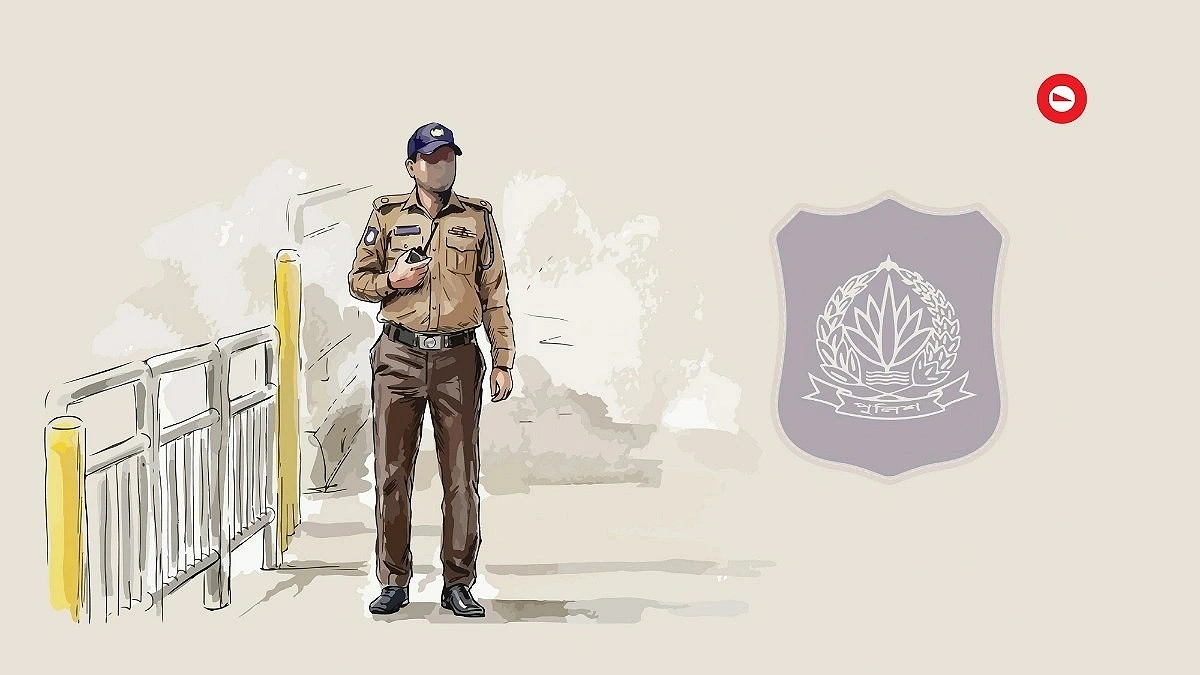
Graphics: Agamir Somoy
Crimes such as stopping passenger buses by putting up barricades on roads in broad daylight and robbing passengers and abducting people at gunpoint from markets and taking them to the hills to demand ransom are occurring regularly in Ukhiya and Teknaf in Cox’s Bazar. Drug and arms trafficking, smuggling, human trafficking, extortion and mugging are also increasing in the border and hilly areas. Yet the police have been unable to play an effective role in controlling these crimes. Only 183 police officers responsible for the security of more than 2 million people are struggling to cope with the situation.
According to district police data, there are 596,983 local residents in Ukhiya and Teknaf. Around 1.4 million Rohingyas live in camps in the two upazilas. In addition, at least 113,000 Rohingyas live in scattered settlements outside the camps. In total, 183 police officers are responsible for the security of more than 2 million people across the two upazilas covering 650.48 square kilometers. This means that on average one police officer has to ensure the security of more than 11,000 people.
Ukhiya Police Station has two inspectors, 10 sub inspectors, 10 assistant sub inspectors and 35 constables. Inani Police Outpost has one sub inspector, two assistant sub inspectors and five constables. Balukhali Police Outpost has one sub inspector, one assistant sub inspector and six constables. Teknaf Police Station has four inspectors, 17 sub inspectors, 18 assistant sub inspectors and 70 constables. Of these, 16 are working at Shamlapur Investigation Center, 10 at Whykong Police Outpost and 10 at Saint Martin Investigation Center. The Armed Police Battalion has separate manpower for the Rohingya camps.
A total of 463 members of APBn 16 are deployed in seven camps in Teknaf. In Ukhiya’s 11 camps, 450 members of APBn 8 and 450 members of APBn 14 are deployed.
Police officials concerned said more than 150 cases are recorded at Teknaf Police Station every month. An investigating officer has to investigate more than 40 to 45 cases at the same time. This is in addition to arresting accused persons wanted under warrants, visiting crime scenes, recording statements and preparing investigation reports.
A police officer at Teknaf Police Station who did not want to be named shared his experience. He said he had never seen such a heavy caseload at the same time in his 12-year career. He is currently investigating 20 cases alone every month. He said, “It is extremely difficult to maintain law and order with such limited manpower.”
Local residents alleged that when crimes, gunfights or accidents occur in remote areas, it is difficult to ensure the quick presence of police. They also said they do not receive quick assistance even after calling 999.
However, police officials said that due to limited manpower and the vast area under their jurisdiction, it is not possible to reach emergencies quickly while conducting operations and patrols in different locations at the same time.
Sarwar Alam Sikder, an assistant professor of political science and PhD researcher, said simply increasing the number of police officers would not be enough. He said Ukhiya and Teknaf need a technology based and integrated security system. He recommended CCTV cameras, drones, automatic number plate recognition, crime data analysis and GPS based patrols in border and important areas. He also recommended additional police stations and outposts, a law-and-order task force and rapid intelligence sharing among the relevant forces.
Mohammad Siraj Amin, additional DIG and commanding officer of APBn 14, told Agamir Somoy that there is a manpower shortage compared with the large population in the Rohingya camps. He said a proposal for additional manpower and an additional battalion has been submitted to the higher authorities. He claimed that crime in the camps has decreased significantly since August 5, 2024. He said regular operations and surveillance are continuing to prevent crime. Mohammad Siraj Amin also commented that a permanent solution to the Rohingya crisis lies in safe and peaceful repatriation.
Mohammad Shamim Kabir, additional superintendent of police (administration and finance) in Cox’s Bazar, said the current police manpower in Ukhiya and Teknaf is not sufficient. He said security responsibilities have increased due to the Rohingya population, crime, the growing number of tourists on Marine Drive and operations against armed groups in remote hilly areas. He said the manpower shortage is creating difficulties in regular operations and investigations. He also said proposals have been sent to establish new investigation centers in Kachhapia, Whykong and Inani.
