Sunday। 1 November। 2026
আগামীর সময়
Sunday। 1 November। 2026
Agamir Somoy
  • Latest
  • Bangladesh
  • Business
  • Chattogram
  • District
  • World
  • Environment
  • Entertainment
  • Sports
  • Feature
  • OP-ED
  • Misc
  • Success Story
  • Religion
BN
  • Latest
  • Bangladesh
  • Business
  • Chattogram
  • District
  • World
  • Environment
  • Entertainment
  • Sports
  • Feature
  • OP-ED
  • Misc
  • BN
লোড হচ্ছে…

Chief Editor & Publisher: Abdus Sattar Miazi

Editor: Mustafa Mamun

Agamir Somoy English Logo
About UsContactTerms of ServicePrivacy PolicyTeam

EDB Trade Centre (Level-6 &7) 93 Kazi Nazrul Islam Avenue Karwanbazar, Dhaka-1215.

Contact: +880 9666 771010

Advertise: +880 1755 651164

[email protected]

© 2026 | Dainik Agamir Somoy. All rights reserved.

আগামীর সময় Bangladesh

Research

Police under pressure from the media and politicians

  • Media criticism can lower morale, but not all criticism is unjustified
  • Lack of accountability and corruption are eroding public trust
Saiful Islam
agamir somoy
Published: 01 November 2026, 08:03
শেয়ার করুন:
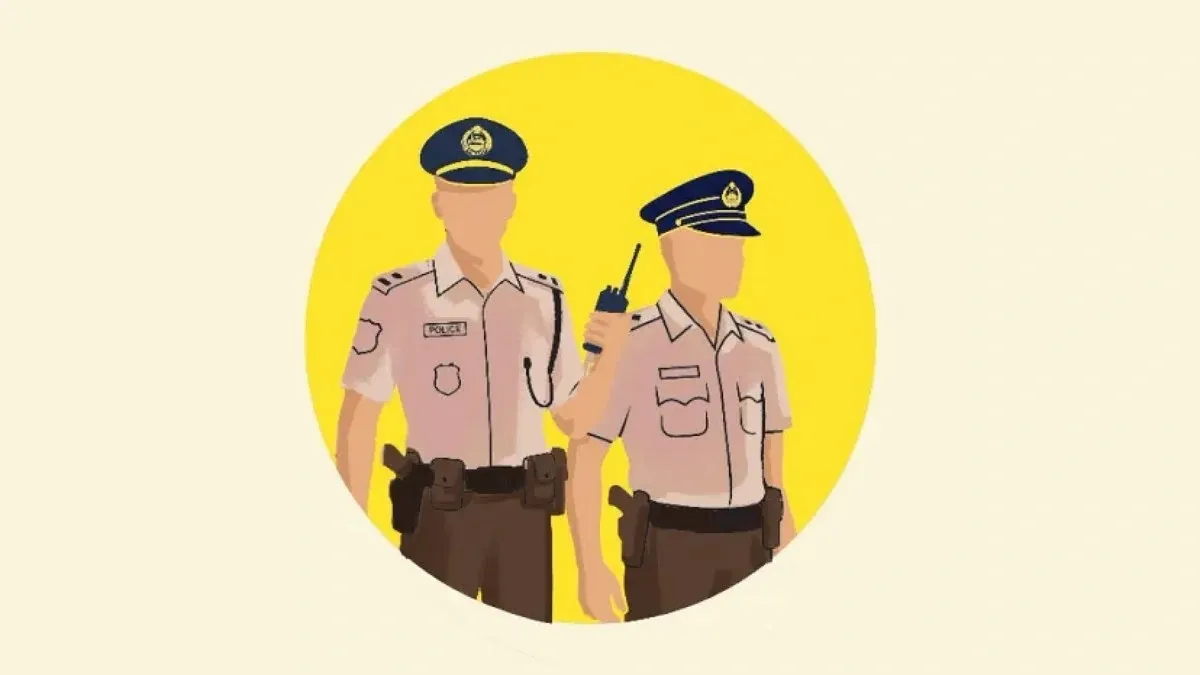
Police under pressure from the media and politicians

Graphics: Agamir Somoy

The police are unable to perform their duties in line with public expectations due to political influence. Meanwhile, sustained negative media coverage is affecting the force’s credibility and morale. In other words, the police are under pressure from media reports and political interference. A lack of accountability and allegations of corruption have also contributed to public distrust.

These findings emerged from a study published in the second issue of Volume 12 of the PSC Journal (July to December 2025), published by the Police Staff College.

A former Cabinet secretary was asked whether he viewed the police as a political party’s muscle. His answer was straightforward: there was no need to look far. The report by the Office of the United Nations High Commissioner for Human Rights (OHCHR) would suffice.

The office’s investigation into the July-August 2024 uprising found that the then government and security forces were involved in serious human rights violations during the suppression of the protests. The report stated that there were reasonable grounds to believe these incidents had occurred under the direction of political leaders and senior security officials.

The former Cabinet secretary said all previous governments had used the police as a force to serve their political interests.

The PSC Journal study said that when the police are perceived as an instrument of the ruling party, questions arise about the force’s impartiality and public trust declines. This also affects the reporting of crimes, filing of complaints and cooperation with investigations.

Meanwhile, discussions and criticism on television talk shows, statements by various stakeholders and articles by writers portraying the police negatively may also affect the force’s morale and credibility, according to the researchers. The study also identified the unverified dissemination of widespread misconceptions about the police as one of the reasons behind public distrust.

Discussions with media policymakers revealed that police conduct is frequently portrayed negatively on television and other media talk shows. Allegations of political bias, corruption, abuse of power and mistreatment of ordinary people are often raised.

No police representatives are present at these programs. Even when invited to participate, they do not respond. Moreover, the police do not provide explanations for the allegations after the negative discussions are aired. As a result, viewers hear only one-sided accounts of the allegations. This risks further reinforcing negative perceptions of the police.

Human rightsPublic trustCorruption allegationsCommunity policingMedia coveragePolice professionalismImpartial investigationsPolice reformPolitical interferencePolice accountability
    আগামীর সময় ইপেপার
    শেয়ার করুন:

    However, not all criticism of the police can be dismissed as baseless. Reporting allegations of corruption, abuse of power and human rights violations is part of the media’s accountability role. The United Nations investigation into the police response to the July-August uprising also demonstrated the importance of news footage, videos, testimonies and other evidence in verifying serious allegations.

    The Police Staff College study also identified corruption, bribery, harassment, irregularities in investigations and a lack of transparency in complaint resolution as factors contributing to the crisis.

    When law enforcement varies according to political affiliation or social status, public trust in justice is undermined. The absence of impartial investigations and effective disciplinary action against police officers accused of misconduct also risks strengthening a culture of impunity.

    Police are a state institution and must not be used to serve the interests of any political party or group, said Dr. Muhammad Omar Faruk, a professor in the Department of Criminology and Police Science at Mawlana Bhashani Science and Technology University.

    He told Agamir Somoy that political influence and the misuse of power had led the police to be perceived as a partisan force. This has raised questions about the force’s professionalism and impartiality.

    Dr. Omar Faruk said an environment must be ensured in which the police can function as a state institution to establish a politically neutral and accountable force.

    The study emphasized the need to distinguish between constructive criticism and baseless allegations. It also identified limited resources, inadequate training and excessive workloads among police officers as barriers to professionalism and improved service delivery.

    The study recommended a politically neutral police administration, the expansion of community policing and evidence-based crime prevention. It also stressed the importance of ensuring proper complaint reception at police stations, appropriate treatment of victims, impartial investigations and effective grievance redress.

    The study said police performance should not be assessed solely by the number of arrests or cases resolved. Public satisfaction, the quality of complaint resolution, protection of human rights and effectiveness in crime prevention should also be prioritized.

    Alongside protecting police morale and ensuring a safe working environment, effective investigations into allegations of misconduct are also essential.

    The study further stated that the police should be established not merely as a law enforcement agency but as a public servant and partner of the people.

    Although fear may temporarily compel people to obey the law, trust and fairness are necessary to secure voluntary cooperation in the long run.

    In a nutshell, the study stated, “The true strength of the police lies not only in their power to enforce the law, but also in their ability to earn public trust and voluntary cooperation.”

    The importance of avoiding intimidation was also highlighted by Dr. Tawohidul Haque, a teacher at the Institute of Social Welfare and Research at the University of Dhaka and an expert on criminology.

    He said the goal of modern policing should be to earn public trust through fair conduct, transparency and service rather than intimidation.

    He also emphasized the need to ensure adequate training, necessary resources and a safe working environment for police personnel. Addressing the crisis requires internal reforms within the police, effective measures against corruption and abuse of power, and independent oversight.

    Although public expectations of the police are high, it is not possible to detect every crime immediately or resolve every problem quickly. Criminal investigations require time, expertise, technology, manpower and adequate resources.

    The study said that the responsibility for addressing these limitations lies with the state and relevant authorities. At the same time, the police must improve their professionalism and service quality rather than focusing solely on arrests or the number of cases resolved.

    The research found that criticism of the police is not always unjustified. Criticism and independent investigations are important when allegations of corruption, abuse of power or human rights violations arise.

    Therefore, constructive criticism must be distinguished from baseless allegations. Accountability-driven criticism does not weaken the police. Instead, it creates opportunities to correct mistakes and improve public services.

    Protecting police morale, ensuring adequate training, promoting mental well-being and maintaining a safe working environment are also necessary.

    However, protecting morale must not be used as an excuse to suppress legitimate criticism or ignore allegations of misconduct.