
Two Straits in Flames: The heat hits national energy

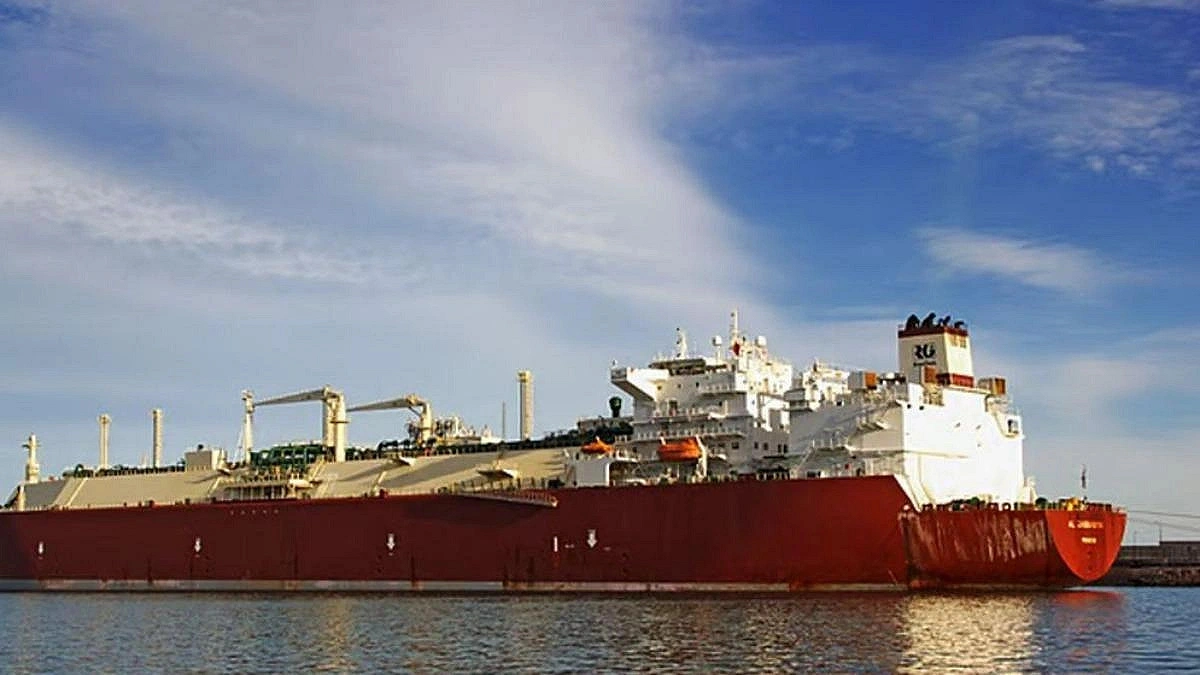
File Photo
The Middle East war now surrounds two sea routes. On one side is Hormuz, and on the other, Bab al-Mandeb. Both are the heart of the global energy trade, and both are now facing uncertainty. The waves of these two crises are washing over the shores of import-dependent economies like Bangladesh. The longer the war drags on, the more prolonged the uncertainty in the global energy market will be. Experts believe that alongside managing reserves and seeking alternative sources in the short term, diversifying energy sources in the long term is the most realistic path.
The seven-month-long Iran-US-Israel conflict had already reduced ship movement through the Strait of Hormuz long ago. Due to the impact of this war, Bangladesh is now among the most damaged countries alongside others in the world.
Amid this stalemate, the war has taken a new turn. Over the past few days, Iran-backed Houthi rebels in Yemen have advanced at a surprising pace, taking control of almost the entire Red Sea coast, including the port of Mokha. Latest reports reveal they have also established authority over the strategically important Perim Island and the Bab al-Mandeb strait; news media reports indicate that Saudi-backed forces have withdrawn from the island.
From the Houthi side, however, it is being said that there is currently no risk for commercial ships other than Saudi ones, and their operations are limited to specific targets. But analysts fear otherwise—Iran may want to create simultaneous pressure on the two lifelines of global energy supply to gain bargaining leverage from the Western alliance.
The real impact of this crisis has already fallen on Bangladesh's energy sector. The long-standing gas crisis has intensified further. As a result, power generation and factory production have been disrupted, and disaster has descended upon daily public life. The government's subsidy burden is growing as it tries to handle the situation by importing energy at higher prices.
As LNG imports under long-term contracts are disrupted, the government is forced to buy LNG from the spot market at more than double the price. Due to high global demand, LNG cargoes are not available on time even at exorbitant prices.
Now, with instability added to Bab al-Mandeb, the opportunity for alternative sea routes is also shrinking. Ships that could have thought of taking a detour through the Red Sea and Suez Canal to avoid Hormuz now face new risks as well. As a result, if uncertainty persists along the route through which nearly one-fifth of the world's LNG is transported, there are fears that the price of Asia's oil-linked LNG contracts will rise even further.
This situation has heightened concerns over global oil supply and shipping costs. In recent months, Saudi Arabia has used Bab al-Mandeb to export tens of millions of barrels of oil. If this strait cannot be used, less oil can be supplied from the region. At the same time, ships will have to travel longer routes. This will increase product transport time and costs, and inflationary pressures may also rise.
Richard Bronze, co-founder of Energy Aspects, told news outlet CNN: "Bab al-Mandeb was a lifeline in the current situation of Hormuz. Losing this lifeline is a terrible warning for the oil market. It is also an indication of how unstable the current situation in the Middle East is."
Oil prices in the global market were already high due to the war in the Middle East. On top of that, news of strategic areas of Bab al-Mandeb falling into Houthi hands drove oil prices even higher last Thursday. Both international market benchmark Brent crude and US benchmark WTI rose by more than 7 percent, reaching $108 and $103 per barrel, respectively. This was their highest level since May.
Johannes Rauball, Senior Crude Analyst at Kpler, noted, "Oil prices in the global market have surged past $100 per barrel due to shipping disruptions in the Red Sea, Saudi Arabia's oil production cuts, and Ukraine's attacks on Russian energy infrastructure."
"With no immediate resolution in sight and these disruptions persisting, refineries are being forced to procure extra crude oil. This is driving crude prices even higher," the crude analyst added.
Dr. Md. Shafiqul Islam, Chairman of Bangladesh Petroleum Corporation (BPC), stated that new plans will have to be drawn up if the crisis persists. He observed, "War or any abnormal situation has a negative impact on the energy sector. However, fuel oil imports have been secured through December. Even on Friday, we held discussions with suppliers, and they assured us of delivering our required fuel oil. Now we are working on how to secure fuel oil imports through next June."
"For now, oil reserves are satisfactory. Suppliers have informed us that they will source oil from alternative routes if necessary. But if the situation worsens and drags on, we will have to rethink our approach," added the BPC chairman.
Energy experts state that an immediate shortage is unlikely given current reserves. However, to manage long-term risks, Bangladesh has already begun seeking alternative sources. Communication is ongoing with Angola, Malaysia, the United States, and Australia, while several alternative countries are also being considered for oil imports. Alongside this, talks are underway with China and Japan regarding renewable energy and waste-to-energy production to reduce reliance on a single source. Furthermore, discussions are taking place with the United States regarding an agreement on nuclear energy utilization.
Nevertheless, an increase in costs is almost guaranteed. Sourcing energy from distant suppliers incurs higher freight costs, insurance premiums are rising, and a steady decline in domestic gas reserves is naturally increasing import dependency. Rising import bills will strain foreign exchange reserves and create uncertainty for industrial production and investment decisions. Prolonged conflict could also endanger Bangladesh's export trade with the Middle East.
Professor Dr. M. Shamsul Alam, Energy Adviser to the Consumers Association of Bangladesh (CAB), told Agamir Somoy, "The sheer risk of an import-dependent energy sector is being proven to us repeatedly. Yet, the government is building another LNG terminal. To manage this crisis, we must practice austerity by cutting all unnecessary and predatory expenses in the energy sector, while ramping up renewable energy adoption and prioritizing domestic gas exploration."
