
From Mishti to Ishraque: Prime Minister Tarique Rahman's zero tolerance

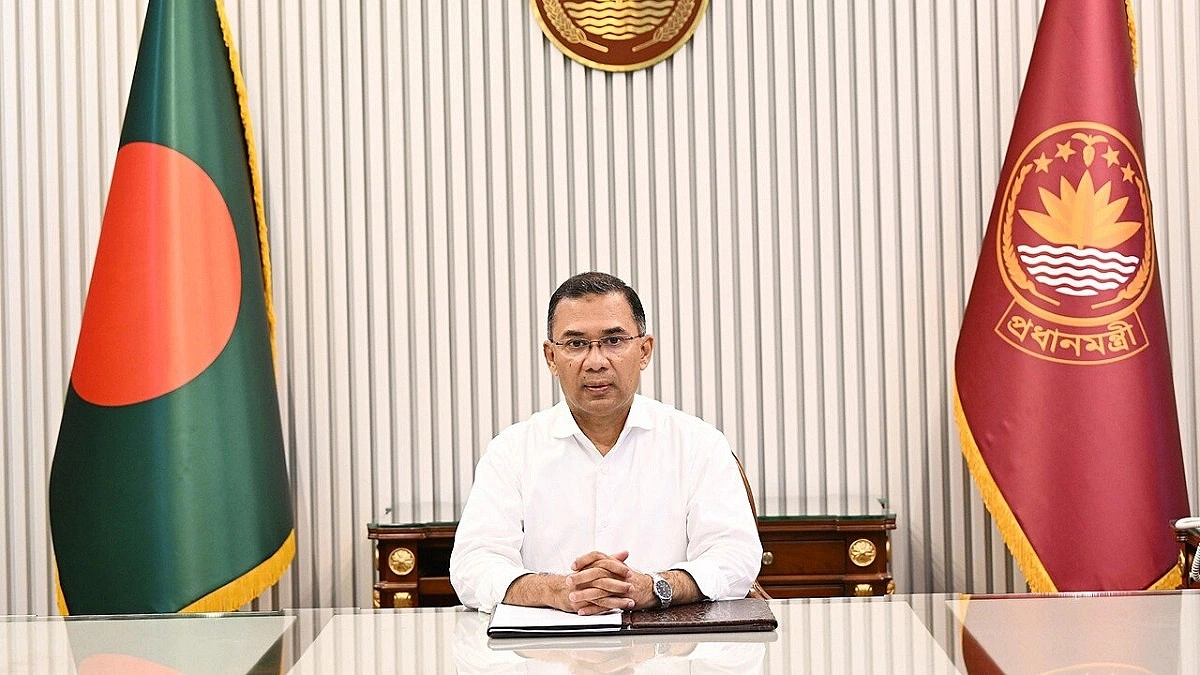
PM Tarique Rahman. File photo.
Whether a leader of his own party or an elected representative—Prime Minister Tarique Rahman is sending a strong message that no one will be spared if caught with wrongdoings.
Within less than a month, the resignations of Ferdousi Ahmed Mishti, a BNP Member of Parliament from a reserved women's seat, and Ishraque Hossain, State Minister for Liberation War Affairs, have sparked fresh discussions regarding the government's stance on accountability.
The contexts of the two incidents differ. One involves allegations of an attack, vandalism, and looting at the Radda MCH-FP Centre in Mirpur, Dhaka; the other stems from controversy surrounding a state minister participating in an anti-drug operation in capital's Gendaria while holding a firearm. However, there is a common thread between both incidents—both individuals are key figures in the ruling party, and reports emerged in both cases that they were asked to resign.
The first incident took place in the last week of September. Intense discussion erupted in political circles following an attack, vandalism, looting, and the demolition of structures at the Radda MCH-FP Centre in Mirpur, Dhaka. Allegations also surfaced regarding the involvement of local political figures in the incident.
Ferdousi Ahmed Mishti denied the allegations raised against her. Following the incident, Prime Minister Tarique Rahman instructed her to resign from her post as a Member of Parliament. On October 1, Mishti submitted her resignation letter to the Speaker of the National Parliament. Speaker Hafiz Uddin Ahmed then said that her parliamentary seat became vacant immediately upon her resignation.
Following Mishti's incident, State Minister for Liberation War Affairs Ishraq Hossain has now become the center of attention across the country. On October 17, a video spread on social media showing his presence carrying a firearm while participating in an anti-drug operation in Gendaria, Dhaka. In the video, he was seen raising the weapon while taking part in the raid. The incident raised questions in political and administrative circles.
While there were no objections to the purpose of conducting an anti-drug operation, debate arose over whether it was lawful for a state minister to take part in a raid carrying a weapon himself. The Dhaka Metropolitan Police launched an investigation into the incident. Police stated they were examining whether any violation of the law had occurred.
In his statement, Ishraq claimed that he had raised the weapon for the safety of himself and others due to apprehension of a potential attack. He claimed that several drug dens were cleared during the raid, and several individuals were detained and handed over to the police. Thus, the purpose of the raid and the justification for displaying the weapon emerged as two distinct questions.
Figures affiliated with the BNP and the government note that questions arose over why he personally took to a raid carrying a weapon instead of activating the administration to tackle drugs. Especially at a time when the Prime Minister was making sudden visits to inspect conditions at various hospitals, educational institutions, and government residential areas in the capital, such actions by a state minister embarrassed the government.
Top leaders of the BNP state that the incident did not remain merely a personal matter of Ishraq's; it also embarrassed the Prime Minister and other members of the cabinet. The cabinet would also have to bear responsibility for such behavior by a state minister.
On Saturday, the day of Ishraq's incident, Prime Minister Tarique Rahman made sudden visits to 13 locations in the capital from morning until noon. He issued directives to relevant officials regarding cleanliness and service quality at hospitals, educational institutions, and government residential areas. In some places, he even set deadlines for improving conditions. The weapon incident involving Ishraq occurred on the afternoon of the very day the Prime Minister conducted these inspections. Some individuals associated with the party and government feel that Ishraq's actions largely overshadowed the positive discussion surrounding the Prime Minister's visits.
Subsequently, on October 18, following a cabinet meeting at the Secretariat, Prime Minister Tarique Rahman instructed Ishraq to resign from the cabinet, according to multiple news outlets citing sources close to the government. However, at the time of publication on that day, no official statement had been received from any responsible government official regarding the matter.
The directive for Ishraq to resign is viewed by concerned quarters as a message of the Prime Minister's strict stance on the conduct and accountability of government members.
When placed side by side, the incidents involving Mishti and Ishraq bring several questions regarding the government's accountability policy to the forefront. First, does ruling-party affiliation place an individual above allegation? Second, how swiftly does the government act when controversy arises over the conduct of a public representative or minister? Third, along with political decisions such as investigating allegations and demanding resignations, how transparently do legal processes move forward?
In Mishti's case, the resignation of the Member of Parliament took effect in the context of allegations involving the attack on the Radda health center. In Ishraq's case, news of the resignation order emerged following questions over the video of his participation in a raid carrying a firearm and its legality. In both instances, the government's stance is being interpreted as a stern message regarding party discipline and responsible conduct.
However, a politically significant step and the determination of legal liability are not the same thing. Ordering a resignation can be part of administrative or political accountability; but determining the truth of an allegation requires proper investigation and evidence.
Before coming to power, political parties promise a strict stance against corruption, irregularities, and the abuse of power. The credibility of that promise is tested when allegations arise against leaders, MPs, or ministers from their own party.
The resignation of Ferdousi Ahmed Mishti and PM's order for Ishraque Hossain to resign present two examples of that very test before the Tarique Rahman government. How consistently the message seen in these incidents—of ensuring accountability beyond party identity—will be applied in practice is what matters now.
This is because "zero tolerance" cannot remain limited solely to demanding resignations. The same policy must be enforced across all areas—impartial investigation of allegations, equal application of the law, discipline in public duty, and appropriate action if guilt is proven.
Thus, at the center of the discussion surrounding the Mishti and Ishraq incidents is not merely the resignation of two individuals, but rather a broader question—will anyone in the ruling party face accountability in the same manner if embroiled in controversy? The answer to this question will determine whether the "zero tolerance" policy remains a political declaration or is consistently reflected in the government's actions.
