
306 factories shut amid garment workers’ movement

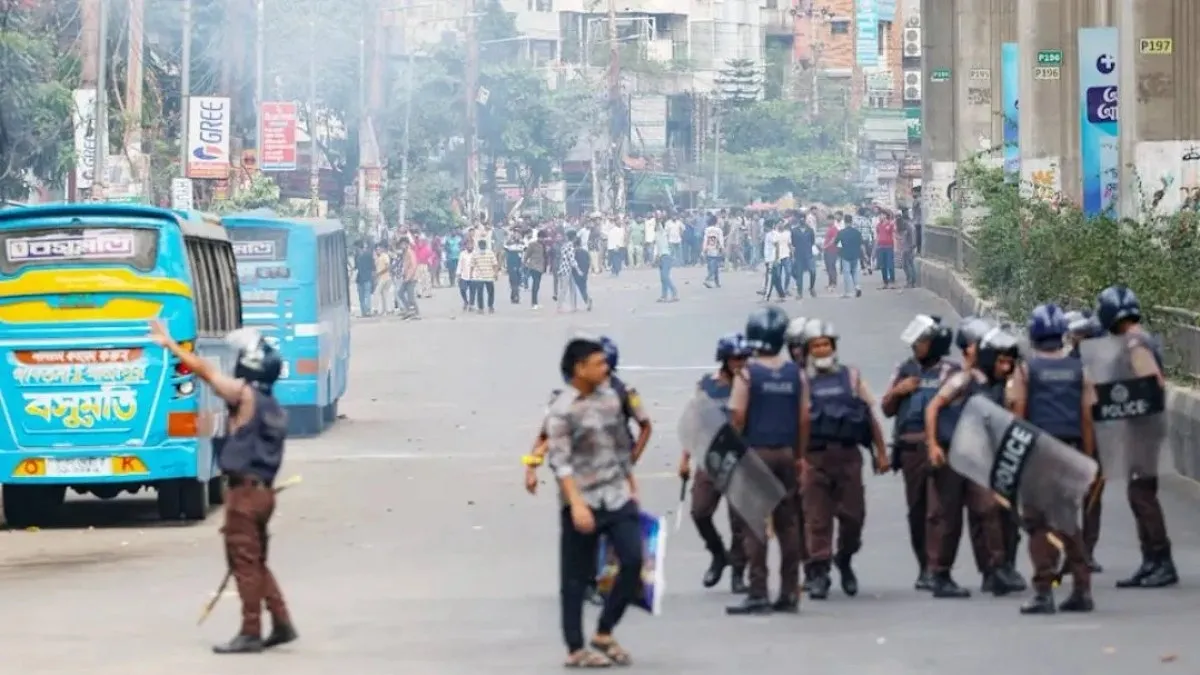
Photo: Agamir Somoy
Garment workers are demonstrating for the fourth consecutive day on Tuesday. Production remains suspended in 306 garment factories across the industrial zones of Mirpur, Savar-Ashulia, and Gazipur.
Bangladesh Garment Manufacturers and Exporters Association (BGMEA) confirmed the matter. The number of workers employed in these factories is nearly 7,00,000.
The impact of the labor movement has been felt most severely in Dhaka’s Mirpur, Gazipur, and Savar-Ashulia. Garment workers blocked the Dhaka-Tangail Highway in the Naojor area of Gazipur Metropolitan.
Around 9:30 am, workers took positions on the road, bringing traffic to a halt. Barricades were constructed on the road using bamboo during this time. Reports of worker protests were also received from the Konabari, Mouchak, and Telichala areas.
Fearing that the situation might spiral out of control, authorities declared a day’s holiday in 50 ready-made garment factories across various areas of Gazipur. Earlier on Monday, incidents of worker protests, arson, and setting fire to a police vehicle occurred in the same area.
On the other hand, in Savar’s Ashulia, repeated incidents of chases, counter-chases, and brickbat throwing took place between workers and the police. Workers protested at various points along the Abdullahpur-Baipail Road.
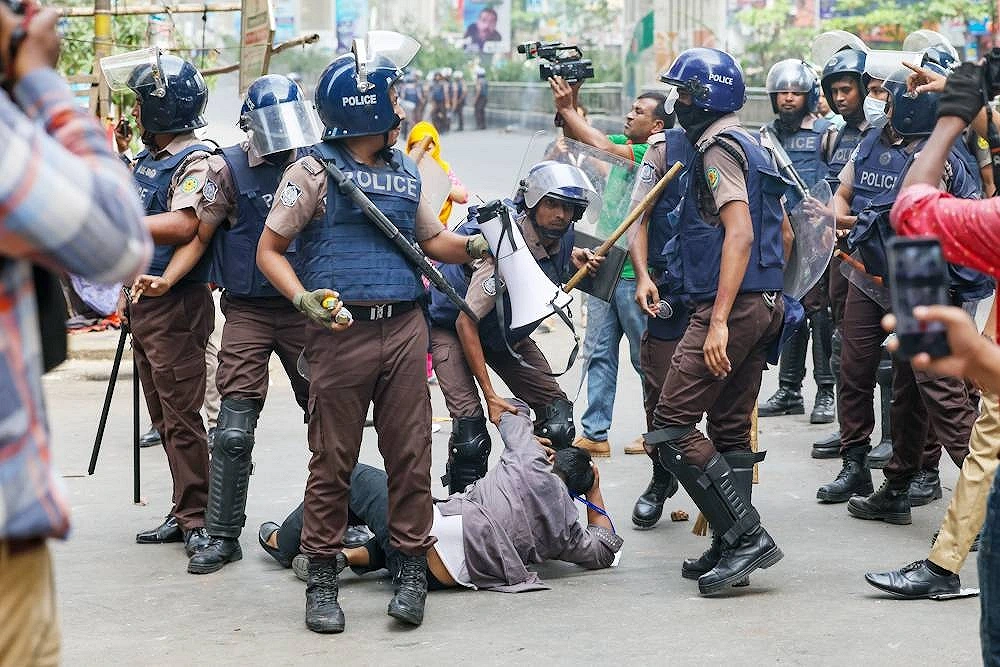
To bring the situation under control, police fired tear gas shells. Amid the evolving situation, holidays were declared in about 40 factories in Ashulia. Workers in about 10 additional factories stopped work and staged a stay-in inside the factory premises.
The heat of the workers’ movement has also spread to Mirpur industrial zone. Around 10 am, workers began protesting beneath the Mirpur-11 Metro Rail Station. A clash with police ensued during the protest. Police fired tear gas and sound grenades to disperse the demonstrators.
Due to the clash, vehicular movement on the Pallabi-Mirpur-10 Road was temporarily suspended. Traffic returned to normal later around 11:30 am. Police reported detaining at least four individuals in connection with the incident. Due to the clashes, train stops at the Mirpur-11 Metro Rail Station were also temporarily suspended.
Due to labor unrest, refusal to join work, and security risks, production was suspended in at least 690 garment factories on Monday. The number of workers employed in these factories exceeds 17 lakh.
According to the BGMEA, production was halted in 382 factories in the Gazipur and Mymensingh areas. Production was suspended in 223 factories in the Savar-Ashulia and Jirabo areas, and in 65 factories in Mirpur.
Moreover, production was shut down in around 20 member factories of the Bangladesh Knitwear Manufacturers and Exporters Association (BKMEA) in Narayanganj.
On 1 November, according to BGMEA data, 318 garment factories were closed across five industrial zones in the country. The number of workers who were unable to report to work or who suspended work stood at 7,02,255.
The ready-made garment industry is one of the main sources of export revenue for Bangladesh. Stakeholders believe that if production remains halted in this sector for an extended period, not only will factory owners and workers suffer, but the entire supply chain is at risk of being damaged.
If production remains suspended, the timely delivery of goods to foreign buyers could be disrupted. This could create risks of delayed export shipments, erosion of buyer confidence, and the diversion of new orders to other countries.
At the same time, negative impacts could spill over into related sectors linked to the garment industry, including transportation, packaging, textiles, yarn, accessories, and other supporting industries.
BGMEA said if production is disrupted due to prolonged instability, export shipments and Bangladesh’s commitments to international buyers could be compromised.
