Rooppur's electricity empowers national grid for the second time

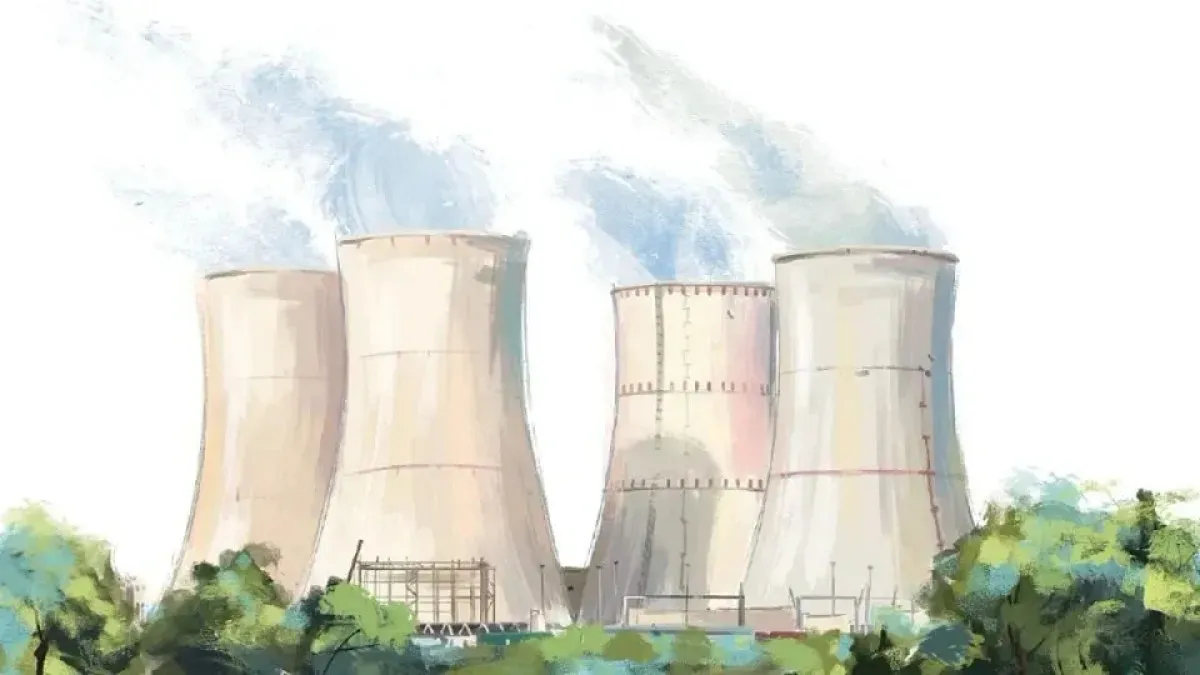
Graphics: Agamir Somoy
The Rooppur Nuclear Power Plant has begun supplying test electricity to the national grid for the second time.
Electricity supply from the plant in Ishwardi, Pabna, started at 10:20 am on Monday.
Dr. Md. Kabir Hossain, project director of the Rooppur Nuclear Power Plant Construction Project, said that at this stage, about 300 to 350 megawatts of electricity will be supplied to the grid on a test basis for 10 to 24 hours. During this time, the necessary technical tests of the plant's generation system and its integrated management system with the national grid will be completed.
On November 17 at 3:16 pm, about 350 megawatts of electricity was supplied to the national grid for the first time. Following that, the second phase of the connection process began today.
The engineering division of Rosatom, the Russian state agency and main contractor of the project, said in a statement that day that the reactor had then reached 40 percent of its designated capacity and the generator's output was 370 megawatts.
The process of commissioning a nuclear plant proceeds step by step. In mid-October, the first unit reached the minimum controlled power level, meaning a controlled nuclear reaction began in the reactor. The power was then raised to about 40 percent, at which stage the turbine could be started and connected to the grid for the first time. Now the power will be gradually raised to the designated level. During that time, the unit will be in test commercial operation. After that, full-scale commercial production will begin.
This plant, built to a Russian design at Rooppur in Pabna, has two units. Each contains a VVER-1200 reactor. The total installed capacity of the two together is 2,400 megawatts.
According to project sources, the first unit may go into full-capacity test production in January-February of next year. Work on the second unit is also nearly complete.
Safety preparations are also being monitored at this time of commissioning. From November 8 to 18, a team of experts from the International Atomic Energy Agency (IAEA) reviewed Bangladesh's preparedness for nuclear and radiological emergencies. The team recommended strengthening national coordination, finalizing emergency plans, and launching full-scale emergency drills at the plant.
Rosatom Director General Alexey Likhachev called the first phase of grid connection a milestone for both countries. In his words, it will significantly reduce Bangladesh's dependence on imported fuel.