
Prime Minister’s New York Visit: A New identity on the world stage, now comes the challenge of sustaining ties

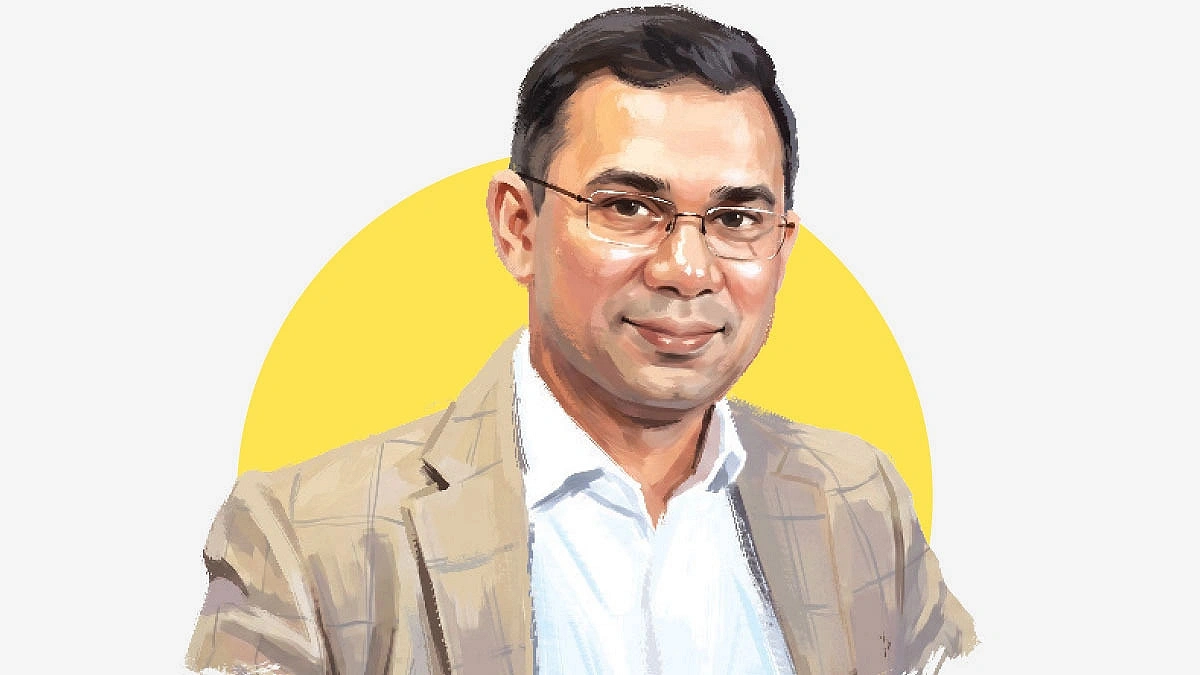
Graphics: Agamir Somoy
Prime Minister Tarique Rahman returned home from New York on Sunday morning after attending the 81st session of the United Nations General Assembly. The five-day visit was his first major opportunity since taking office in February to present Bangladesh’s new political identity before the international stage. During the visit, the prime minister held meetings with leaders of several countries, international organisations, investors and policymakers. He also delivered his much-anticipated address to the UN General Assembly.
The visit was packed with engagements. According to information from the Prime Minister’s Office, bilateral meetings were held with 11 countries. In addition to his General Assembly speech, the prime minister spoke at several high-level meetings and events and held discussions with international investors.
One of the notable aspects of the visit was the small delegation. The prime minister took part in numerous programmes within a short period with a limited number of accompanying officials. Such a planned and streamlined arrangement for a state visit can also send a positive message internationally, highlighting both resource conservation and a focus on work.
Former ambassador and former chairman of the Bangladesh Institute of International and Strategic Studies (BIISS) Munshi Faiz Ahmed believes, “The biggest achievement of this visit was the creation of a new identity for the prime minister on the international stage.” In his view, the visit helped make an initial effort to present Bangladesh to the world under its new identity following a major political transformation.
The schedule of the visit also reflected this assessment. The prime minister did not limit his activities to addressing the UN General Assembly. He held meetings with important figures from various countries and spoke with senior officials of international organisations. As a result, the visit went beyond formalities. Munshi Faiz Ahmed considers the meetings with the heads of international companies particularly important. In his view, “Bangladesh may need the cooperation of these organisations for various purposes in the future. The identity that has now been established can be put to use in the future. But for that, an environment must be created within the country where these opportunities can be turned into practical outcomes.”
Rohingya issue given importance
A major focus of the visit was the Rohingya crisis. Bangladesh has been carrying the burden of this crisis for years. Therefore, highlighting the issue strongly on the international stage is important for Bangladesh. In his address, the prime minister also emphasised the need for a lasting solution to the Rohingya crisis. He said the crisis originated in Myanmar and therefore the solution must also come from Myanmar. He called for an effective role by the international community in ensuring safe and dignified repatriation.
Former ambassador Sakib Ali also viewed the prime minister’s remarks on the Rohingya issue as significant. In his assessment, “The prime minister did well in his first address. He made a particularly strong statement on the Rohingya crisis.”
According to Sakib Ali, “The Rohingya crisis could become a major problem for Bangladesh in the coming days. Therefore, the issue needs to be regularly raised on the international stage.”
During the visit, Bangladesh also hosted a high-level event on the Rohingya crisis. As a result, the issue was not confined to the prime minister’s General Assembly address; Bangladesh had another opportunity to present its concerns to international partners.
What Message Did the Prime Minister’s UN Speech Send?
One notable aspect of the prime minister’s address was his use of the Bangla language. He delivered his entire speech to the United Nations General Assembly in Bangla, presenting Bangladesh’s position before world leaders in the country’s official language.
The speech touched on Bangladesh’s democratic transition, human rights, justice, world peace, economic development and the Rohingya crisis. The prime minister also outlined the government’s “Three-R” strategy for rebuilding the country. He spoke of plans to move Bangladesh forward through recovery, restoration and reconstruction.
On global peace, the prime minister emphasised dialogue and diplomacy. He spoke of equality, justice, mutual respect and protection of interests as the foundations of relations among states. These were important messages in presenting Bangladesh’s position. In particular, speaking about peace and humanity carries political significance at a time of war, conflict and division.
Former ambassador Sakib Ali believes, “What the prime minister said about a humane world is important. In the reality of a war-torn world, a leader from a Third World country speaking about a humane world creates an opportunity for discussion on the international stage.”
Could the speech have been more striking?
However, some have raised questions about the prime minister’s first UN address. Could it have presented global challenges more broadly alongside Bangladesh’s domestic issues?
The speech addressed issues such as democracy, human rights, the economy, the Rohingya crisis and climate change in Bangladesh. But the UN General Assembly is a platform where a country can present its position not only on national interests but also on broader global crises.
Wars and conflicts are increasing around the world. Divisions are emerging in the international system. Inequality persists between developed and developing countries. The damage caused by climate change is increasing. Questions of global inequality are also emerging over access to the benefits of artificial intelligence and new technologies.
The prime minister mentioned some of these issues. However, there was an opportunity to give the speech a broader global dimension. Some analysts believe the address could have taken on an additional dimension if it had put forward clearer proposals on the future of the global system based on Bangladesh’s experiences and position.
In particular, Bangladesh could have articulated its position more clearly on issues such as peacebuilding, ending wars, climate justice, equal access to technology, debt and economic pressures on developing countries, and reform of international institutions.
Continuity on the Palestine issue
Another important aspect of the prime minister’s speech was Bangladesh’s continued position on the Palestine issue. Despite the changing realities of international politics, Bangladesh maintained a clear position on the matter.
Munshi Faiz Ahmed believes, “Clearly stating Bangladesh’s position on various international issues was another important achievement of the visit. Among these, maintaining Bangladesh’s previous position on Palestinian independence is significant. Such a position demonstrates continuity in Bangladesh’s foreign policy. At the same time, it makes Bangladesh’s position on various issues concerning developing countries clear.”
The real test begins now
Meetings were held during the New York visit. New relationships were established. Discussions took place with investors. Bilateral meetings were held with leaders of various countries. Bangladesh’s position on the Rohingya crisis was presented at the international level. But the real value of these achievements will be assessed from now on.
Munshi Faiz Ahmed also said, “The opportunities the prime minister created during his US visit must be used for Bangladesh’s reconstruction. In other words, the steps taken after the visit are the most important.”
The same applies to investment. If discussions with investors lead to actual investment, the visit will produce economic benefits. If new opportunities for exporting manpower are created, Bangladesh will benefit. If cooperation on energy security increases, it will have an impact on the country’s economy. The same applies to the Rohingya crisis. Bangladesh needs not only international support but also effective diplomatic pressure to facilitate repatriation.
Sakib Ali believes the prime minister’s visit cannot be fully assessed simply on the basis of his UN speech or meetings with leaders of various countries. He represented Bangladesh there. What Bangladesh gained from that representation is what matters.
From this perspective, the New York visit can be described as a beginning for Bangladesh. Maintaining its momentum and turning the opportunities created by the visit into tangible outcomes will now be the major challenge.
