
Rooppur puts more pressure on reserves, 12 risks in energy sector
- People are paying the price for institutional, political and financial failures
- The power sector has high installed capacity and generation capability but a poor record of governance
- Twenty-three international drilling contractors will be appointed for domestic gas exploration

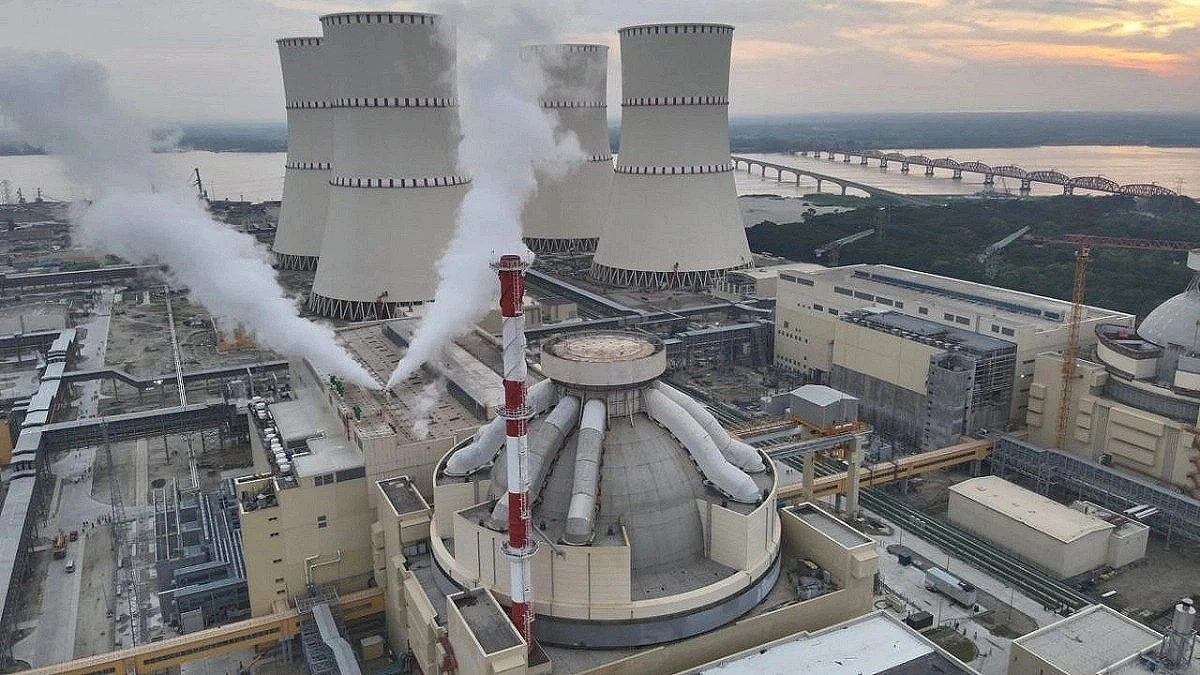
Rooppur Nuclear Power Plant. Photo: Collected
At home or outside, in offices or factories, people are struggling for energy such as electricity and gas. Yet the country does not lack electricity generation capacity. There are large power plants. But the lights are not on. The reason is the collapse of management. The entire energy sector has been operating on wrong decisions for years. The current crisis is the result of wrong policies and mismanagement.
The General Economics Division (GED) of the Planning Commission has prepared the Five-Year Strategic Framework for 2026 27 to 2030 31. It has identified 12 specific risks for the energy sector.
One of these is the safety risk of the Rooppur Nuclear Power Plant. There are delays in starting the plant. Repayment of Rooppur loans and imports of additional equipment for solar power will increase pressure on foreign exchange spending. Other risks include rising LNG prices and the Strait of Hormuz crisis, weak domestic gas exploration programs, failure to gain investor confidence in renewable energy and gaps in monitoring and evaluation data. As a result, energy security is under threat overall. The government is making various plans to address these risks. The issues have been highlighted in the GED’s Five Year Strategic Framework. It also said the people of the country are paying the price for institutional, political and financial management failures in the sector.
Dr. Monzur Hossain, member (secretary) of the GED responsible for preparing the framework, told Agamir Somoy, “Energy transition is urgent for the country. Ensuring the availability of energy is one of the government’s fundamental responsibilities to citizens and is essential for implementing broader development activities. A secure, affordable and increasingly clean energy system supports the achievement of other infrastructure goals. It is the most important enabling condition for industrial competitiveness, poverty reduction, climate resilience and national dignity. For this reason, policies and strategic action frameworks will be implemented to achieve continuity in energy supply according to the country’s demand.”
The GED said the energy sector has entered the period of the Five-Year Strategic Framework for the 2026 27 to 2030 31 fiscal years. The power sector has high installed capacity and generation capability but has a poor record of governance. By 2030, solar power has the potential to generate 10,000 megawatts of electricity. The potential for offshore and coastal wind power in the Bay of Bengal is estimated at around 134,000 megawatts. There are also domestic gas resources, but exploration has long received inadequate funding compared with their geological potential. There has been a consistent failure to realize the country’s resources and policy ambitions. This failure is not technical but institutional, political and financial. The people of the country are paying the price for that failure.
Plans to Address the Risks
To address the risks, 80 percent of LNG imports will be maintained under long term contracts. Three new contracts will be completed within the current fiscal year and domestic gas well drilling will be accelerated. In addition, the Matarbari offshore LNG terminal will be kept operational as a backup.
Failure to Gain Investor Confidence in Renewable Energy
The problems in this sector will be resolved within six months. Quarterly solar auctions will be introduced and the sovereign investment guarantee clause will be reinstated. In addition, a stable renewable energy policy will be formulated.
Financial Decline of BPDB
To overcome this risk, quarterly tariff rationalization and implementation will begin this month. In addition, at least five PPAs (Power Purchase Agreements) will be renegotiated in the first year. The reforms will be aligned with the targets of the IMF program.
Delay in Rooppur Plant Operation and Safety Failures
To address the risk, a grid readiness assessment will be completed in the first year. In parallel, the transmission system will be improved. The fuel supply agreement with Russia’s Rosatom will be finalized. Safety will be ensured by making sure the certification of the Bangladesh Atomic Energy Commission meets the standards of the International Atomic Energy Agency (IAEA).
Weak Performance of Domestic Gas Exploration Program
BAPEX will receive ADP funds in the first quarter. In addition, 23 international drilling contractors will be appointed. Two offshore PSCs (Production Sharing Contracts) will also be signed in the first year. At the same time, 3D seismic surveys will be conducted in the Bay of Bengal.
Grid Infrastructure Constraints Hindering Renewable Energy Integration
To address this risk, a grid stability study will be conducted in the first year. In addition, the expansion of solar power will be coordinated with transmission capacity. A 2,500-megawatt battery storage system will be installed and HVDC (High Voltage Direct Current) upgrades will be completed by the 2027 28 fiscal year.
Failure to Integrate Green Financing
A sovereign green bond worth US$1 billion will be issued within the current fiscal year. In addition, carbon trading will be introduced. A financing platform will be established within six months and Renewable Purchase Obligation (RPO) regulations will be finalized in the first year.
Gaps in Monitoring and Evaluation Data
To reduce this risk, an Energy Transition Coordination Unit will be established under the Energy and Mineral Resources Division within six months. Quarterly reporting will be made mandatory. Data will be integrated into a unified dashboard and an annual independent evaluation will be conducted.
Damage to Energy Infrastructure Due to Climate Change
To address this risk, climate risk assessments will be conducted for all major power generation, transmission and distribution assets. In addition, flood and cyclone resilience standards will be developed for new energy infrastructure. An emergency repair fund will be established to quickly restore supplies after extreme weather events.
Foreign Exchange Pressure from Renewable Energy Equipment Imports
A phased local component policy will be developed for solar and wind power equipment. In addition, supplier financing arrangements will be discussed with equipment manufacturers. Coordination will be maintained with Bangladesh Bank in planning foreign exchange allocations for renewable energy programs.
Rooppur Loan Repayment and Foreign Exchange Pressure
A structured repayment plan will be prepared with Bangladesh Bank. It will include a foreign exchange reserve buffer and the possibility of renegotiating repayment terms with the financing parties.
Cybersecurity Vulnerabilities in Modern Grid Infrastructure
A specialized cybersecurity framework will be developed for critical energy infrastructure including SCADA systems and advanced metering infrastructure under the joint supervision of the Power Division and relevant national cybersecurity authorities. A five-year strategic framework will be developed for reforms and improvements.
Abul Mansur Md. Faizullah, chairman of Sylhet Gas Fields Limited, told Agamir Somoy, “There is no alternative to domestic gas exploration and extraction if energy security is to be ensured. If the initiatives mentioned in the strategic framework can be implemented, they will bring benefits.”
