
Bangladesh: A Proponent of World Diabetes Day
Bangladesh also leads in the wellness map after language recognition

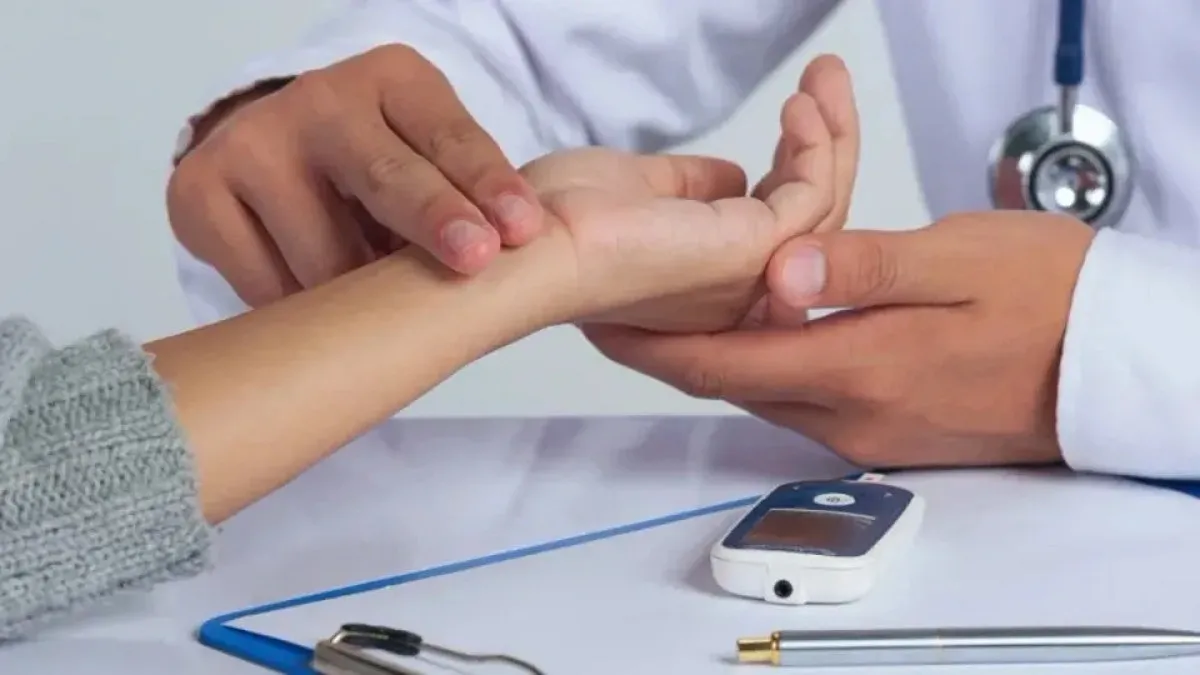
Representational image. Collected.
The Bangla month of Kartik offers no relief from rain either. Suddenly the sky turns black!
But does Anwar Hossain even notice it? Diabetes has taken residence in his body. If he doesn't prick himself with an insulin needle every day, it flares up. Yet the burden of his family's rice and lentils rests on his shoulders alone. When he cannot even bear the weight of his own body, how can he bear the weight of a family? Anwar Hossain is not one or two such people in the country—the number is not even stuck at a lakh. It has crossed the crore mark. This is the situation even with BIRDEM Hospital, one of Bangladesh's finest institutions! I shudder to think what would have happened without it! Though BIRDEM's success is recognized not only at home but also abroad. Following the path they showed, World Diabetes Day is being observed today across the globe. Bangladesh takes pride in two global recognitions. One is International Mother Language Day on February 21, and the other is World Diabetes Day. Bangladesh is the proponent of both!
Seguntala Bazar in Moktarpur of Kaliganj Upazila in Gazipur. Two or three shops. And a couple of tea stalls. It is at this market on the banks of the Shitalakshya that Anwar Hossain has his hardware shop. There are small sales here and there. Most of the time it is devoid of customers. Then he is no longer present between himself and the world.
The river is visible from the shop itself. On Wednesday morning last week, Anwar Hossain sat by the riverbank to let the autumn sunlight fall on his body. When the sky suddenly turned black and rain began—had his neighboring shopkeeper Saikat not called out to him, he would have been drenched and soaked. The absent-minded Anwar Hossain was gazing across the river to where the sky touches the earth.
"Hey Anwar Kaka (uncle), it's raining! Get up, please go home." Somehow managing his lungi, Saikat pushed Anwar Hossain up. Tucking his lungi at his waist, Saikat ran to his own shop. He had to close the shutters. Otherwise, the rain would soak his groceries and sundries.
Anwar Hossain has been suffering from diabetes for a long time. He had gone to Saudi Arabia. It was there that the disease took hold. He returned home for treatment. As it kept worsening day by day, he never went back. Two months ago, he had surgery for gallstones. Because of his diabetes, he had to endure a great ordeal to undergo that operation. The year before, he suffered from a knee problem in his right leg. Even then, diabetes caused complications. He sold land to meet the costs of treatment. Now there is no more land left to sell. He even struggles to buy diabetes medication.
Anwar Hossain told this correspondent, "Diabetes is a very dangerous disease. Once it afflicts someone, there is no escape. One has to live within the barbed wire of strict rules. The mind does not agree to follow these rules. Every day, one has to prick oneself with an injection needle to take insulin." He was saying, "From taking insulin, my hands and legs have become full of prick marks. There is no spot left on my stomach or back. I cannot take it anymore. My body cannot endure it. I have no money either. How much can a hardware shop in a village sell!"
Anwar Hossain is a registered patient of BIRDEM Hospital. There are about 70 lakh more like him. There are at least another 70 lakh people in the country who have diabetes but are not registered. Including the registered, unregistered, and pre-diabetic, the number is around 2 crore 10 lakh. This is what Farid Kabir, Director (Public Relations and Publications) of the Diabetic Association of Bangladesh, was explaining last Wednesday while sitting in his small office room. He has spent almost his entire career raising awareness about diabetes among people. The small room at BIRDEM Hospital in Shahbagh, Dhaka, where he sits and carries out his promotional work, is crammed with papers, books, newspapers, and domestic and foreign reports. Sitting amid all this, he explained what BIRDEM does and why it does it.
He Also Informed That a Nationwide Survey of One Lakh People
He also informed that a nationwide survey of one lakh people revealed that among those being tested for diabetes, 25 were new patients—meaning they had no idea they had diabetes.
People do not realize they are sick unless they develop some complication. They go to a doctor, who examines them and says—"Oh brother, you have diabetes!"
We are moving about with around 2 crore 10 lakh diabetes patients. Whenever registered patients come to BIRDEM's outpatient department, they buy a coupon for 100 taka. With this coupon, they go to the doctor. The doctor sends them to a nutritionist. Then they go to a health educator. How to take insulin, when to take it, how to increase or decrease it, when to increase or decrease it—all of this they learn within that 100 taka. Most importantly, the patient's economic history is also kept at BIRDEM. Financial assistance for the patient depends on this.
Why are diabetes associations in other countries of the world small? The reason is—they do advocacy along with awareness. Meaning, they are NGOs. We are the only ones directly involved in treatment.
From the conversation, it is learned that BIRDEM, the Diabetic Association, and a few other partner organizations are leading not only in Bangladesh but across the world in the field of diabetes. Today is World Diabetes Day, and the proponent of this day is also the Diabetic Association. Until 1991, the day was not global. The International Diabetes Federation (IDF) observed it. In 2006, the Bangladesh Diabetic Association proposed to the government that Diabetes Day be observed as a United Nations day. Under their supervision, it would become an international day. All member countries would observe it.
At that time, Bangladesh's Permanent Representative to the United Nations was Dr. Iftekhar Ahmed Chowdhury. A renowned diplomat of this country. He served as the Foreign Affairs and Chittagong Hill Tracts Affairs Adviser in the caretaker government led by Dr. Fakhruddin Ahmed from 2007-09. His elder brother, the late Faruq Ahmed Chowdhury, was a former Foreign Secretary of Bangladesh. He was helping us a great deal. While Farid Kabir's eyes were gleaming as he shared the news of their success, there was a knock at his door. The conversation was interrupted for a moment. Diabetic Association President A K Azad Khan pushed the door open and entered the room. Both of us rose from our chairs to show respect. Standing, Professor Khan inquired about Diabetes Day. At one point, he also joined our discussion. His words: "We only remember International Mother Language Day. Undoubtedly, this is a great achievement. But that World Diabetes Day is observed under the United Nations following Bangladesh's proposal—that too is no small achievement. Many people know about Mother Language Day but do not know about Diabetes Day."
I asked an official of the Ministry of Health—if Dr. Mohammad Ibrahim's Diabetic Association or BIRDEM did not exist in this country, how would the government cope with the diabetes epidemic? In reply, he said, "Surely some arrangement would have been found. But there is no way to ignore BIRDEM's contribution. Alongside BIRDEM, they have built many quality institutions. There is a medical college for teaching MBBS, a nursing college. There is also a dental college. There is even a university."
Last Thursday night, Anwar Hossain was called again for some more information. He was then sitting on the veranda of his home, engrossed in conversation with family members. There too, the accounting of that mustard-seed existence continued. In the gentle breeze of Kartik, his mind does not sway. His surroundings do not fill with the fragrance of shiuli flowers.
