
ICDDR,B research: No evidence of genetic changes found in measles virus
- 97.3% of infants under 9 months of age are unvaccinated
- This rate is 92% for infants who have received one dose of the vaccine

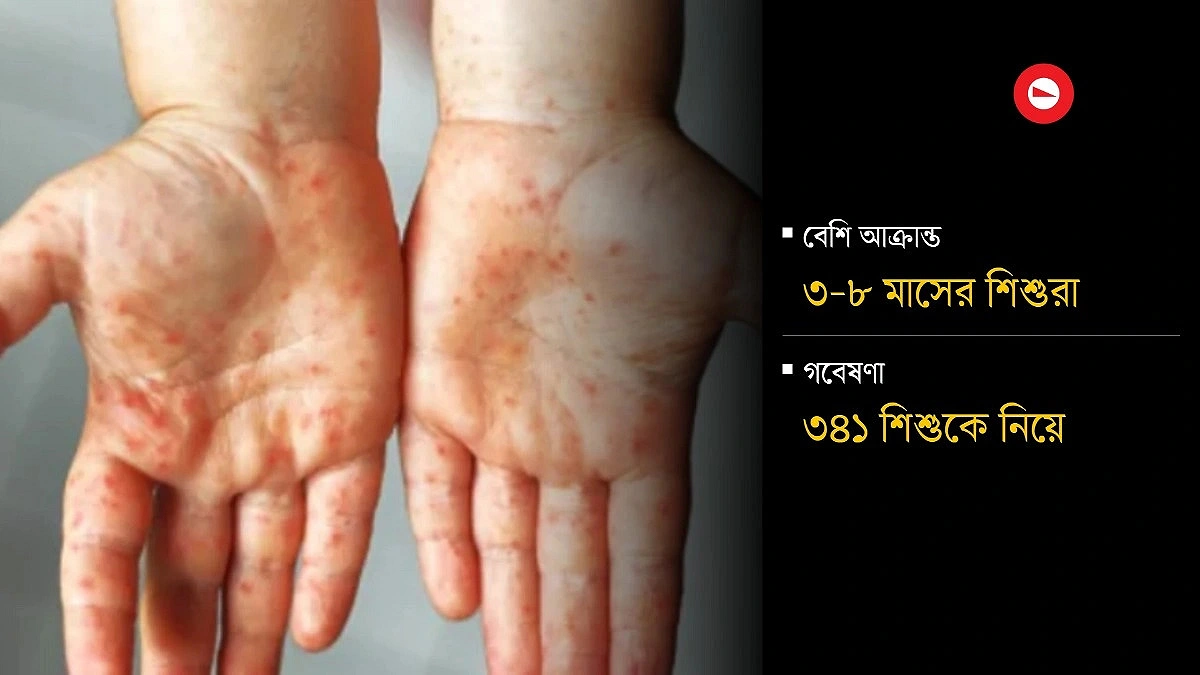
Graphics: Agamir Somoy
Children under 9 months of age, who are not yet eligible for routine vaccination, are the most affected. Additionally, the measles outbreak has yielded no evidence of any genetic changes in the virus that could evade the protection offered by the currently used vaccine. This is what initial findings from ICDDR,B indicate.
In a press release today (Monday), ICDDR,B said that given the scale of the outbreak, some have questioned whether genetic changes in the measles virus have reduced vaccine effectiveness. However, the research findings do not support the notion that the vaccine has become ineffective.
The research institute reported that among the suspected cases included in their investigation, children who had received the recommended two doses of the vaccine had a relatively lower rate of testing positive. Genetic analysis revealed that the currently circulating virus belongs to the B3 genotype, which has also been identified in measles outbreaks in other countries around the world.
Noorjahan Maliha, Associate Scientist at the Virology Laboratory of ICDDR,B's Infectious Diseases Division, said, "Children who received two vaccine doses had a lower rate of testing positive. However, this hospital-based investigation cannot determine the population-level vaccine effectiveness rate."
According to data from the Directorate General of Health Services (DGHS), from March 15 to July 25, 2026, a total of 122,763 suspected measles cases and 15,272 laboratory-confirmed measles cases were recorded across the country. During the same period, 721 suspected measles-related deaths and 95 laboratory-confirmed measles-related deaths were documented.
ICDDR,B Executive Director Tahmid Ahmed commented, "These preliminary results have answered some important questions. However, to investigate why some vaccinated children have been infected, what factors contribute to severe illness and death, how malnutrition may affect protection, and when children lose maternal antibodies, ICDDR,B has undertaken broader research activities."
The press release noted that researchers from ICDDR,B and the Bangladesh Children's Hospital and Institute were involved in this investigation. The study included 341 children under 14 years of age who were admitted to the Bangladesh Children's Hospital and Institute with suspected measles between April 20 and May 21 of the current year. Laboratory tests confirmed measles in 324 children. The most affected were children aged 3 to 8 months, of whom 137 out of 141 children in that age group tested positive for measles.
The researchers divided the 341 children into four groups based on age and vaccination status. Among the 146 children under 9 months of age, who had not yet reached the routine vaccination age, 142 (97.3%) tested positive for measles. Among the 126 children who were old enough to be vaccinated but had not received any dose, 122 (97%) tested positive. Among the 48 children who had received one dose of the vaccine, 44 (92%) tested positive, and among the 21 children who had received the recommended two doses, 16 (76%) tested positive.
The researchers said that the decline in the positivity rate from approximately 97% among children with no vaccine protection to 76% among children who received two doses is consistent with the notion that the vaccine is providing protection. Children who did not contract measles were not included in this investigation. Therefore, larger-scale research on this matter is needed.
Mustafizur Rahman, Senior Director of the Infectious Diseases Division at ICDDR,B, told Agamir Somoy: "Vaccination is the most effective way to prevent measles and reduce the risk of severe illness. At the same time, although national vaccination coverage rates are reportedly relatively high, we also need to understand why this outbreak became so large."
