
Bangladesh Health Watch Report
Public hospitals plagued by irregularities, 40 percent of doctors stay absent

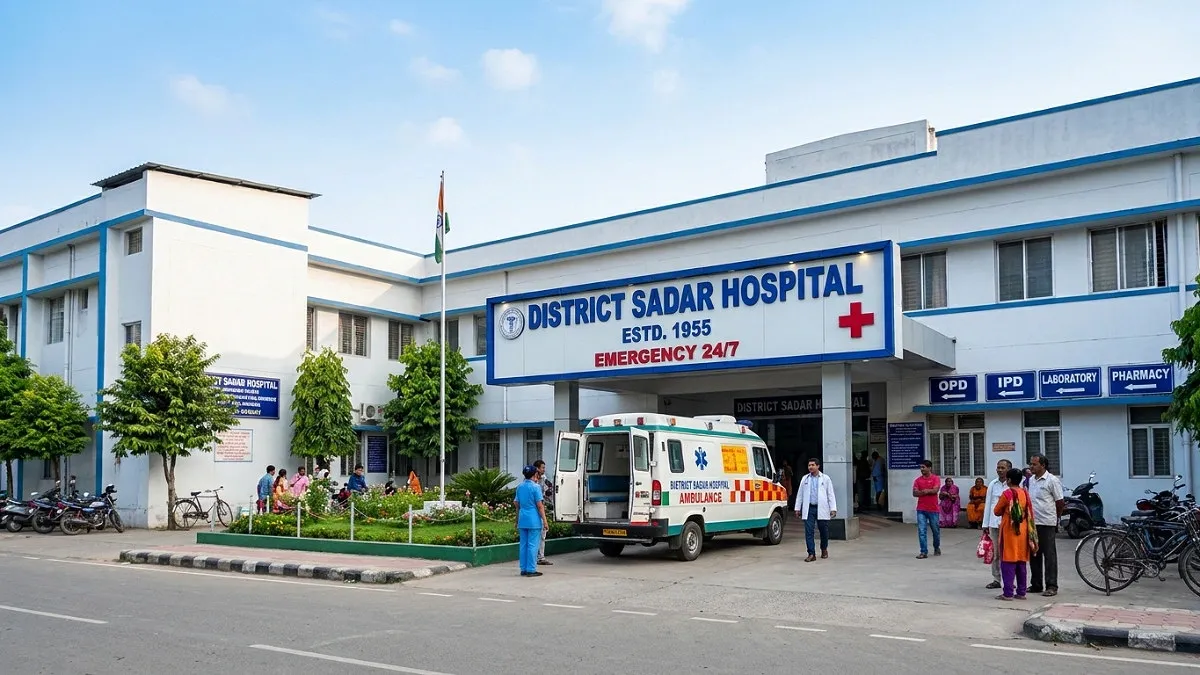
Representational image by AI.
Bangladesh Health Watch has said corruption in the health sector is not just individual misconduct but a symptom of weak governance.
The observation in incorporated in the biennial report (2025-26) of the organisation on the irregularities and corruption in health sector.
The report said, even during surprise visits to government hospitals, about 40 percent of doctors were found absent. In some health centers in remote areas, this rate is over 70 percent. Again, many doctors are receiving salaries and allowances without performing their duties. Allegations have also been raised against doctors of taking commissions in exchange for referring patients.
The report titled "Combating Corruption: Strengthening Good Governance in Bangladesh's Health Sector" was unveiled at an event held at the International Mother Language Institute in the capital on Sunday.
The 191-page report was written by a team of 29 public health experts, researchers, and journalists. The report has 11 chapters. The first chapter deals with the concept of corruption in the health sector, and the 11th chapter makes some recommendations for preventing corruption. The remaining nine chapters cover people's daily experiences in seeking treatment at hospitals, commissions, negligence in treatment, human resource management, absenteeism from workplaces, procurement, medical education, information and data and ethics, and institutional weaknesses. The 11 essays are effectively 11 research papers. The report was edited by Ahmed Mushtaque Raza Chowdhury, Convener of Bangladesh Health Watch and Professor of Population and Family Health at Columbia University in the United States, and Dr. Shams El Arifeen, Senior Scientist (Emeritus) at the International Centre for Diarrhoeal Disease Research, Bangladesh (icddr,b).
The report also contains allegations of doctors receiving commissions in exchange for sending patients from government hospitals to private diagnostic centers. Some doctors send patients to private diagnostic centers for tests and receive commissions ranging from 20 to 50 percent of the test fees. According to the researchers' estimates, the amount of such commission transactions at major diagnostic institutions in the country is about Tk 1,861 crore per year.
Public health experts say doctors' absenteeism is not just a crisis of workplace attendance; it also raises questions about the capacity and accountability of government health services. Especially due to the shortage of doctors in remote areas, ordinary people have to go to distant hospitals for treatment. This creates extra pressure in terms of both time and money. And due to commission business, patients suffer financial losses, and some are even deprived of treatment.
According to the report's data, patients seeking treatment at government hospitals have to suffer various irregularities and harassment. It mentions informal money transactions and the menace of brokers in getting hospital bed allocations, discharge certificates, and various services.
The report mentions an incident where a ward boy was accused of taking Tk 5,000 from an elderly patient with the promise of fixing a surgery date. It was later learned that there was no arrangement for surgery in that specific ward. Instead of taking disciplinary action against the accused employee, he was transferred elsewhere.
Mushtaq Hossain, former chief scientific officer of the Institute of Epidemiology, Disease Control and Research (IEDCR) and public health expert, says large government hospitals must be given autonomy. Then a culture of accountability will return. Many irregularities will be resolved. Even if some new problems arise, the Ministry of Health and the Directorate General of Health Services will have to coordinate and resolve them.
Irregularities in the health sector are not limited to doctors' absenteeism from workplaces or commission business. The report also highlights political influence and management weaknesses in recruitment, transfer, and promotion. Researchers have identified political influence as well as weaknesses in paper-based management in the recruitment, transfer, and promotion of more than 180,000 employees in the health sector.
The report found information that medical equipment worth about Tk 283 crore is lying unused. On the other hand, it mentions a loss of Tk 459 crore in procurement at the Central Medical Stores Depot. Due to these irregularities, along with the waste of government money, necessary medical equipment and services cannot be ensured in hospitals.
Ahmed Mushtaque Raza Chowdhury, Convener of Bangladesh Health Watch, said corruption is the result of a lack of good governance. If good governance is not ensured, these practices will continue. There is no alternative to making health-related institutions autonomous to stop corruption. Then they will be able to work independently and make decisions without any interference.
There is also delay in resolving complaints of negligence in treatment. From 2010 to May 2025, 172 complaints were filed with the Bangladesh Medical and Dental Council (BMDC). Of these, 79 complaints were awaiting resolution. Disciplinary action was taken in only 29 cases. The report also raised questions about the independence and accountability of health sector regulatory bodies.
Bangladesh Health Watch has made several recommendations to address these problems. These include banning by law the taking of commissions by doctors in exchange for patient referrals, introducing a digital human resource management system to ensure doctors' presence at workplaces, and providing special incentives to those serving in remote areas. Alongside this, recommendations have been made to create a legal framework to ensure the resolution of complaints of negligence in treatment and compensation.
According to Shams El Arifeen, Emeritus Scientist at icddr,b, corruption in the health sector is not just a matter of individual misconduct. It is linked to weak governance, lack of accountability, conflicts of interest, and lack of coordination in supervision.
