
Measles outbreak to take 2-3 months to control

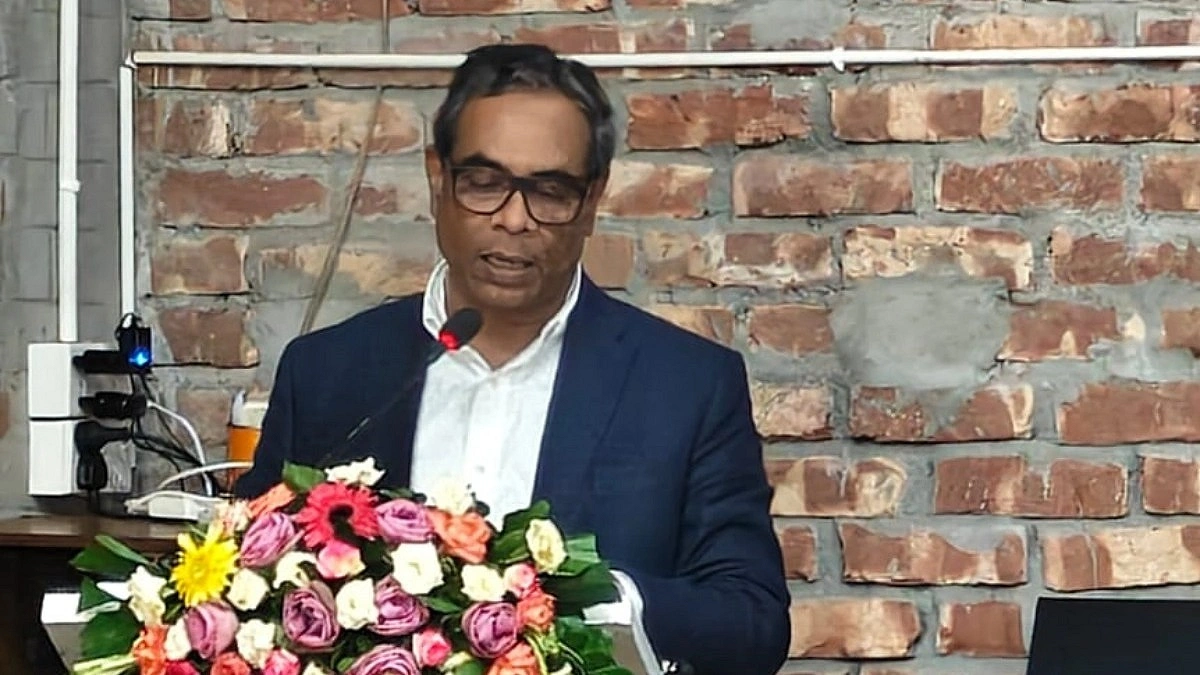
Photo: Agamir Somoy
State Minister of Health MA Muhit said 97 percent of age-eligible children who had not received a single dose were identified with measles and it will take two to three months to bring the measles outbreak under control and stabilize the healthcare situation.
He made these remarks on Wednesday at a seminar held at the Bangladesh Shishu Hospital and Institute to share research findings on pediatric measles.
Muhit added, “It will take at least two to three months to bring measles under control and get everything in order. Unrealistic expectations that a long-standing problem will be solved in a day or by next week cannot be kept.”
Addressing the state of the healthcare system, he noted that around 80 percent of the country’s population depends on government health services, though the sector has faced various crises due to long-term mismanagement, corruption, and neglect.
While a vast network of private hospitals and diagnostic centers exists, Muhit pointed out that they are often driven by profit and face quality control issues. However, he noted that autonomous institutions like Bangladesh Shishu Hospital, Holy Family, and BIRDEM have created a successful balance between the public and private sectors.
To prioritize child health, the government plans to start operations at five full-fledged children’s hospitals in five divisional cities within the next two to three months. The government will quickly recruit 5,000 new doctors, 1,000 nurses, and 1,00,000 new field workers to resolve the manpower shortage in the health sector.
During the event, a joint research study conducted by the Bangladesh Shishu Hospital and Institute (BSHI) and the International Centre for Diarrhoeal Disease Research, Bangladesh (icddr,b) revealed that 65 percent of children hospitalized with measles were suffering from malnutrition, including 12 percent with severe and 53 percent with moderate malnutrition.
The study found that 43 percent of hospitalized children were between 3 and 9 months old, and 38 percent of infected children did not receive exclusive breastfeeding for the first six months of life.
This rate was even more critical among the deceased, as 82 percent of children who died from the disease had been deprived of breastfeeding during their first six months. 97.3 percent of children who were too young for regular vaccination (under 9 months) and 97 percent of age-eligible children who had not received a single dose were identified with measles.
Data from the Directorate General of Health Services (DGHS) indicates that 918 people have died since 15 March; this total includes 819 deaths from measles symptoms and 99 confirmed measles deaths.
BSHI Board of Management Chairman AKM Azizul Haque presided over the meeting. Special guests included DGHS Director General Prabhat Chandra Biswas, Director Md Nurul Islam, and IEDCR Director Kazi Ahmed Zaki.
BSHI Director Mirza Mohammad Ziaul Islam and icddr,b Senior Director Mustafizur Rahman presented the main research paper.
