
Kidney and cancer patients rise alarmingly, says Health Minister

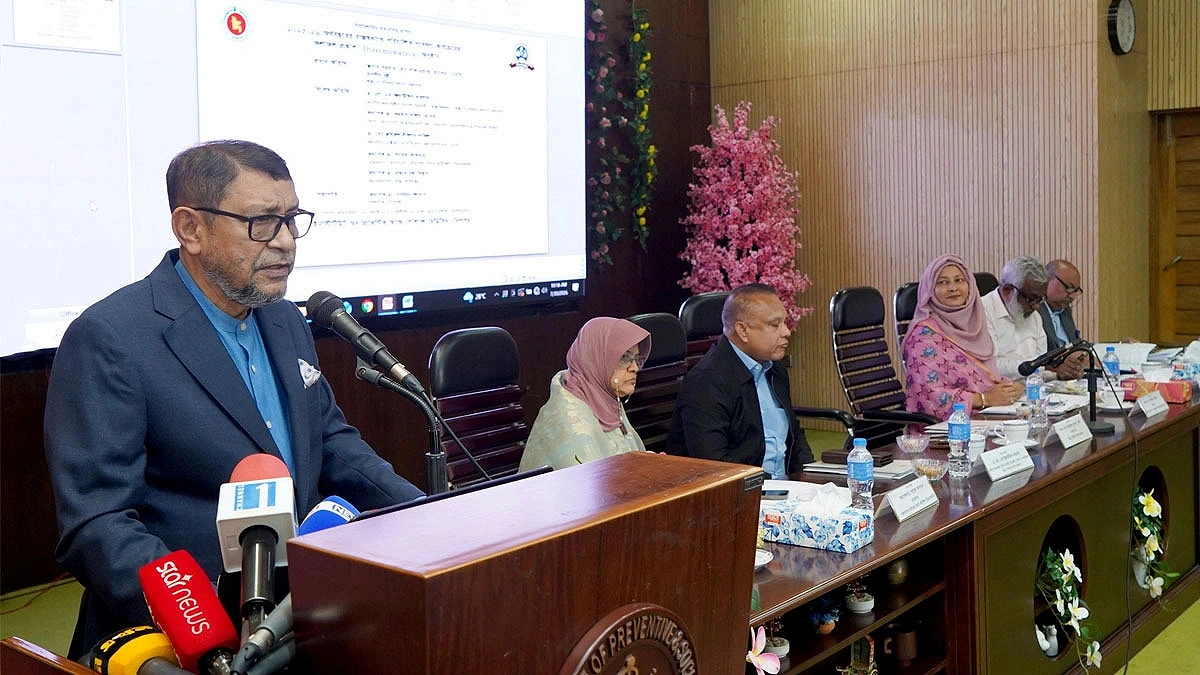
Photo: Agamir Somoy
Health and Family Welfare Minister Sardar Md. Sakhawat Husain has expressed concern over the rising number of cancer and kidney disease patients across the country.
He said the number of patients suffering from kidney diseases and cancer has increased alarmingly in the country. Patients with kidney ailments and cancer endure immense suffering, and their pain is immeasurable.
He made these remarks as the chief guest at an event to publish the findings of a research conducted under the revenue budget for the 2025-26 fiscal year at the National Institute of Preventive and Social Medicine (NIPSOM) in the capital's Mohakhali on Thursday morning.
Addressing the doctors, the Health Minister said that a physician's smiling face and compassionate behavior can heal a patient halfway. Physicians are the ones who can truly restore a patient to health. For the sick and helpless, the doctor is their ultimate refuge.
He emphasized that the nation cannot be protected from diseases solely through medicine. Now, the focus must shift not just to curing diseases, but also to preventing them. To achieve this, innovative preventive measures must be adopted starting from age zero.
Highlighting development activities, the minister pointed out that the era of seeking votes solely by building bridges and roads is over. Work must be done on issues that truly matter to the people, and the country must be built according to their needs. At the same time, research and awareness campaigns must be prioritized with the utmost focus on the health of rural people.
Mentioning that Bangladesh's history of health research is extremely rich, S.M. Ziauddin Haider, Special Assistant to the Prime Minister (on health affairs), said that whenever global health research is discussed, Bangladesh stands tall with immense pride, thanks to the International Centre for Diarrhoeal Disease Research, Bangladesh (icddr,b). The benefits of the extensive research Bangladesh has conducted on diarrhea and cholera at the international level are now evident worldwide.
Emphasizing the need for field-level experience, he said that researchers should visit the upazila (sub-district) health complexes directly before presenting any data. It is necessary to collect information by discussing with the employees and officials there to identify the actual problems and areas of conflict so that they can be resolved. If good experiences from one upazila spread to another, it will lead to visible, positive improvements in the country's overall healthcare system.
Presided over by NIPSOM Director Professor Nasrin Sultana, the event was also attended by Director General of the Directorate General of Health Services (DGHS) Professor Prabhat Chandra Biswas, Chairman of the Bangladesh Medical Research Council (BMRC) Professor Sayeba Akhtar, and Secretary General of the Doctors Association of Bangladesh (DAB) Md. Zahirul Islam Shakil, as special guests.
