
Bangladesh projects 25% more vaccinations to curb deadly measles outbreak

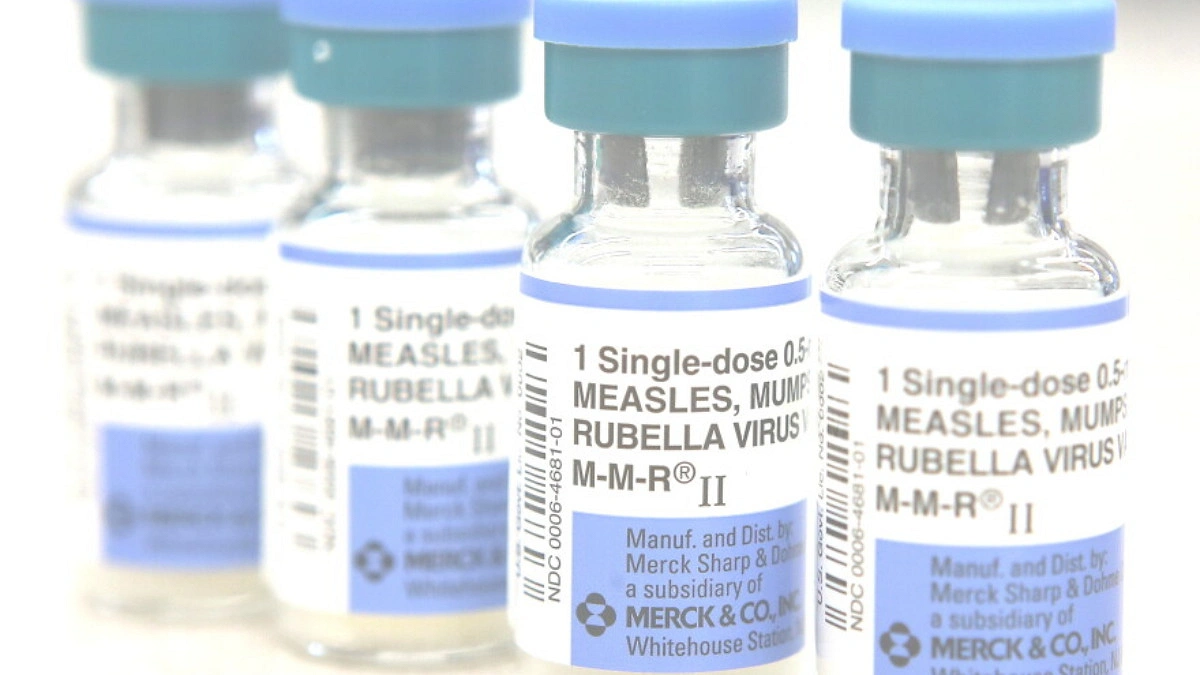
Collected Photo
The government previously had said that measles would be under control by June. However, five months after the outbreak began, infections and deaths continue unabated. Recently, the Minister of State for Health said if everything is done properly, it might take another two to three months to bring measles under control.
Public health experts and scientific officers, however, said there is little chance of measles declining anytime soon. The outbreak will persist until at least 95 percent of eligible children are vaccinated. This means that out of the roughly 30 percent of unvaccinated children, at least 25 percent must be immunized to slow the transmission rate.
According to experts, inadequate measles vaccine coverage over an extended period has created an immunity gap, leaving a vast number of children vulnerable. Low campaign targets resulted in poor coverage in slums, remote areas, floating populations, and underserved families. A lack of awareness also left many unimmunized. Furthermore, infected individuals failing to self-isolate accelerated the spread. Reduced rates of breastfeeding lowered maternal immunity, while malnutrition further heightened vulnerability. These six primary factors contributed to the outbreak.
Directorate General of Health Services (DGHS) data shows that 173,588 measles patients were hospitalized this year, with 960 fatalities. Over the last 24 hours alone, 1,170 new cases and 5 deaths were recorded. The government claims to have exceeded its target during the April 20 to May 20 Measles-Rubella national campaign. However, this target was 5.5 million children lower than the target for June's Vitamin 'A' campaign, despite both targeting children aged six to 59 months. Targeted vaccination is currently underway in high-risk areas, with a new goal to immunize 1.5 to 1.6 million children.
Be-Nazir Ahmed, former Director of the Disease Control Division at DGHS, noted that herd immunity cannot be achieved this way. Flaws in preparation, planning, and accounting of vaccinated children will cause infections and deaths to continue.
Acknowledging that vaccine coverage remains insufficient, Minister of State for Health M. A. Muhit stated that the remaining 1.6 million missed children will be vaccinated. However, he admitted this would still fall short of 95 percent coverage, requiring at least another 10 percent of children to be brought under the program.
The Minister of State attributed the low coverage to inefficiency and negligence by UNICEF in setting vaccination targets. Riad Mahmud, Health Manager at UNICEF Bangladesh in Dhaka, offered no comment regarding the Minister's statements.
Scientific officers estimated that the proportion of children missed during the campaign exceeds 30 percent, ruling out an immediate drop in transmission. Kazi Ahmed Zaki, Director of the Institute of Epidemiology, Disease Control and Research (IEDR), emphasized that vaccination is the sole method to prevent measles. Achieving herd immunity requires accurately identifying the eligible population and increasing coverage.
Hasanul Mahmud, Assistant Director of the Expanded Program on Immunization (EPI) and Surveillance at DGHS, stated that when the outbreak began in March, the target was set at 18 million based on Bangladesh Bureau of Statistics survey data. Since that proved insufficient, vaccination drives are ongoing to bridge the gap, prioritizing high-risk areas with elevated infection and mortality rates.
Vaccine Shortages and Herd Immunity Concerns
An official noted that allocations are being calculated carefully due to a lack of adequate vaccine supplies on hand and the time-consuming process of purchasing new stock. When asked if this approach could establish herd immunity, the official suggested it might.
However, another EPI official stated that achieving herd immunity under these conditions is impossible. Due to low vaccination coverage over the past few years, a large backlog of unimmunized children remains. Until this gap is addressed, measles is unlikely to come under control. Furthermore, the country faces high rates of child malnutrition, which heightens susceptibility.
Two senior DGHS officials disclosed that despite official claims of 100 percent success, actual coverage for this year's measles campaign was below 70 percent. No responsible authority agreed to comment officially on this matter.
When asked whether the proportion of unimmunized children stands at 30 percent, IEDCR Director Kazi Ahmed Zaki stressed that this figure requires verification through research. With newborn babies entering the eligible six-month age bracket daily, target calculations must dynamically account for these demographics. He emphasized that accurate surveys are necessary to resolve discrepancies between government and non-government data.
Public health expert Be-Nazir Ahmed commented that the government is failing to prioritize the measles crisis, pointing to repeated miscalculations in setting target demographics for eligible children and inadequate promotional campaigns driving up infection rates.
Systemic Data Gaps and Expert Recommendations
Attempts to identify the highest-risk regions were met with administrative runarounds across three separate DGHS departments, with no official data provided. While the IEDCR Director confirmed that high-risk areas were identified and sent to the DGHS Management Information System (MIS), inquiries directed to the MIS control room were routed to the EPI building, then back to MIS, where an official ultimately suggested contacting the World Health Organization instead.
Former IEDCR Chief Scientific Officer and public health expert Mushtaq Hussain cautioned that concealing data will not stop measles transmission. Beyond reaching accurate vaccination targets, he urged prioritizing primary healthcare and establishing community-level isolation facilities to lower mortality risks.
On August 12, the National Immunization Technical Advisory Group (NITAG) noted that transmission remains ongoing across specific geographical zones and age groups. NITAG recommended stepping up vaccination efforts for missed children aged 6 to 59 months and expanding coverage to children aged 5 to 14 years in high-risk areas based on epidemiological findings.
Link Between Infant Nutrition and Infection Risk
Research highlights a direct connection between measles infections and deaths in Bangladesh and the lack of exclusive breastfeeding during the first six months of life. A joint study by Bangladesh Shishu Hospital & Institute and icddr,b analyzed data from 354 pediatric measles patients and revealed the following:
38% of infected children did not receive exclusive breastfeeding for their first six months.
43% of cases occurred in infants aged 3 to 9 months, forming the most affected group.
82% of children who died from measles were deprived of exclusive breastfeeding during their first six months.
Infants are particularly vulnerable due to low immunity. While maternal antibodies typically protect infants under six months, a growing preference for formula and solid food driven by reduced awareness or personal choice has eroded this protection.
According to government data from the MICS 2025 survey, exclusive breastfeeding rates for infants under six months in Bangladesh dropped from 62.6% in 2019 to 56.6%. Early initiation of breastfeeding within one hour of birth also saw a steep decline, falling from 46.6% to 30.4%.
