
Bangladesh-India ties must be equal, not husband-wife: Speaker

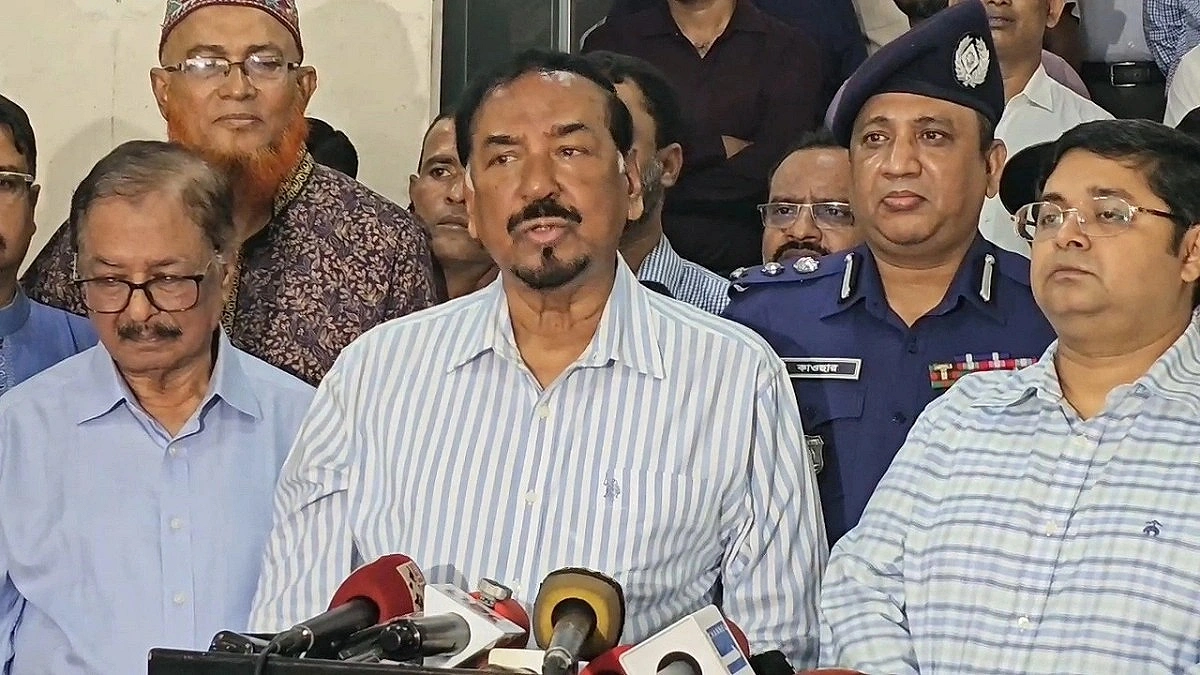
Collected Photo
Speaker Hafiz Uddin Ahmad said Bangladesh’s relationship with India should be based on honesty, good-neighborliness, and equal status.
He made these remarks at the Bhola Circuit House on Monday and added that Bangladesh does not want a husband-and-wife relationship with anyone; it wants the kind of friendly and equal status relationship that should exist between two sovereign countries.
Hafiz stayed in Bhola on a four-day visit, and after concluding the meeting, he departed from Bhola for Dhaka. Deputy Commissioner Shamim Rahman, Superintendent of Police Shahidullah Kawser, District Council Chairman Golam Nabi Alamgir, and other officials were present during the meeting.
Regarding India-Bangladesh relations, the speaker noted that Bangladesh needs to maintain good relations with India. However, no signs indicate India desires good relations, as discussions are taking place only at the diplomatic level.
Noting that former foreign minister AK Abdul Momen of the Awami League (AL) government had previously referred to the relationship between Bangladesh and India as a “husband-and-wife relationship,” Hafiz said, “Bangladesh does not want such a relationship.”
He added that although the BRICS summit has concluded, the Bangladesh government has not yet openly declared its policy on the matter. Although thoughts of joining BRICS had been present since the time of the AL government, no significant enthusiasm has been observed from India’s side on this issue so far.
Hafiz pointed, “Prime Minister of Bangladesh has not yet been invited to India as Prime Minister with due dignity. Bangladesh also has objections regarding certain matters involving India.”
Noting that India granted asylum to the prime minister of the previous government and allowed her to engage in political activities there, the speaker said, “Bangladesh does not consider this honest and neighborly behavior.”
Regarding the country’s situation and reforms, Hafiz added that 17 years of misrule by the AL caused a collapse across every tier, department, and area of the nation. Killings, enforced disappearances, murders, money laundering, and corruption broke all past records.
He noted that improving the situation will take time. Although seven months is a very short time for this task, the government has started reform efforts. Discussions are ongoing among political parties regarding the implementation of the July Charter.
However, Hafiz said they have not yet reached an agreement on how these reforms will be carried out. The BNP and opposition parties will quickly reach an understanding so that the public can gain freedom from 16-17 years of deprivation and misrule.
He commented that results will be achieved through constitutional amendments after the reform process concludes. The public has not yet received the results because the reform process has not legally begun.
Hafiz expressed hope that if the government and the opposition agree on reform proposals in the upcoming parliamentary session, necessary laws can be quickly amended.
