
Bus route rationalization
A new patchwork begins in the cycle of old failures
- Five years later, a new trial will begin again on November 1
- Experts see little prospect of visible changes in road discipline

Collected Photo
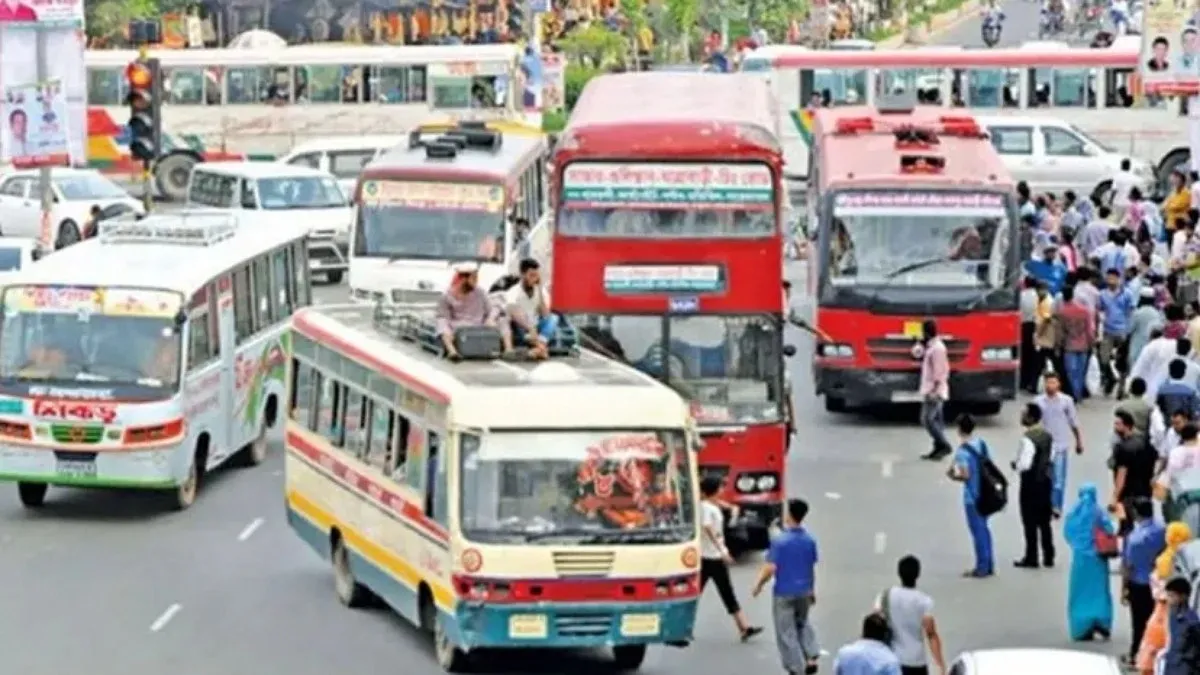
Bus names will change and companies will have new identities. But the buses themselves will remain the same. Instead of introducing e-ticketing for fare collection, the existing illegal waybill system will continue. Effective arrangements for hiring drivers on fixed salaries and distributing dividends among owners are also not being introduced. Yet these were the very changes the bus route rationalization initiative was designed to bring about. Five years after the failure of the experimental Dhaka Nagar Paribahan service, a new service called City Paribahan is set to launch under a different name. However, another trial based on patchwork solutions is beginning without addressing the reasons behind the previous initiative’s failure.
A total of 816 buses will operate experimentally on six routes from November 1. These existing buses are being brought under several companies and given new names. For example, buses operated by Dishari, Tanzil and Metrolink on the Mirpur to Keraniganj route will be combined under the name Chiriakhana City Bus. In other words, although the companies’ identities will change, there will be no changes in bus quality, fare collection methods or workers’ working conditions.
The initiative was launched to restore order to Dhaka’s public transport system. The plan was to introduce a company-based system instead of allowing buses to operate separately under individual ownership. Designated buses would operate on specific routes. Passengers would board and get off at designated stops. Fares would be collected through e-ticketing. Drivers would receive fixed salaries, while owners would receive dividends on their investments. This would reduce competition among buses for passengers. It would also stop buses from picking up passengers indiscriminately along the road and improve passenger services.
Mohammad Mashiur Rahman, additional executive director of the Dhaka Transport Coordination Authority (DTCA), told Agamir Somoy that the initiative was unlikely to succeed this time either if the existing problems remained unresolved. He said the absence of e-ticketing would leave the initiative at risk of failure. If transport workers retained control over fare collection, nothing could be made successful. Many of the core ideas behind rationalization were not being implemented. He also questioned the benefit of the initiative if old and dilapidated buses were still allowed to operate.
However, Saiful Alam, general secretary of the Dhaka Road Transport Owners Association, is optimistic. He said, “There is no reason why it should not succeed this time. The owners incurred losses before, but they will not this time. The initial goal is to bring the buses under discipline. The rest will be addressed over time. For now, fares will be collected through the waybill system. Once e-ticketing is introduced after two months, owners will receive dividends under the franchise system.”
Core problems remain unchanged after five years
Dhaka Nagar Paribahan began experimental operations on December 26, 2021. The plan was to operate 155 buses on the Ghatarchar to Kanchpur route. However, due to a shortage of suitable buses, the service began with only 20 buses operated by Trans Silva Paribahan and 30 double decker buses operated by the Bangladesh Road Transport Corporation (BRTC).
Under the plan, no buses belonging to other companies were supposed to operate on the route alongside Nagar Paribahan. In practice, this could not be enforced. Buses operated by other companies continued to run on the same route. As a result, competition with the existing system continued even after the new buses were introduced. There were also complications involving the necessary infrastructure, passenger shelters and bus depots. The gap between planning and implementation ultimately weakened the initiative. Nagar Paribahan was eventually shut down after incurring losses.
What changes have been made to the new initiative based on those experiences? Buses will operate on six routes, but they are old. E-ticketing will not be introduced from the beginning. In other words, the service is being relaunched under a new name without resolving the main problems that undermined the previous initiative. This raises the biggest question about the new initiative.
The objective of bus route rationalization was to transform the entire operating system. So far, however, the visible changes have largely involved operating buses from several companies under a single name. This will change their administrative identity. But achieving the desired results will be difficult unless competition among buses, fare collection methods and the quality of passenger services also change.
Only 98 of 418 routes active in the city
According to data from the Bangladesh Road Transport Authority (BRTA), Dhaka has 418 approved bus routes. Only 98 of them are currently active. An estimated 7,000 to 7,500 buses operate on these routes every day, carrying approximately 3.7 million to 3.8 million passengers.
Transport expert Mohammad Hadiuzzaman, a professor at the Bangladesh University of Engineering and Technology (BUET), believes that changing bus company names alone will not improve the situation. Effective measures are needed to determine which buses will operate on which routes and how vehicle quality and roadworthiness will be ensured. Fixed salaries, working hours and proper recruitment arrangements for drivers must also be established. Otherwise, it will be difficult to stop competition among buses for passengers.
Under the plan, buses will operate with designated colors and identities. Passengers will only be allowed to board and get off at designated stops. Owners will receive dividends on their investments, while drivers will work for fixed salaries. However, unless these arrangements are implemented effectively, bringing buses under a single company name will not establish discipline in their operations.
How City Paribahan will operate on six routes
According to route details provided by the DTCA, regular buses are scheduled to operate on five routes, while air-conditioned buses will operate on one route.
Gazipur to Motijheel to New Market route: The plan is to connect the New Market area with Gazipur, Chowrasta and Tongi through several major roads in the capital. A total of 253 buses will operate along the 26.47-kilometer route. Buses operated by VIP and Bikash will be brought together under the name VIP Paribahan.
Mirpur to Keraniganj route: This route extends from Mirpur through Diabari, Kazipara, Kallyanpur, Shyamoli, College Gate, Asad Gate, Science Lab, Shahbagh, Press Club, Zero Point, Gulistan, Sadarghat and Babubazar Bridge to Keraniganj. Buses operated by Dishari, Tanzil and Metrolink currently run on this route. Under the new system, these buses will operate together under the name Chiriakhana City Bus. A total of 133 buses will operate along the 17.18 kilometer route.
Ghatarchar to Mohammadpur to Basabo route: The plan is to connect Ghatarchar with Basabo and surrounding areas through Basila, Mohammadpur and other parts of the capital. A total of 70 buses will operate under the name Ramzan Ali Enterprise along the 24.49-kilometer route extending to Demra.
Ghatarchar to Kanchpur route: This route extends 25.05 kilometers from Ghatarchar through Basila, Mohammadpur, Science Lab, Shahbagh, Jatrabari and Matuail to Kanchpur. A total of 150 buses operated by Rajanigandha, Malancha, Shomoy and Midline Paribahan will operate under the name Four Star Bus Line.
Ghatarchar to Abdullahpur route: The plan is to connect Ghatarchar with Abdullahpur through Mohammadpur, Asad Gate, Shyamoli, Technical, Mirpur 1, Mirpur 10, Pallabi, Kalshi and ECB Chattar. A total of 190 buses will operate under the name PNP City Service along the 30-kilometer route.
Tongi to Dhakeshwari route: A total of 20 buses will operate under the name Dhaka Chaka along the 22.89-kilometer route from Tongi to Dhakeshwari through College Gate, Abdullahpur, the airport and surrounding areas, Khilkhet, Bashundhara and nearby locations.
How much improvement can new services bring with old buses?
Combining existing buses for operation raises questions about their age, roadworthiness and maintenance. However, it would not be accurate to conclude that every old bus is unsuitable for service. Nevertheless, it is essential to assess buses for roadworthiness, safety and maintenance standards. Clear criteria must be established to determine which buses can operate under the new system. Unless there is a mechanism to remove unsuitable buses, changing company names will not ensure better passenger services.
The goal of route rationalization was not merely to standardize bus colors or names. It was intended to remove unfit vehicles from the roads, regulate passenger boarding and ensure regular services. If these areas remain unchanged, passengers will continue to face the same old problems even when boarding buses with new names.
Mohammad Mashiur Rahman, additional executive director of the DTCA, said buses that are too old or have exceeded their service life would not be allowed to operate. They will be monitored from the first day of the initiative.
The bus route rationalization plan called for drivers to be hired on fixed salaries and owners to receive dividends under a franchise system. This would ensure that drivers’ incomes did not depend on the number of passengers they picked up. As a result, competition among buses would decline. Owners would also receive dividends based on company earnings. However, this arrangement will not be implemented effectively from the outset of the new initiative.
Transport expert Mohammad Hadiuzzaman told Agamir Somoy that the experience of the initiative launched five years ago showed that simply putting buses on the road did not constitute success. Success means determining whether discipline has returned to the roads, passenger services have improved and longstanding problems have been resolved. Without ensuring these changes, City Paribahan will remain another patchwork attempt trapped in the cycle of old failures.
