

Farashuddin Rejects Caretaker System, Backs Party-Led Elections

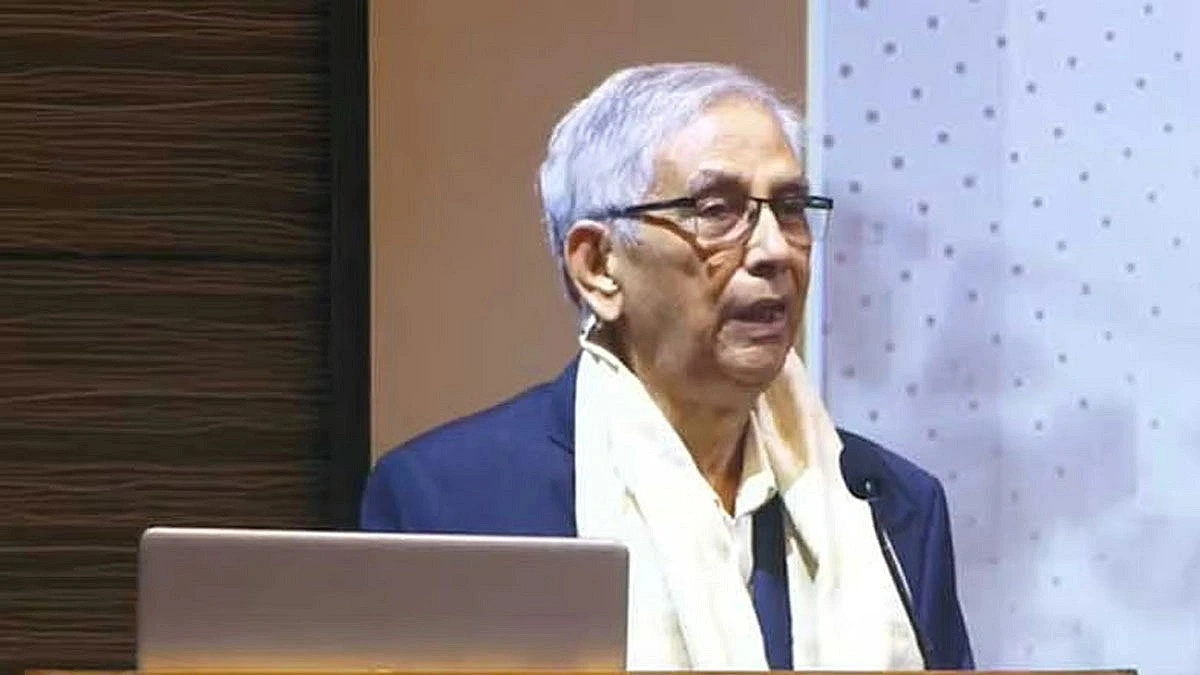
Former Bangladesh Bank Governor Dr. Mohammad Farashuddin. Photo: Collected
General elections should be held under an elected party-led government, as they are in other democracies around the world, provided they are conducted under a strong and independent Election Commission, former Bangladesh Bank Governor Dr. Mohammad Farashuddin said. He added that appropriate institutional safeguards could ensure free and impartial elections under such a system.
Farashuddin made the remarks on Sunday while delivering the Nehreen Khan Memorial Lecture at East West University in Aftabnagar, Dhaka. In his lecture, titled Constitutional Reform and Democratic Governance: The Bangladesh Perspective, he discussed politics, the caretaker government system, and the country's past political crises.
Criticizing the caretaker government system, the veteran economist described it as an unacceptable bureaucratic arrangement born out of distrust in politics. As an alternative, he proposed reducing the scope of the incumbent party-led government 90 days before the election and transforming it into a routine election-time government. During that period, MPs' powers and official privileges would remain suspended, while full administrative authority would be transferred to the Election Commission.
Expressing regret, Farashuddin said the BNP-led alliance had a strong chance of winning the 2014 election or at least emerging as a strong opposition force in Parliament. However, he said the party's decision to boycott the election squandered a major opportunity to demonstrate that a free and impartial election could be held under a party-led government.
Farashuddin also referred to the "Minus Two" formula associated with the 2007-08 political crisis, commonly known as One-Eleven. He said efforts to weaken Sheikh Hasina as part of a broader depoliticization process were thwarted by Zillur Rahman and Syed Ashraful Islam. On the other hand, he said the faction led by Mannan Bhuiyan had exerted intense pressure on Khaleda Zia to leave the country, but she remained steadfast in her decision to stay in Bangladesh. He also said the ongoing unnecessary debate over the declaration of Bangladesh's independence could be resolved by recognizing Ziaur Rahman's declaration on March 27, 1971.
The former central bank governor also expressed concern over the country's economic situation, saying widening income and wealth inequality had slowed economic momentum. He noted that the tax-to-GDP ratio currently remained in the 8 percent range, while private-sector credit growth had fallen to a record low of 6.7 percent.
The event
was chaired by Farashuddin in his capacity as chairman of the Board of Trustees
of East West University. Among others, Vice Chancellor Prof. Shams Rahman,
journalist Sohrab Hassan, Prof. Fakrul Alam, and Treasurer Ishfaq Elahi
Chowdhury also spoke at the program.

