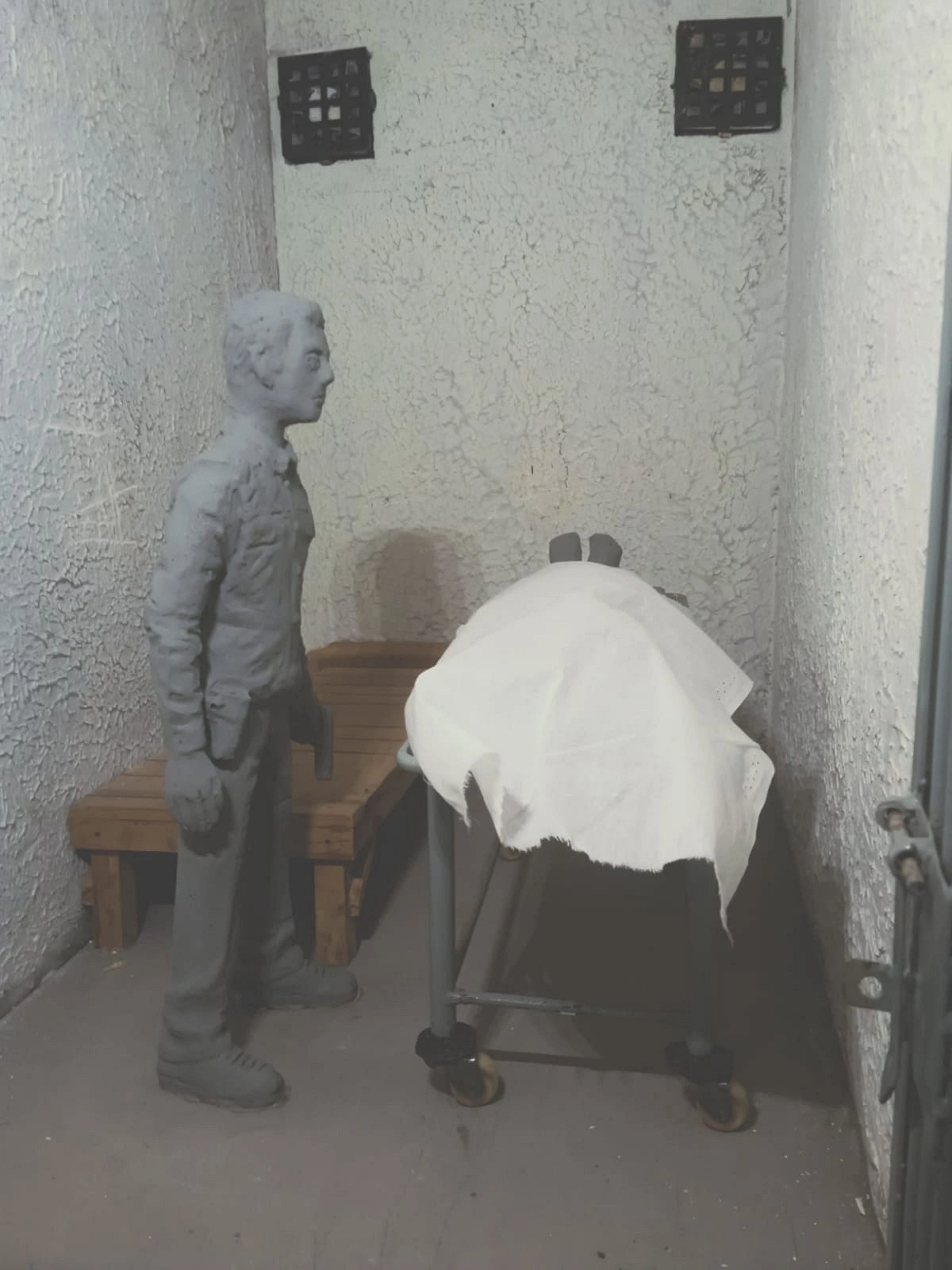
'Let such days never come again'

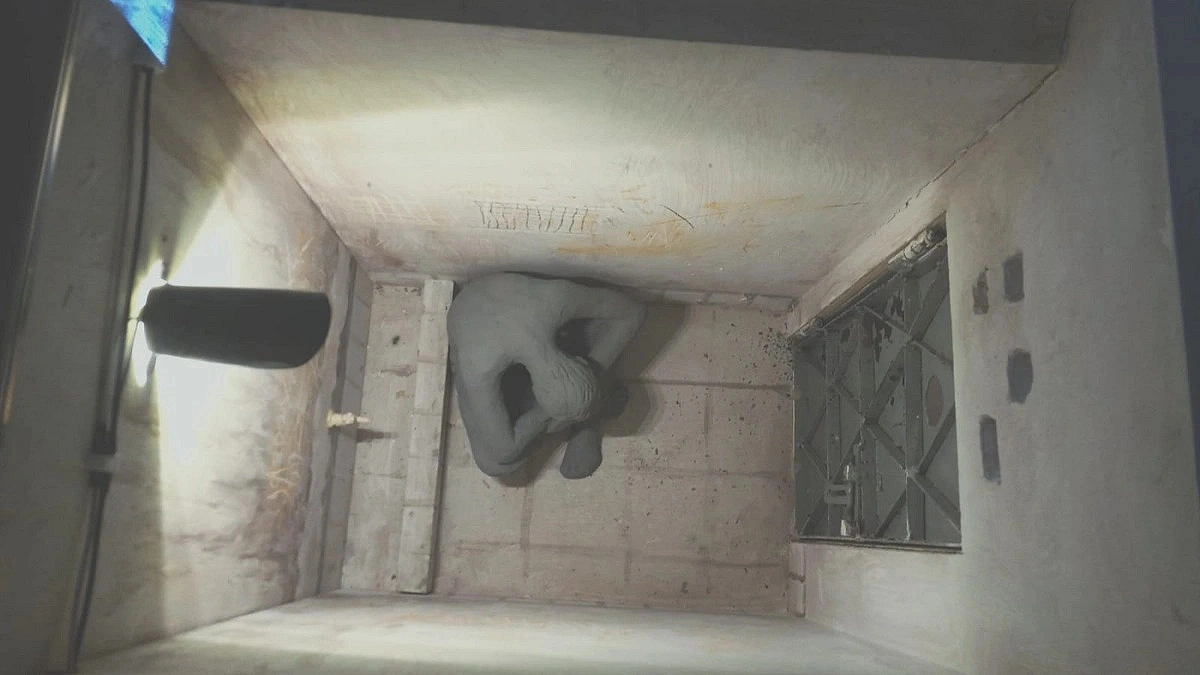
Aynaghar’ has found a place in the July Museum. Agamir Somoy photo.
As soon as you enter the July Memorial Museum, your eyes fall on a small square-shaped room made of bricks on the right side. It has no paint, no ornate decoration. The bare brickwork seems to silently declare—this is no ordinary exhibit. This is a symbolic representation of the "Mirror Room" (Aynaghar).
Curious visitors enter one by one. Some look around, some take photos with their phones, while others open the symbolic iron door and stand inside for a few seconds, trying to feel the suffocating reality of prison life. The moment you step inside, the heat and discomfort begin to overwhelm the body. There is a crowd of people all around. Someone asks, "How could people live here?"
Another voice chimes in, "We can't even bear it when there's a power outage for a single day. How did people survive here for years in such a tiny, dark room?" Just then, from amidst the crowd of visitors, a woman named Nurayana, aged between 30 and 40, spoke up in a trembling voice: "Let such days never come again." As soon as she uttered those words, the surrounding commotion seemed to freeze for a few seconds. Rashida Begum, 60, came to visit the museum with her son, daughter-in-law, and grandson from Adabor in the capital. Age has taken a toll on her body; she cannot walk for long. Even so, after touring the entire museum, she came and sat down next to the July mass grave. Her face bore traces of exhaustion, but her eyes held deep sorrow. She said, "I have seen the entire museum. But this Mirror Room has moved me the most. How could people live in such a tiny space? Eating here, using the toilet here, spending day after day in captivity! I couldn't have survived even one day." Fatema Akhtar, 40, came from Sheorapara with her mother. The two were slowly walking through the entire museum. When she reached the Mirror Room, Fatema could no longer control herself. Her eyes welled up with tears. She said, "On the day the Sheikh Hasina government fell, I went to Ganabhaban. But I fell ill and couldn't go inside. Today I came here with my mother. Seeing this tiny room, I understand what horrific torture people were subjected to. How could a person stand in such a small space? Where would they sit? Where would they sleep?"
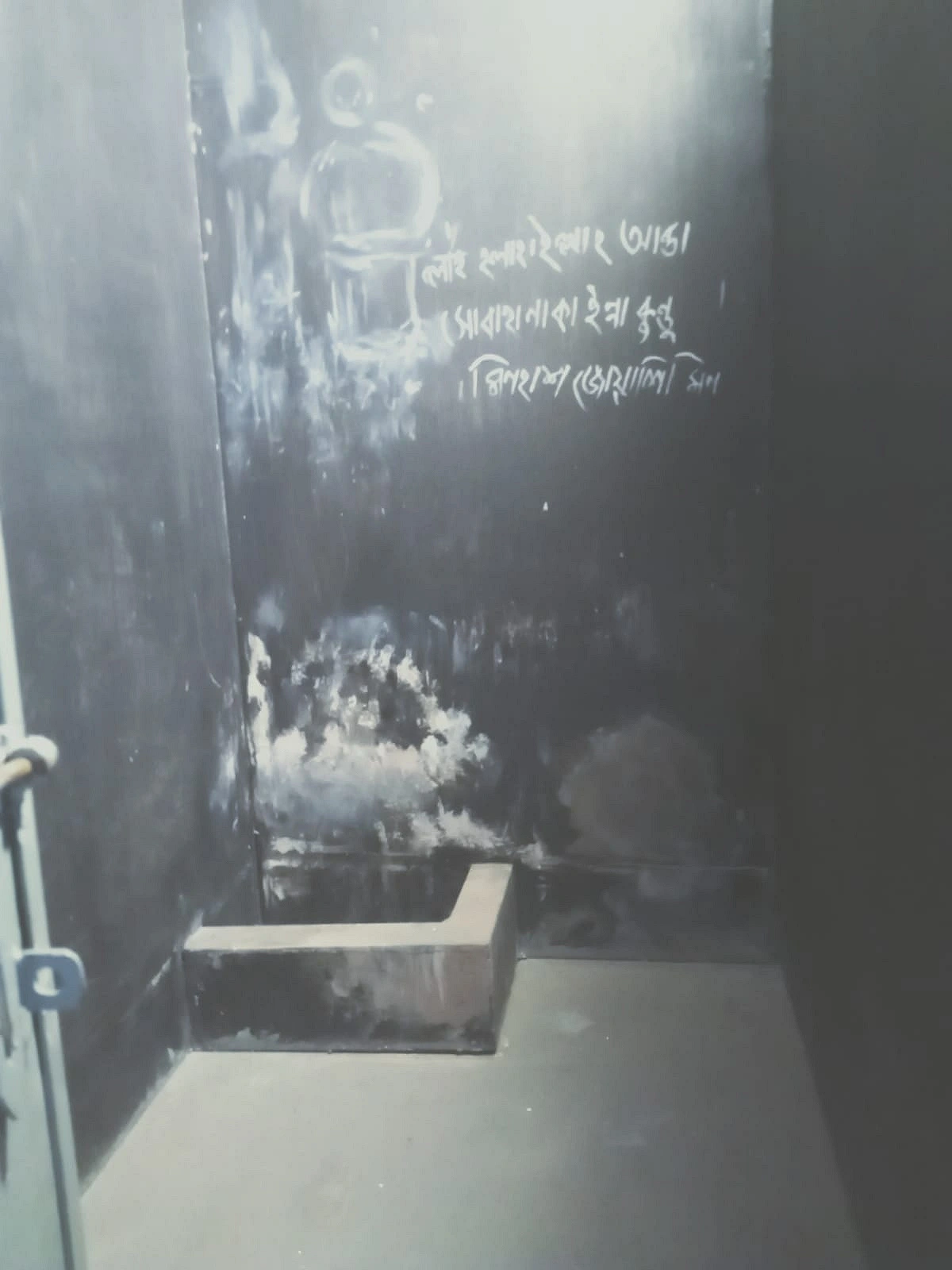
Her mother, standing beside her, let out a deep sigh and said, "This was like the reign of Pharaoh in the modern era. I wouldn't have believed it if I hadn't seen with my own eyes that a person could be confined in such a tiny space." She added, "During the July uprising, when the helicopters were firing, I would just sit at home and cry. My son works in the police force. I kept worrying about how they were doing. I didn't see these things with my own eyes back then. Today, after visiting the museum, I realize that what you see from the outside is nothing compared to the far more horrifying reality inside."
The people visiting the July Memorial Museum do not just have an interest in viewing history; they carry grief, astonishment, anger, and a single hope for the future—that such a dark chapter in the nation's history will never be repeated. Standing in front of the Mirror Room, therefore, the same sentence is uttered from many mouths: "Let such days never come again."