
Milestone Plane Crash
Four Bangladeshi Researchers Gain Global Recognition for Their Study

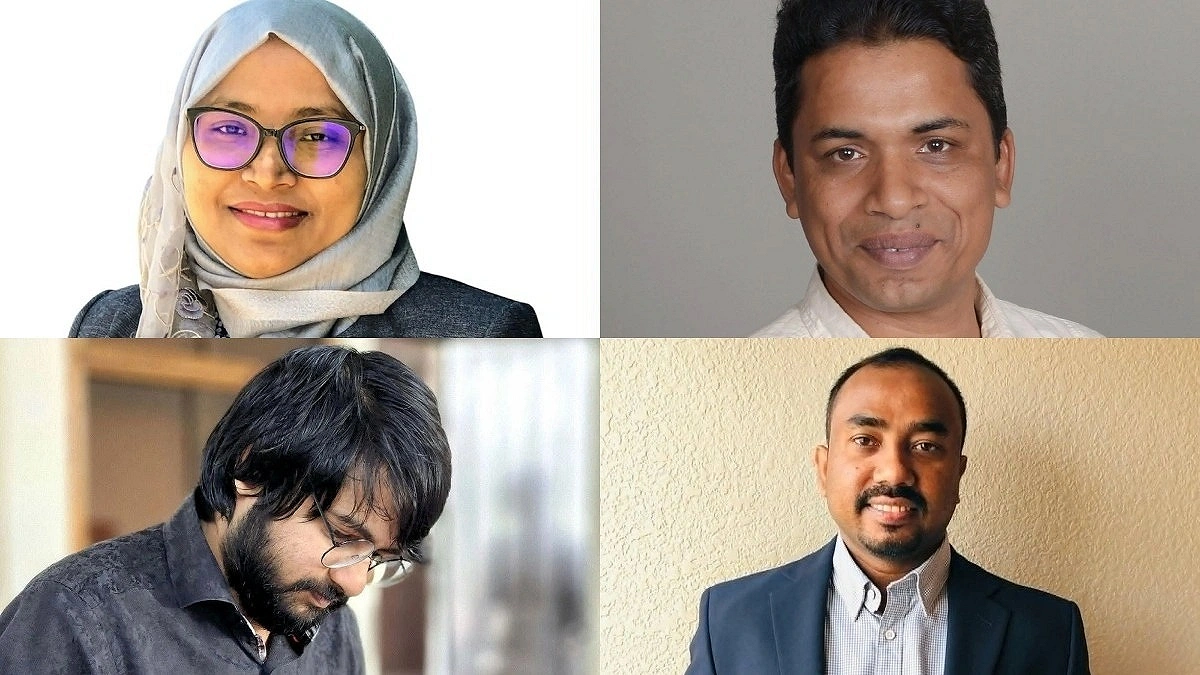
Collected Photo
Four Bangladeshi communication and media researchers have received international recognition for their study on the Bangladesh Air Force training aircraft crash at Milestone School and College in Dhaka’s Uttara area.
The International Communication Association (ICA), one of the world’s most prestigious academic organizations in communication studies, awarded the team the 'Top Paper Award' for their research.
The award recipients are Dr. Nazma Akhtar, incoming assistant professor at the University of North Carolina Wilmington; Sayeed Al-Zaman, assistant professor in the Department of Journalism and Media Studies at Jahangirnagar University and PhD researcher at the University of Canberra; Dr. Khairul Islam, assistant professor at Florida Atlantic University; and A.K.M. Jamir Uddin, PhD researcher at the University of Georgia.
Their paper, titled “Government-Media Relations in Crisis Communication: A Case Study of a Bangladesh Air Force Aircraft Accident,” analyzed crisis communication strategies used by the government and media following the July 2025 aircraft crash at Milestone School and College in Dhaka.
The award was presented at ICA’s 76th annual conference, held in Cape Town, South Africa, from June 4 to 8, 2026. The conference is considered one of the largest and most prestigious global gatherings in the field, attracting around 3,400 communication scholars each year.
For the study, researchers analyzed official press releases issued by various government agencies as well as more than 500 news reports published in major national newspapers. Their aim was to develop a theoretical framework for effective government communication during major crises, particularly in developing and Global South countries.
The study found that in major national emergencies such as the Milestone plane crash, rapid information dissemination alone is not sufficient. Building public trust also requires empathy, human sensitivity, transparency, and ethical accountability in official communication.
Analysis of government and media messaging showed that care-oriented communication toward victims and their families, along with accountable messaging, plays a crucial role in strengthening public confidence during crises.
Based on these findings, the researchers proposed a “Care-Centered Government Crisis Communication Framework,” which they say could serve as an effective model for managing future national crises in developing countries. The framework emphasizes not only timely and accurate information, but also compassion, humanity, and ethical responsibility as core elements of crisis communication.
They believe the framework, inspired by lessons from the Milestone crash, could guide policymakers, government officials, and communication professionals in Bangladesh and beyond in handling future emergencies more effectively.
